Clear Sky Science · en
Impact of treatment strategies incorporating sacubitril/valsartan on achievement of guideline-recommended blood pressure targets and representative safety outcomes
Why Controlling Blood Pressure Matters
High blood pressure is often called a silent threat because most people feel fine until serious problems, like stroke or heart failure, appear. In Japan, tens of millions live with this condition, and many do not reach the numbers doctors recommend for staying healthy. This study looks at how a newer medicine combination, sacubitril/valsartan, used together with other common blood pressure drugs, performs in everyday clinic practice—not just in carefully controlled trials. The findings help patients and doctors understand who is most likely to benefit, how treatment is usually given, and what side effects to watch for.
Real-Life Look Across Thousands of Clinics
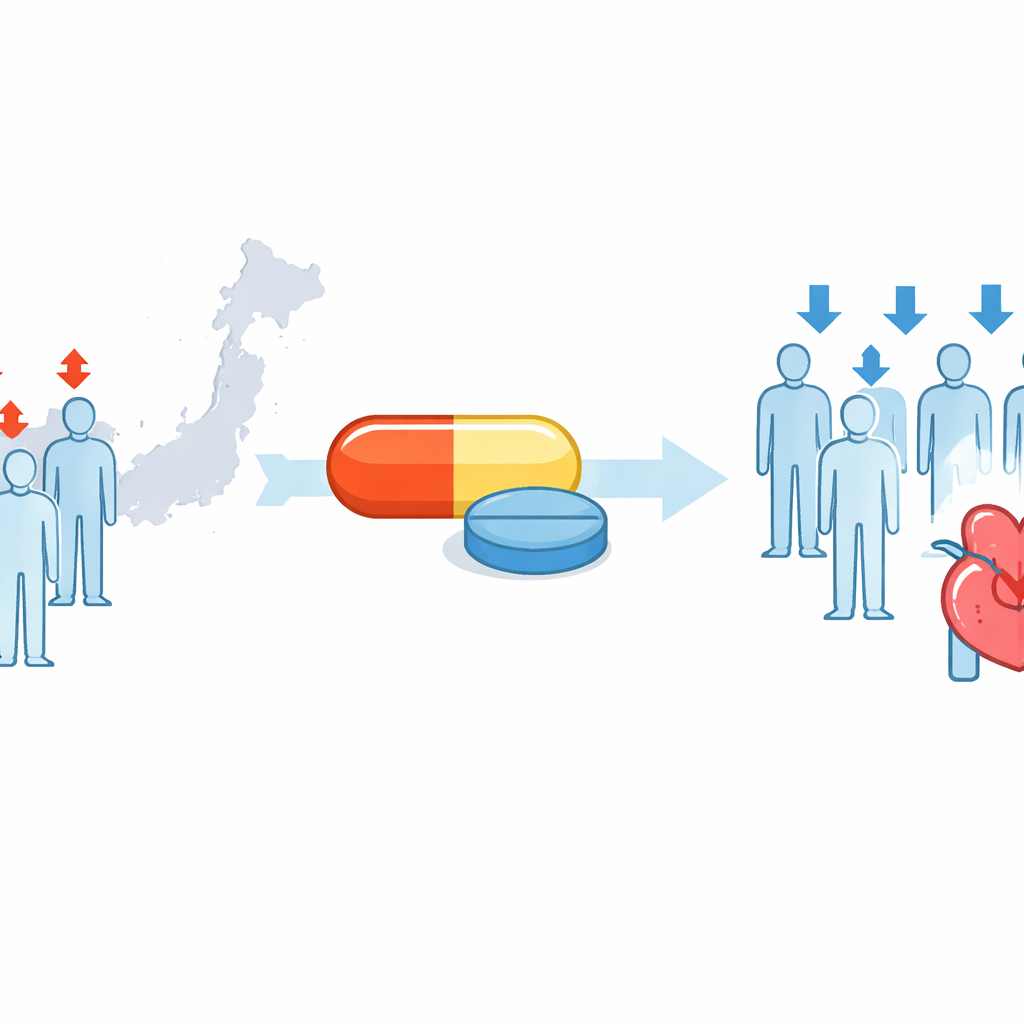
Instead of running an experiment in a few hospitals, the researchers tapped into a huge electronic health record database that includes about 14 million patients from around 4700 clinics across Japan. From this, they identified over 1400 adults with essential hypertension—persistent high blood pressure not caused by another disease—who started sacubitril/valsartan tablets. All had blood pressure at or above 140/90 mmHg when they began, and their records had to show readings both at the start and again around two months later. Most were older adults, with an average age of about 71, and many already had other heart, kidney, or blood fat problems. This design allowed the team to see how the drug worked in the messy reality of routine care.
How Well Did Pressures Come Down?
After about eight weeks of treatment, nearly one in three patients achieved the blood pressure levels recommended by Japan’s 2019 hypertension guidelines. On average, the top number (systolic pressure) fell by about 16 points and the bottom number (diastolic pressure) by about 6 points—changes large enough to meaningfully reduce the risk of heart attacks and strokes over time. People whose blood pressure started in the mild range (called Grade I) were more likely to reach their individual targets than those with more severe hypertension. Interestingly, patients aged 75 and older, and those with a history of stroke or other brain vessel disease, were also more likely to hit guideline goals, partly because the older group had slightly less strict targets under the 2019 rules.
How Doctors Actually Used the Drug
Many patients were already taking several blood pressure medicines before sacubitril/valsartan was added. The most common partner drug was a calcium channel blocker, a long-established class that relaxes blood vessels. Among people whose pressure dropped by at least 10 points, the single most frequent pattern was a combination of sacubitril/valsartan plus a calcium channel blocker. In many of these cases, doctors switched patients from an earlier mix of a calcium channel blocker plus a different drug class (an angiotensin receptor blocker) to this new pairing. This suggests that in real-world Japanese practice, sacubitril/valsartan is often introduced not as a first step, but as an upgrade when standard combinations no longer keep pressure under control.
Side Effects and the Role of Seasons
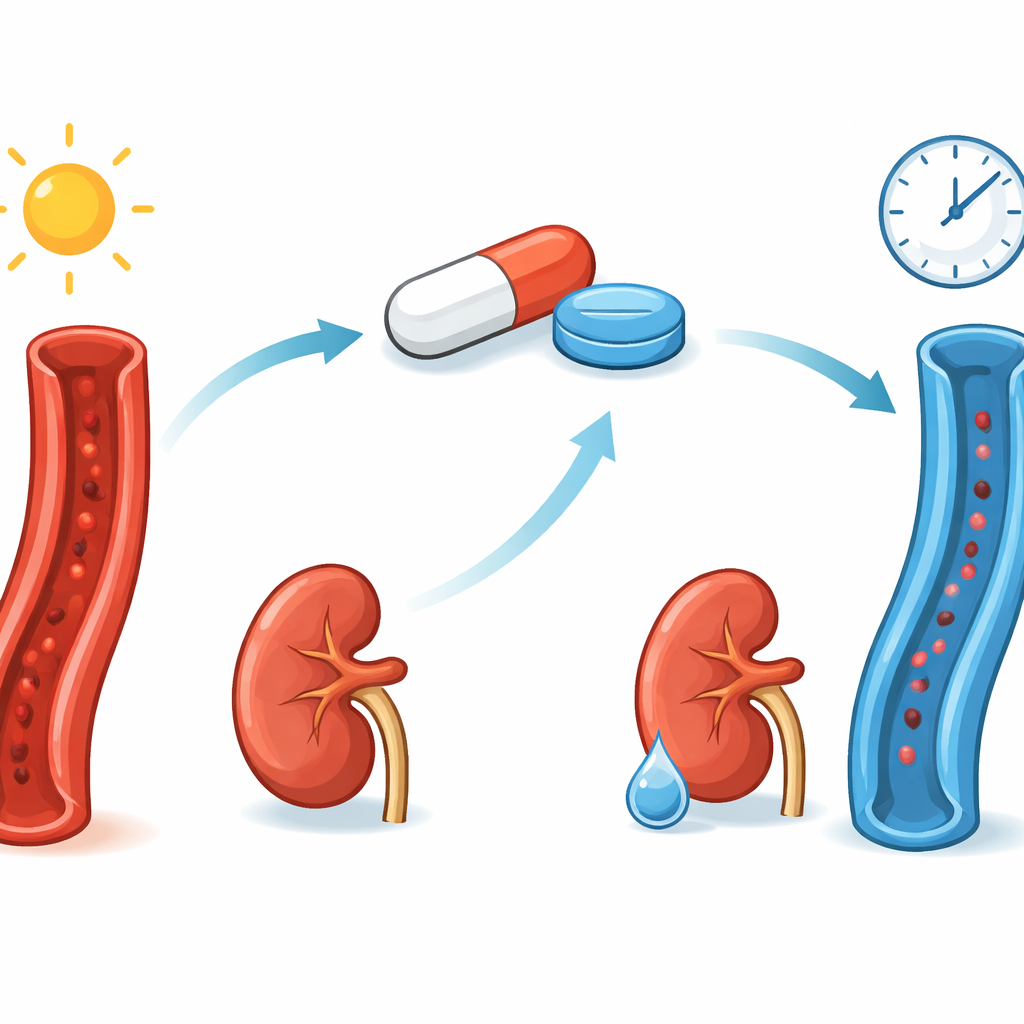
No medicine is free of downsides, so the study also tracked warning signs linked to low blood pressure or fluid loss. The most common issues were symptoms of lightheadedness or faintness, and signs of dehydration or frequent urination. These events appeared in a modest share of patients, and only about 1% stopped sacubitril/valsartan because of low blood pressure and less than 1% because of dehydration-related problems. Many of the affected patients were also taking water tablets (diuretics) or had kidney disease, making them more sensitive to shifts in fluid volume. These problems clustered in the summer months, when hot weather naturally pulls more water from the body, highlighting the need to adjust doses and watch fluid intake as seasons change.
What This Means for Patients
For Japanese adults with hard-to-control high blood pressure, this large real-world study shows that treatment plans including sacubitril/valsartan can meaningfully lower blood pressure and are generally safe when monitored carefully. About one in three patients reached guideline targets within two months, especially those with milder hypertension, older age, or past brain vessel disease. Pairing the drug with a calcium channel blocker was common and often effective, but required attention to dizziness, thirst, and other signs of low pressure or dehydration—particularly in hot weather. As Japan’s guidelines move toward a single, stricter blood pressure goal for all adults, future research will need to confirm whether this drug combination can help more patients meet these tougher targets while staying safe.
Citation: Katsuya, T., Nakatsu, F., Eguchi, S. et al. Impact of treatment strategies incorporating sacubitril/valsartan on achievement of guideline-recommended blood pressure targets and representative safety outcomes. Hypertens Res 49, 1232–1244 (2026). https://doi.org/10.1038/s41440-025-02537-w
Keywords: hypertension, sacubitril valsartan, blood pressure control, Japanese patients, real world evidence