Clear Sky Science · en
Renin-angiotensin system inhibitor use and cardio-renal outcomes in non-proteinuric chronic kidney disease: a post-hoc analysis of the Frontier of Renal Outcome Modification-Japan study
Why this matters for everyday health
Many people live for years with chronic kidney disease without feeling sick, yet they face a higher risk of heart attacks, strokes, and kidney failure. Doctors often prescribe drugs that block the body’s renin–angiotensin system, a hormone network that helps control blood pressure, because these medicines clearly protect the heart and kidneys in patients who leak protein into their urine. This study asked a simple but important question: do those same drugs meaningfully help a different, very common group—people with chronic kidney disease who do not have protein in their urine?
Two kinds of kidney patients
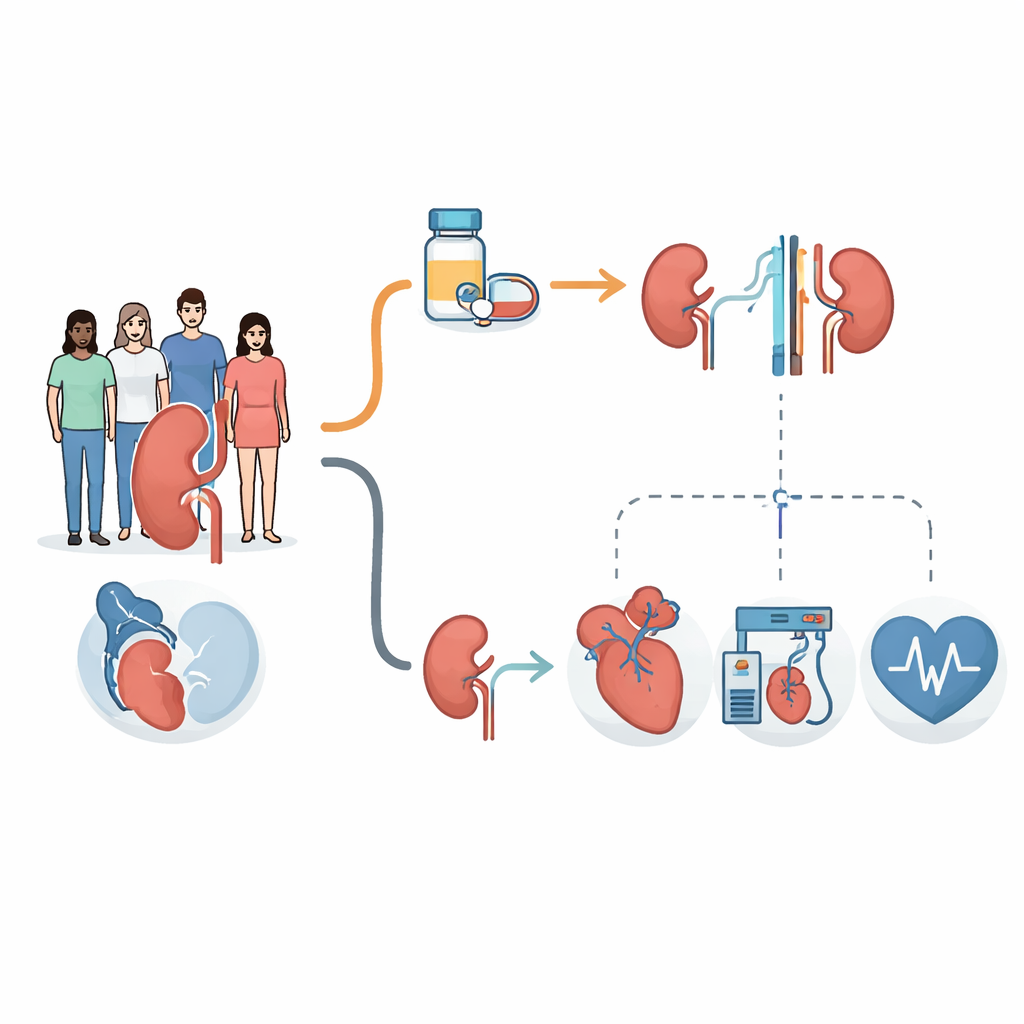
Chronic kidney disease is not one single illness. Some patients lose protein into their urine, a red flag that the kidney’s filtering units are under pressure and leaking. Others have kidney damage without this leakage, often due to scarring in the tissue between the filters, long-standing high blood pressure, or inherited conditions. These “non-proteinuric” patients show up frequently in clinics, but they have been underrepresented in big clinical trials. As a result, doctors have largely assumed that treatments proven helpful in protein-leaking disease will work just as well for them—a leap this Japanese team set out to test.
Taking a closer look at everyday care in Japan
The researchers performed a detailed follow-up analysis of the Frontier of Renal Outcome Modifications in Japan (FROM-J) study, a large project that tracked adults with chronic kidney disease treated by community doctors. From more than 2,300 participants, they focused on 630 whose urine tests showed little or no protein, meaning their kidney filters were not noticeably leaky. Most of these patients—about three out of four—were taking renin–angiotensin system inhibitors such as ACE inhibitors or angiotensin receptor blockers, while the rest were treated with other approaches to control blood pressure and risk factors.
Comparing real-world outcomes
The team followed these patients for several years and recorded major health events. They combined three serious outcomes into one main measure: heart and blood-vessel problems (such as heart failure, heart attacks, or strokes), the start of long-term dialysis or kidney transplantation, and death from any cause. They also examined each of these outcomes separately. Because the patients taking renin–angiotensin drugs tended to be slightly younger and more likely to have diagnosed high blood pressure and to use other blood-pressure pills, the researchers used statistical methods to even out these differences and make a fair comparison between the two groups.
What the numbers showed—and did not show
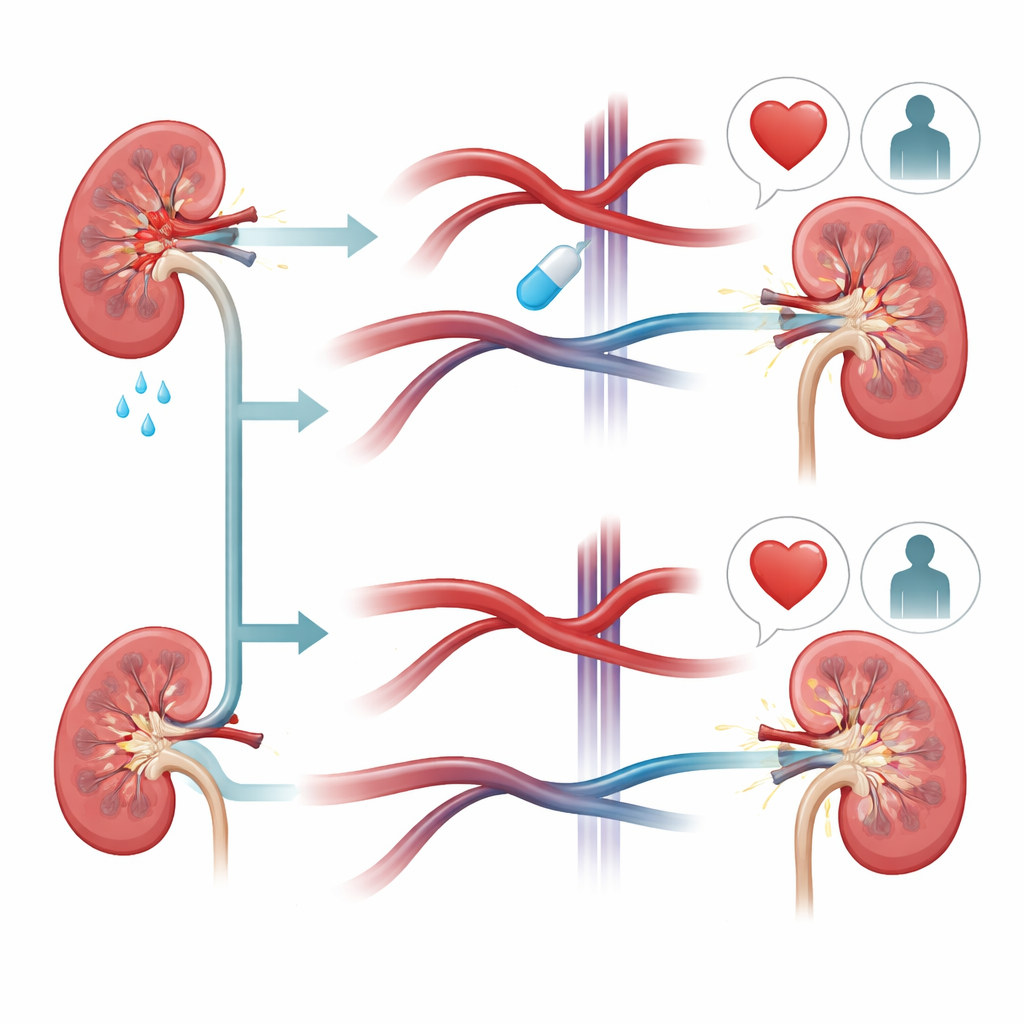
Over the follow-up period, about one in six patients in the renin–angiotensin drug group and one in eight patients in the comparison group experienced the combined outcome of heart problems, kidney failure treatment, or death. After adjusting for age, kidney function, diabetes, and other health details, this difference was not statistically meaningful. The same held true when the researchers looked at deaths alone, heart and blood-vessel events alone, or the start of dialysis and transplantation alone. They also repeated the analyses in different subgroups and in patients tracked by how long they stayed on the drugs, and they checked whether these medicines slowed the decline in kidney filtering or prevented the later development of protein in the urine. Across these careful checks, they still found no clear protective effect.
Rethinking one-size-fits-all treatment
These findings suggest that the benefits of renin–angiotensin system blockers, so well established in patients whose kidneys leak protein, cannot simply be assumed in those whose urine tests are normal despite chronic kidney disease. In non-proteinuric disease, the main damage often lies outside the filtering units, in the supporting tissue and tubules, where these drugs may have less impact. For patients and their doctors, this work signals that medication choices should be more individualized, with closer attention to how a person’s particular type of kidney disease behaves. It also highlights the need for new studies and treatments tailored to the large and growing group of people with non-proteinuric chronic kidney disease, especially in Asian populations where this study was conducted.
Citation: Sugawara, H., Yoshida, K., Saito, C. et al. Renin-angiotensin system inhibitor use and cardio-renal outcomes in non-proteinuric chronic kidney disease: a post-hoc analysis of the Frontier of Renal Outcome Modification-Japan study. Hypertens Res 49, 1161–1169 (2026). https://doi.org/10.1038/s41440-025-02536-x
Keywords: chronic kidney disease, blood pressure drugs, kidney protection, cardiovascular risk, renin angiotensin system