Clear Sky Science · en
Angiotensin II type 1 receptor signaling promotes bladder cancer progression and its inhibition by Losartan
Blood Pressure Pills and Bladder Tumors
Bladder cancer is common, costly to treat, and often comes back even after surgery. At the same time, millions of people take blood pressure medicines every day. This study asks a striking question: can a familiar hypertension drug, losartan, also help slow certain bladder cancers by shutting down a hidden growth signal used by tumor cells?
A Hidden Switch on Bladder Cancer Cells
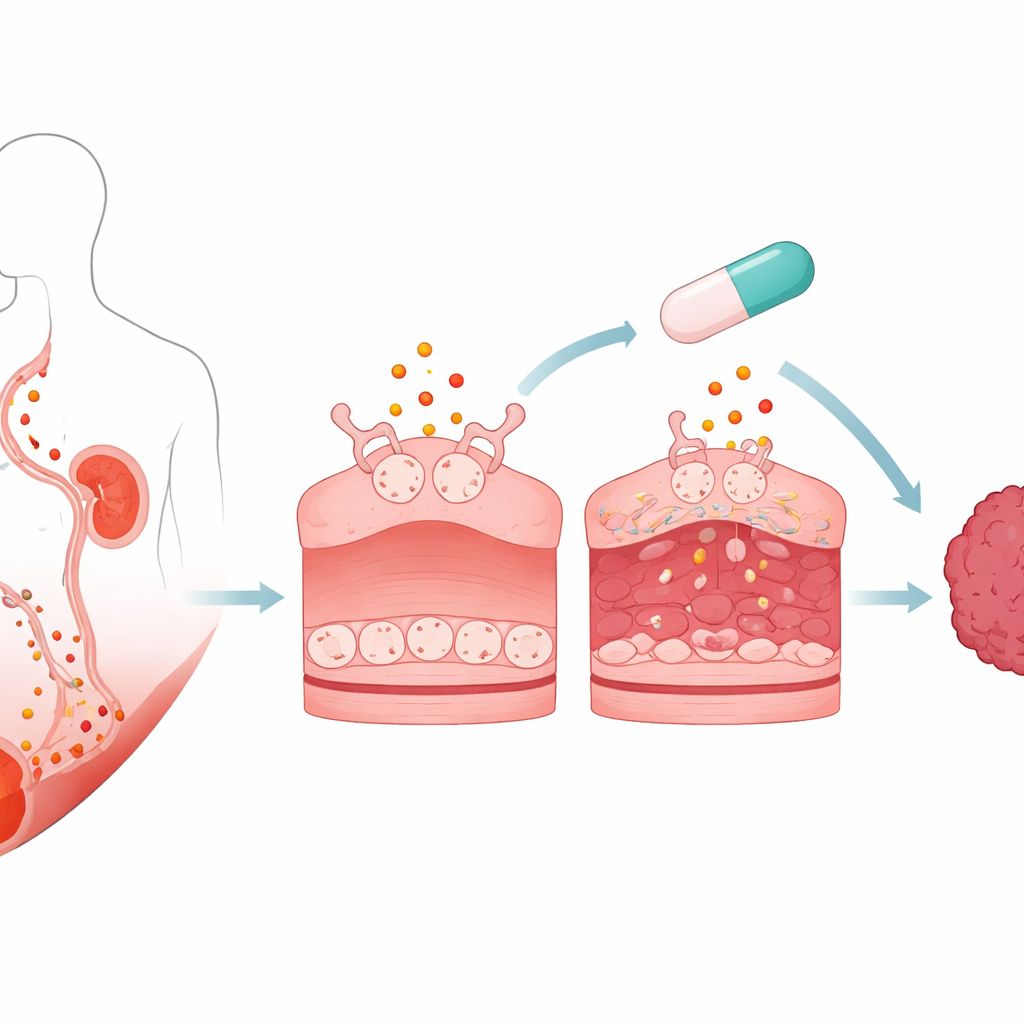
The researchers focused on a protein called the angiotensin II type 1 receptor, or AGTR1, best known for helping control blood pressure. They examined tumor samples from patients with early-stage bladder cancer who had undergone standard surgery to remove tumors from inside the bladder. Using staining techniques to see how much AGTR1 was present on cancer cells, they found that most tumors showed strong AGTR1 levels. Patients whose tumors had more of this receptor were more likely to see their cancer return after surgery. Analyses of large public cancer databases confirmed that people with bladder tumors rich in AGTR1, and in certain related signaling proteins called ERK1 and ERK2, tended to have shorter overall survival.
How a Hormone Signal Spurs Tumor Spread
To explore what AGTR1 actually does inside bladder cancer cells, the team engineered a common bladder cancer cell line to produce extra AGTR1. When these cells were exposed to angiotensin II, the same hormone that normally constricts blood vessels, their behavior changed: they became far more mobile and invasive, slipping through artificial barriers and closing gaps in cell layers more quickly. Interestingly, their growth rate did not increase, suggesting that this signal mainly helps cancer cells move rather than multiply. Inside the cells, angiotensin II rapidly flipped on ERK, a key messenger that encourages aggressive traits, while turning down another pathway, Akt, that is usually linked to survival and growth. The hormone also boosted levels of a nitric oxide–producing enzyme tied to blood vessel formation and cell movement.
Deeper Inside the Tumor’s Control Circuits
Using whole-genome RNA sequencing, the scientists mapped which gene programs were switched on by AGTR1 and angiotensin II. They found strong activation of three major themes: a shift from tightly connected, orderly cells to a more flexible, wandering state (known as an epithelial-to-mesenchymal–like change), the firing of inflammatory NF-κB signaling, and the engagement of mTOR-driven growth control. These same programs are well known to drive cancer spread and resistance to treatment. At the same time, angiotensin II modestly increased both mitochondrial breathing and sugar breakdown in the cancer cells, hinting that the signal gives tumors a small but meaningful boost in energy supply to support their more invasive behavior.
Turning Down the Signal with a Common Drug
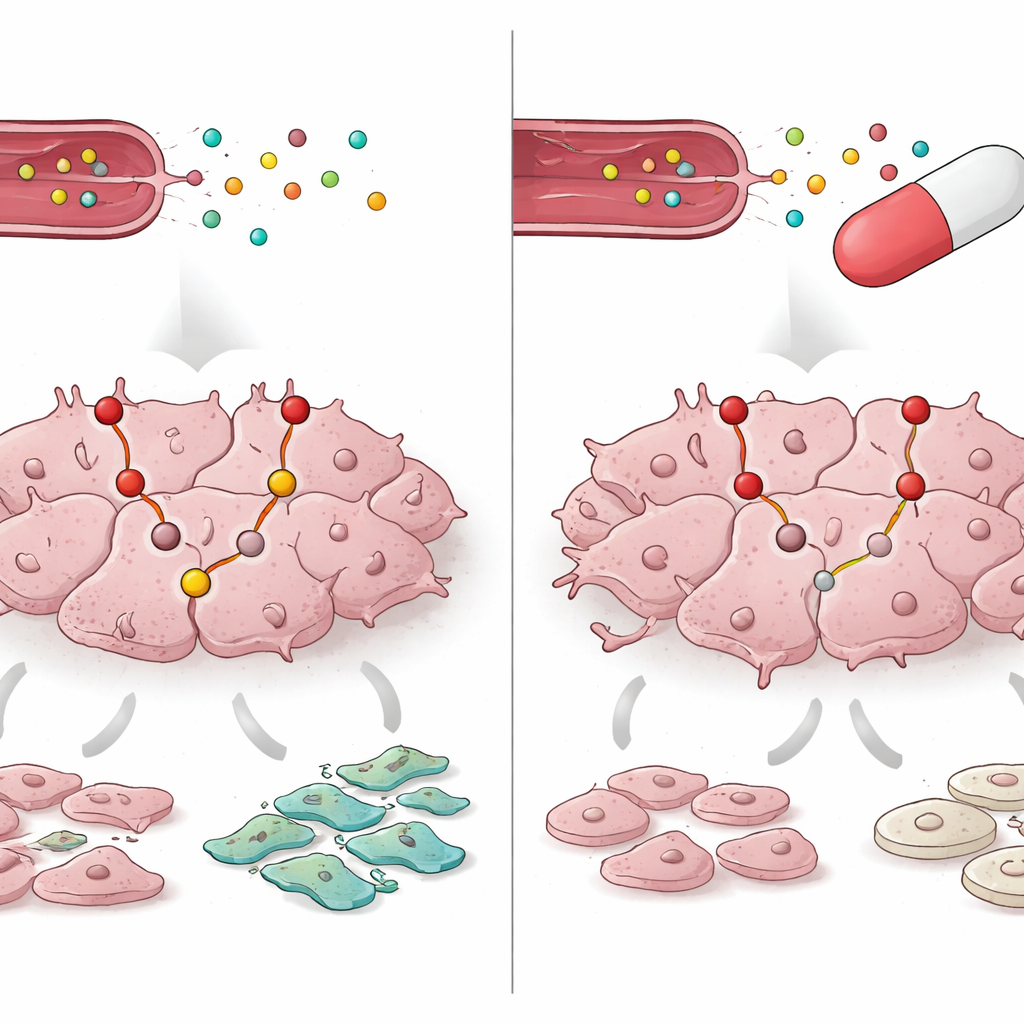
Losartan, a widely used blood pressure pill that blocks AGTR1, was then put to the test. In cell culture, losartan and similar drugs sharply reduced angiotensin II–driven invasion and migration of AGTR1-rich bladder cancer cells, and dampened ERK activation and the inflammatory and epithelial-to-mesenchymal gene programs. In mice implanted with AGTR1-overexpressing bladder tumors, cancers grew faster than control tumors, but feeding the animals losartan slowed later tumor growth and partially restored more “normal,” less mobile cell features at the tumor edge. Not every change could be reversed—particularly the hormone-driven energy boost—but the overall pattern pointed to losartan blunting key steps that make these tumors more aggressive.
What This Means for Patients
Taken together, the results suggest that bladder cancers with high levels of AGTR1 tap into a blood-pressure control system to become more invasive and harder to control. By blocking this receptor with losartan, it may be possible to reduce the chance that such tumors return or progress, especially when used alongside existing treatments. The work also highlights the value of testing tumors for AGTR1 levels: patients whose cancers strongly rely on this pathway might benefit most from repurposing a familiar, relatively inexpensive antihypertensive drug as part of their cancer care.
Citation: Yamanaka, R., Miura, K., Yamasaki, N. et al. Angiotensin II type 1 receptor signaling promotes bladder cancer progression and its inhibition by Losartan. Hypertens Res 49, 1480–1494 (2026). https://doi.org/10.1038/s41440-025-02535-y
Keywords: bladder cancer, angiotensin receptor, losartan, drug repurposing, tumor invasion