Clear Sky Science · en
The modifying effect of chronological age on the predictive value of vascular aging indicators for the long-term cardiovascular events risk
Why the age of your arteries matters
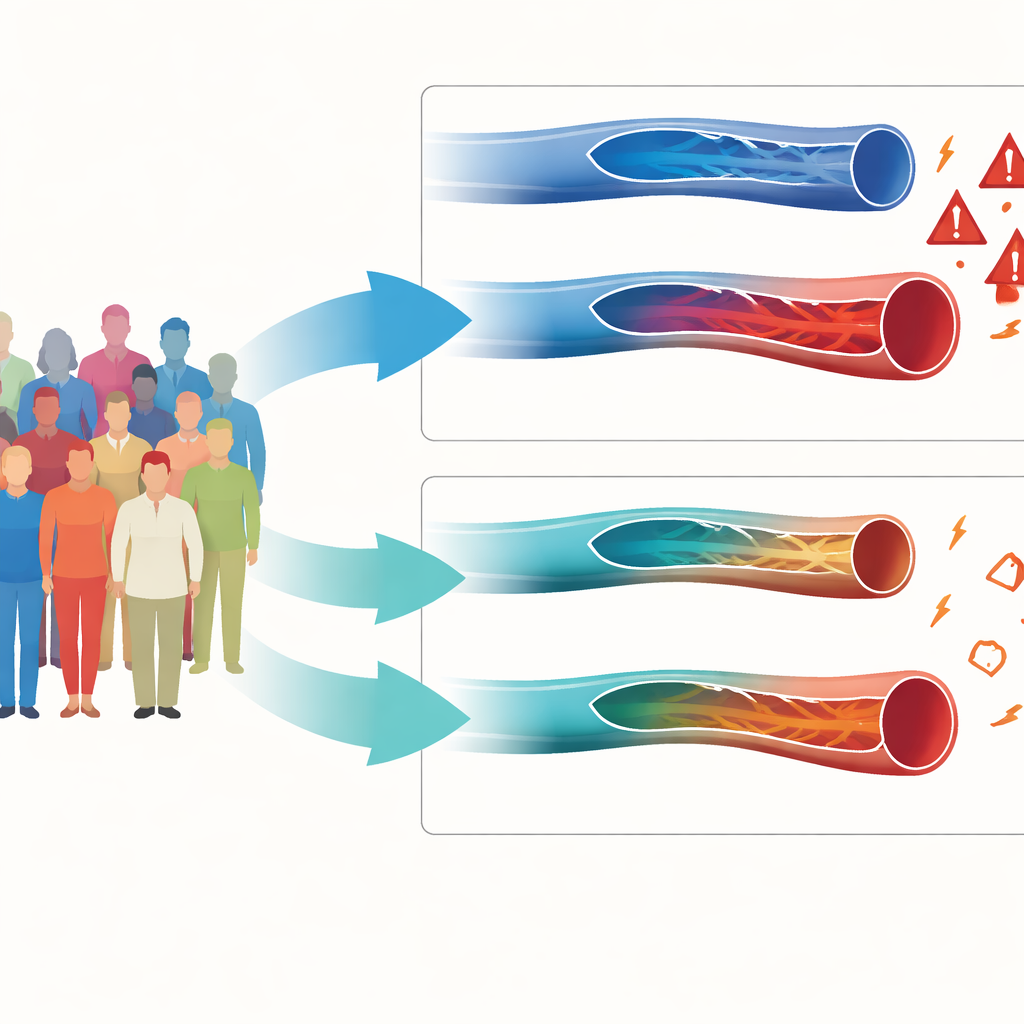
Two people can be the same age in years yet have very different "ages" on the inside. This study looks at the idea that our blood vessels can age faster or slower than the rest of us, and asks a practical question: does this hidden vascular age actually help doctors foresee heart attacks and strokes—and does it work equally well for people in midlife and in older age?
Looking beyond the birthday candle count
Doctors usually estimate a person’s risk of heart disease and stroke using checklists that heavily rely on chronological age—the number of years since birth. That approach can miss middle-aged people whose arteries are already in trouble, and it may lump very different older adults together. To tackle this, researchers use “vascular age,” an estimate of how old someone’s arteries behave based on blood pressure, cholesterol, blood sugar and a measure of artery stiffness called pulse wave velocity. The gap between this vascular age and a person’s actual age, termed Δ-age, captures whether blood vessels are aging early, normally, or better than expected.
A long look at a community in Beijing
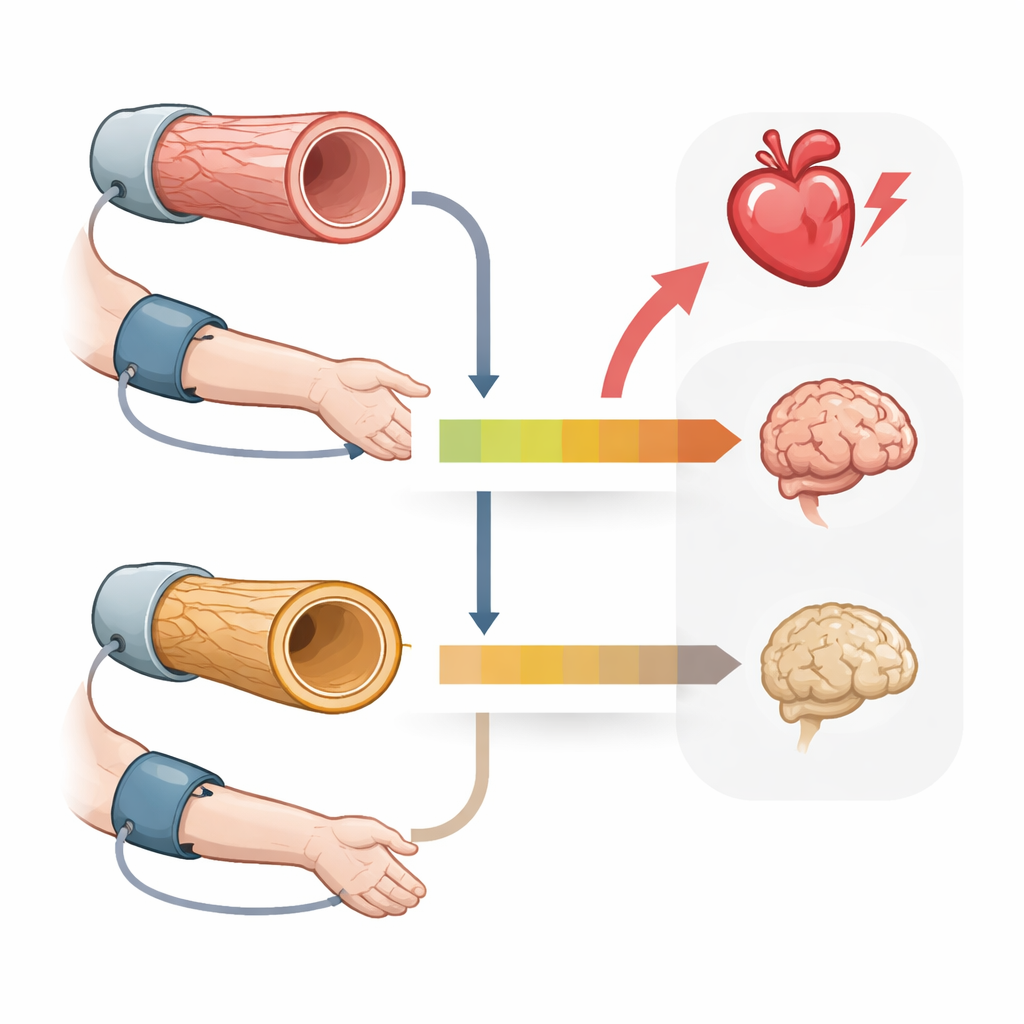
The team followed 8,163 adults from two communities in Beijing, all at least 40 years old when they entered the study between 2011 and 2012. None had recently suffered a heart attack or stroke. At the start, participants answered detailed questions about lifestyle and health history, had their blood pressure and body measurements taken, and gave fasting blood samples. A machine then measured how quickly pressure waves travel from the arm to the ankle; faster waves mean stiffer arteries. Using these data, the researchers calculated each person’s vascular age and then Δ-age—the difference between vascular and chronological age.
Early-aging arteries spell danger in midlife
Participants were grouped by actual age into a middle-aged set (40–59 years) and an older set (60 and above). Over nearly ten years of follow-up, 818 people experienced a major cardiovascular event, such as heart attack, stroke, or death from cardiovascular causes. Among middle-aged adults, every one‑year increase in Δ-age—meaning the arteries behaved one year older than the person’s actual age—was linked to a clear rise in risk, even after accounting for smoking, blood pressure, diabetes, cholesterol, kidney function and an established Chinese 10‑year risk score. Middle-aged adults whose arteries appeared much older than their years faced sharply higher rates of stroke and heart attack, while those with unusually “young” arteries enjoyed noticeably lower risk.
Why the signal fades in later life
In older adults, the pattern looked different. At first glance, higher Δ-age was weakly linked to more cardiovascular events, but once the researchers adjusted for the many health problems that tend to cluster in later life—such as high blood pressure, diabetes and abnormal blood fats—the association faded. In other words, among people 60 and older, knowing that arteries look somewhat older or younger than their chronological age did not add much to what doctors already knew from standard risk factors. The analysis confirmed that chronological age itself changes how useful vascular age is as a warning sign: it is a strong predictor in midlife but much less informative in older age.
What this means for checkups and prevention
For everyday health decisions, the study suggests that tests of artery stiffness and vascular age are most valuable for people in their 40s and 50s. In this group, spotting arteries that are aging early can reveal hidden vulnerability long before traditional risk scores flag serious danger, creating a window to intensify lifestyle changes and treatment. For older adults, cardiovascular risk appears to depend on a broader mix of conditions, so no single index can capture the full picture. Overall, the work supports using vascular age as an extra tool to refine risk prediction in middle-aged adults, while underlining the need for more comprehensive approaches in later life.
Citation: Dong, T., Fan, F., Jia, J. et al. The modifying effect of chronological age on the predictive value of vascular aging indicators for the long-term cardiovascular events risk. Hypertens Res 49, 1150–1160 (2026). https://doi.org/10.1038/s41440-025-02503-6
Keywords: vascular age, arterial stiffness, cardiovascular risk, middle-aged adults, pulse wave velocity