Clear Sky Science · en
Twin pregnancies are risk factors for both early- and late-onset hypertensive disorders of pregnancy: the Japan Environment and Children’s study
Why Twins and Blood Pressure Matter
Expecting twins is often joyful news, but it also brings extra medical questions. One important concern is high blood pressure that begins during pregnancy, which can threaten the health of both mother and babies. This large Japanese study followed more than 86,000 pregnancies to ask a simple but crucial question: do twin pregnancies, and the specific type of twins, raise the chances of developing pregnancy-related high blood pressure early or late in pregnancy?
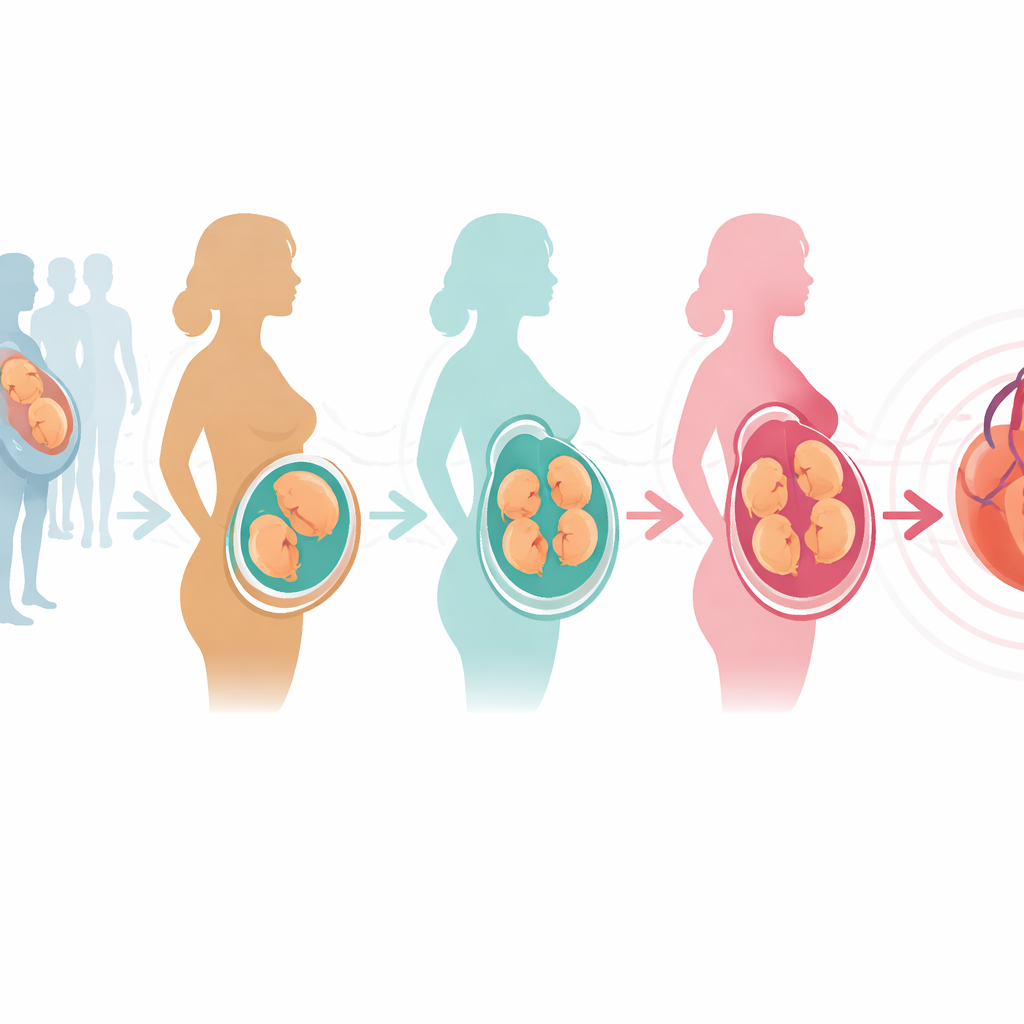
Looking Closely at Types of Twin Pregnancies
Not all twin pregnancies are the same. In some, each baby has its own placenta and sac (called dichorionic diamniotic twins), while in others the babies share a single placenta but have separate sacs (monochorionic diamniotic twins). These differences reflect how early the embryo split and how the placenta formed, and they are already known to influence risks like preterm birth. The researchers wanted to see whether these twin types also differed in their links to high blood pressure disorders of pregnancy, and whether problems tended to appear earlier or later in gestation.
How the Study Was Carried Out
The team used data from the Japan Environment and Children’s Study, a nationwide project that tracks families from pregnancy onward. After carefully excluding women with prior long-standing high blood pressure and several other conditions, they analyzed 86,717 pregnancies: 86,024 with a single baby, 441 dichorionic twins, and 252 monochorionic twins. Using information recorded in medical charts and questionnaires, they noted when high blood pressure first appeared after 20 weeks of pregnancy and grouped cases into early-onset (before 34 weeks) and late-onset (34 weeks or later) disorders. They then used statistical models that accounted for many other influences, including the mother’s age, weight, method of conception, smoking, income, education, and blood pressure early in pregnancy.
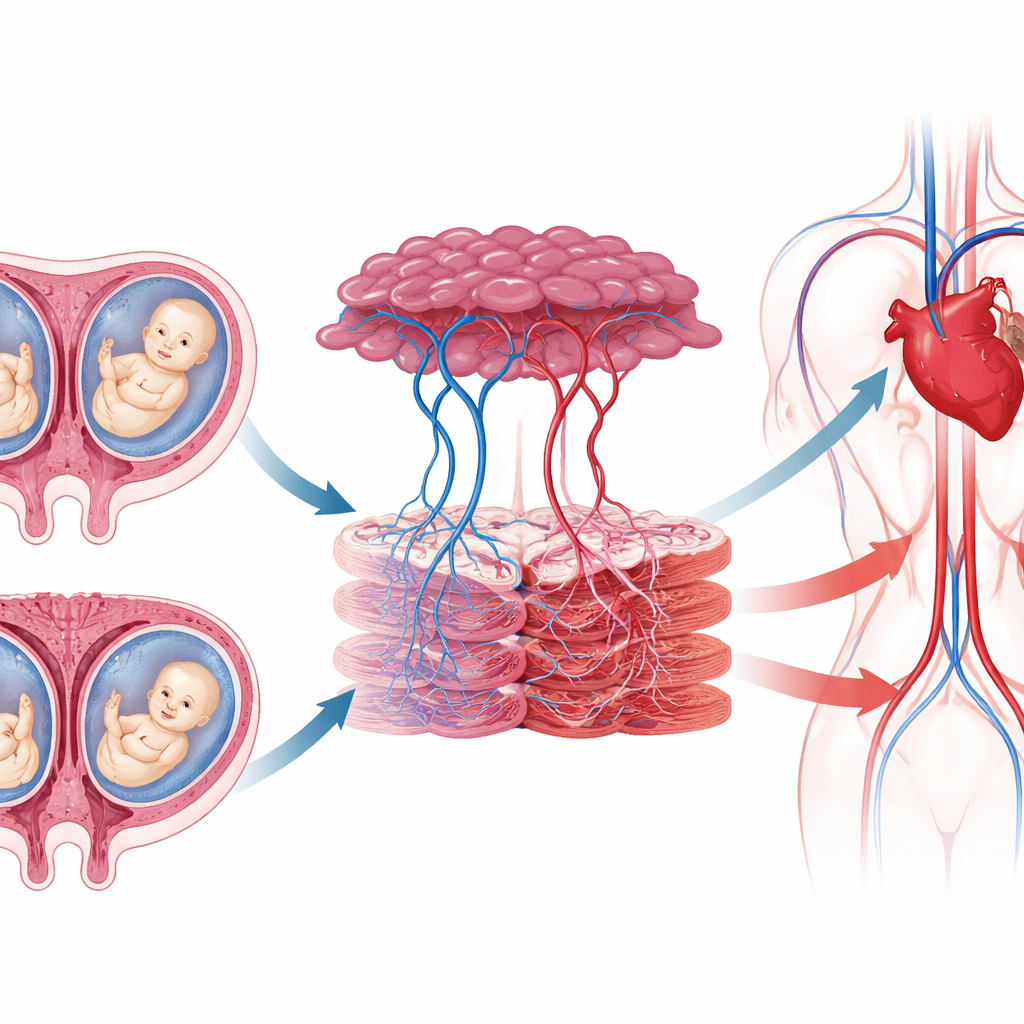
What the Researchers Found
High blood pressure disorders were less common overall but clearly more frequent in twin pregnancies than in pregnancies with one baby. When compared with singletons, both types of twins had roughly double or more the odds of early-onset disease, even after adjusting for other risk factors. For late-onset disease—the kind that appears closer to the due date—the odds were also higher in twins, though the increase was more modest. Within the twin group, pregnancies in which the babies shared one placenta tended to show even higher risk than those with two separate placentas, but these differences were not large enough in this sample to be statistically certain.
Clues About What Might Be Going On
Although this study was not designed to uncover exact biological mechanisms, the findings fit with what is known about the strain that twin pregnancies place on the mother’s circulation. Carrying two fetuses requires greater blood flow and a larger, more active placenta, especially when twins share a single placenta. Earlier research suggests that such pregnancies show stronger signals of placental stress and changes in hormone systems that regulate blood pressure. The current results, which remained even after accounting for blood pressure early in pregnancy, hint that deeper changes in the heart and blood vessels may be at work, particularly in twins sharing one placenta.
What This Means for Families and Doctors
For families expecting twins, these results underline the importance of close blood pressure monitoring from early pregnancy onward. The study shows that both main types of twin pregnancies carry extra risk for high blood pressure, and that problems may appear earlier in twin pregnancies than in pregnancies with one baby. In simple terms, twins ask more of the mother’s body and make high blood pressure more likely. With careful checkups, attention to modifiable risks such as smoking, and future tools like improved blood markers and round-the-clock blood pressure tracking, doctors hope to prevent or catch these disorders sooner, protecting the health of both mothers and their twins.
Citation: Tagami, K., Iwama, N., Hamada, H. et al. Twin pregnancies are risk factors for both early- and late-onset hypertensive disorders of pregnancy: the Japan Environment and Children’s study. Hypertens Res 49, 1170–1181 (2026). https://doi.org/10.1038/s41440-025-02502-7
Keywords: twin pregnancy, preeclampsia, blood pressure in pregnancy, placental function, Japanese cohort study