Clear Sky Science · en
Sodium, potassium and blood pressure in Australian schoolchildren: exploring differences by sex and weight status—a cross-sectional study
Why Your Child’s Salt Intake Matters
High blood pressure is often thought of as an adult problem, but it actually begins to take shape much earlier in life. This study followed hundreds of Australian primary schoolchildren to find out how much salt and potassium they were really eating, how that showed up in their bodies, and how it related to their blood pressure. The findings suggest that many children are consuming more salt than is good for their hearts, and that this may be especially risky for girls and for children living with obesity.
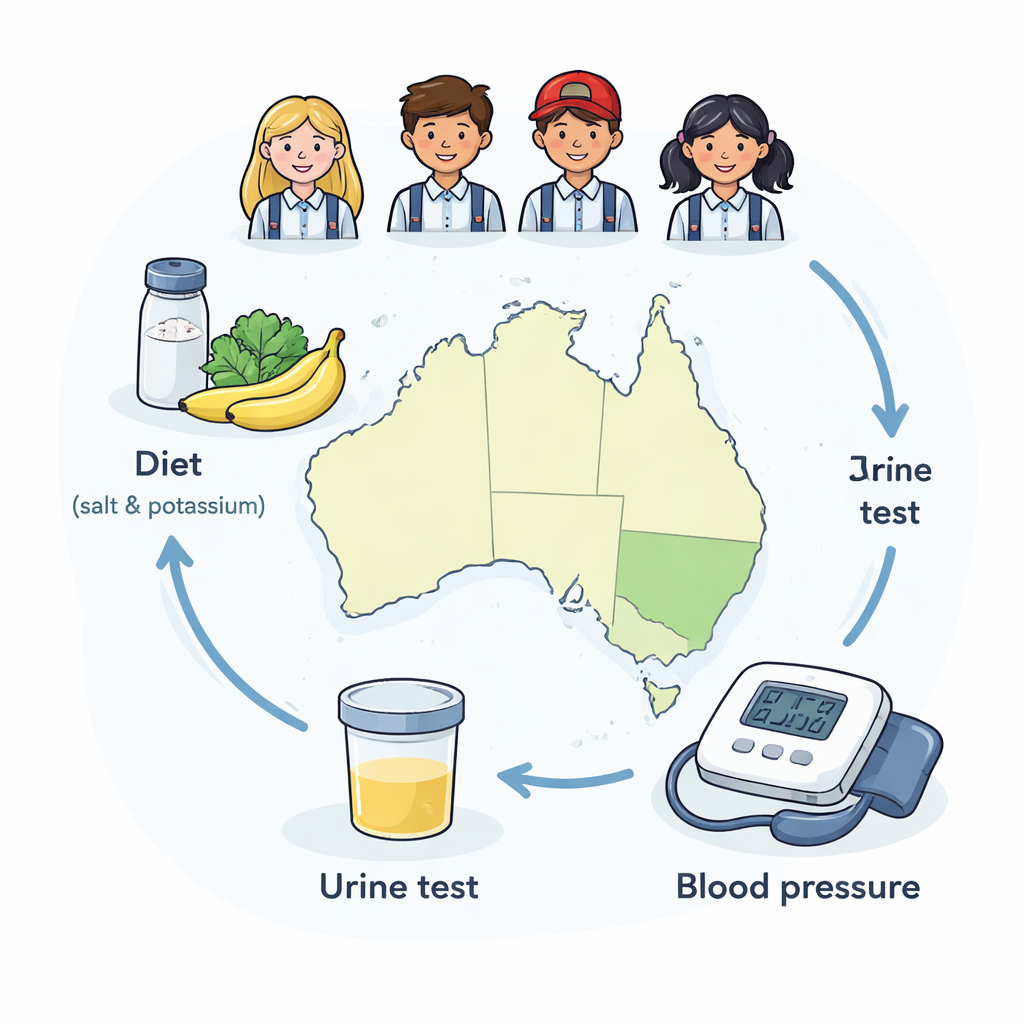
Taking a Close Look at Everyday Eating
Researchers worked with 61 primary schools in Victoria, Australia, eventually including 755 children aged 4 to 12 years. Instead of relying on food questionnaires, which can easily miss hidden salt, the team used 24-hour urine collections, the gold-standard method for estimating how much sodium (from salt) and potassium children actually consume. They also measured each child’s blood pressure, height, weight, and basic background information, such as school neighborhood and parents’ education.
Too Much Salt, Not Enough Balance
The results painted a clear picture: on average, children were excreting enough sodium to suggest they were eating about 6.2 grams of salt a day—well above recommended limits for their age. About three quarters of the children exceeded national upper guidelines for sodium intake. At the same time, their potassium intake, which mostly comes from foods like fruits, vegetables, and dairy, was relatively low. Nearly one in five children already had blood pressure in the “elevated” range for their age, sex, and height, a worrying sign given that blood pressure tends to track from childhood into adulthood.
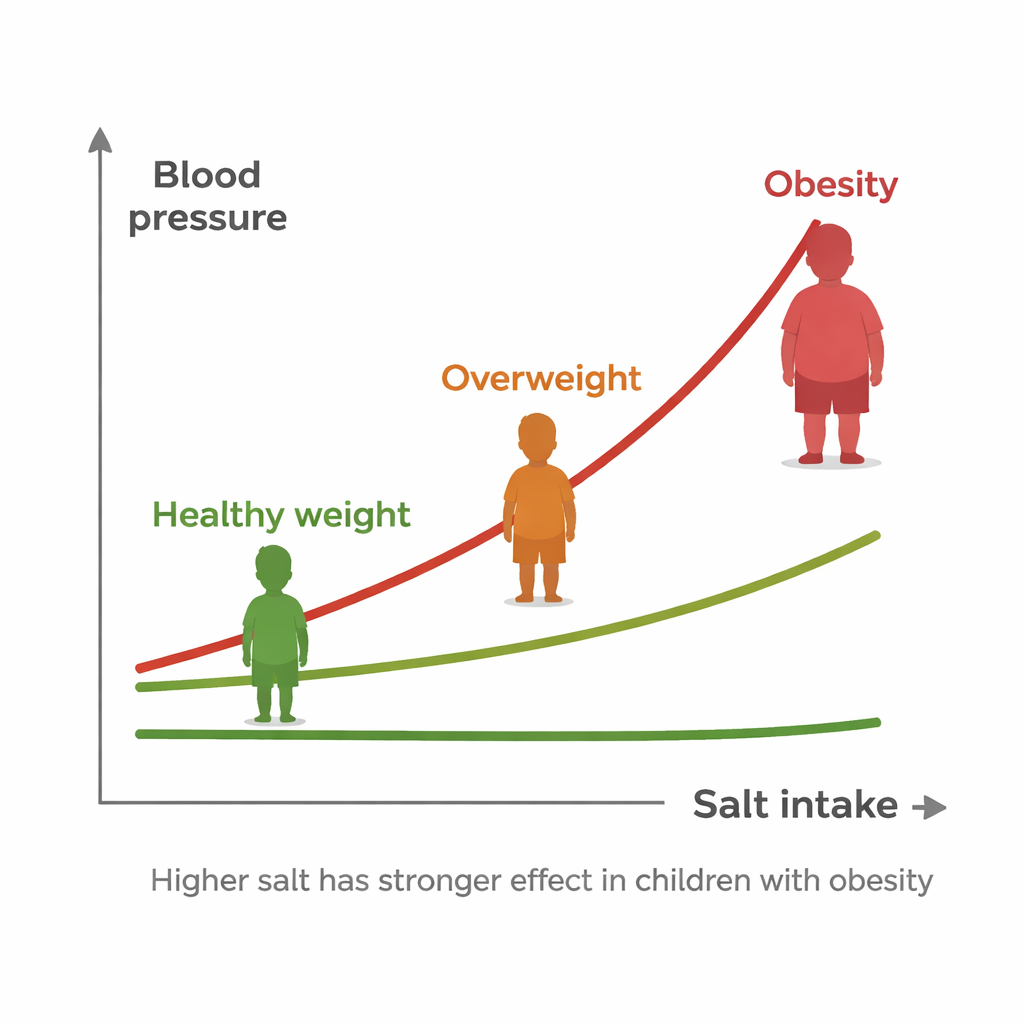
Salt, Blood Pressure, and Which Kids Are Most Affected
When the researchers first looked at the data, higher salt intake appeared to go hand in hand with higher blood pressure. But after they carefully accounted for other factors—such as age, sex, weight, and school setting—the overall link in the full group was weaker and no longer statistically certain. However, when they examined subgroups, important patterns emerged. Among girls, higher sodium excretion remained linked to higher systolic blood pressure, the “top” number that reflects pressure when the heart beats. And when children were grouped by weight, those living with obesity showed a much steeper rise in systolic blood pressure with higher salt intake than children of healthy weight.
Why Weight and Potassium Also Matter
The findings suggest that body weight may change how sensitive a child’s blood pressure is to salt. Children with obesity appeared to experience a much larger blood pressure increase for the same amount of extra salt compared with their peers. This supports the idea of “salt sensitivity,” where some bodies react more strongly to sodium. Potassium told a more complicated story. While there were hints that higher potassium might be linked to blood pressure in simple comparisons, these signals disappeared once other influences were considered. Overall, the children’s relatively low potassium intake suggests they were not eating enough potassium-rich foods to offset the impact of their high salt diets.
What This Means for Parents and Policy
In plain terms, many Australian schoolchildren are eating too much salt, not enough potassium, and some already show early signs of strain on their hearts and blood vessels. The study suggests that cutting back on salty foods—especially in children with higher body weight—could help keep blood pressure on a healthier path. At the same time, encouraging a healthy weight and a diet richer in fruits, vegetables, and other potassium-containing foods may offer added protection. While more long-term research is needed, the message for families and public health planners is straightforward: lowering salt and supporting healthy growth in childhood are likely to pay dividends for heart health decades down the road.
Citation: Grimes, C.A., Lim, K., Clark, L. et al. Sodium, potassium and blood pressure in Australian schoolchildren: exploring differences by sex and weight status—a cross-sectional study. Hypertens Res 49, 938–948 (2026). https://doi.org/10.1038/s41440-025-02489-1
Keywords: childhood blood pressure, salt intake, potassium, childhood obesity, heart health