Clear Sky Science · en
Accelerated epigenetic age in hypertension: a systematic review and meta-analysis
Why Blood Pressure and Aging Matter
Most people know that high blood pressure can strain the heart and arteries, but fewer realize it may also make the body itself grow old before its time. This review article explores an emerging idea: that hypertension is tied to “epigenetic age” – a measure of how old our cells look based on chemical tags on DNA. By pulling together more than 160 studies, the authors ask whether people with high blood pressure show signs of faster biological aging, and what this might mean for preventing heart disease.
A New Way to Tell How Old Your Body Is
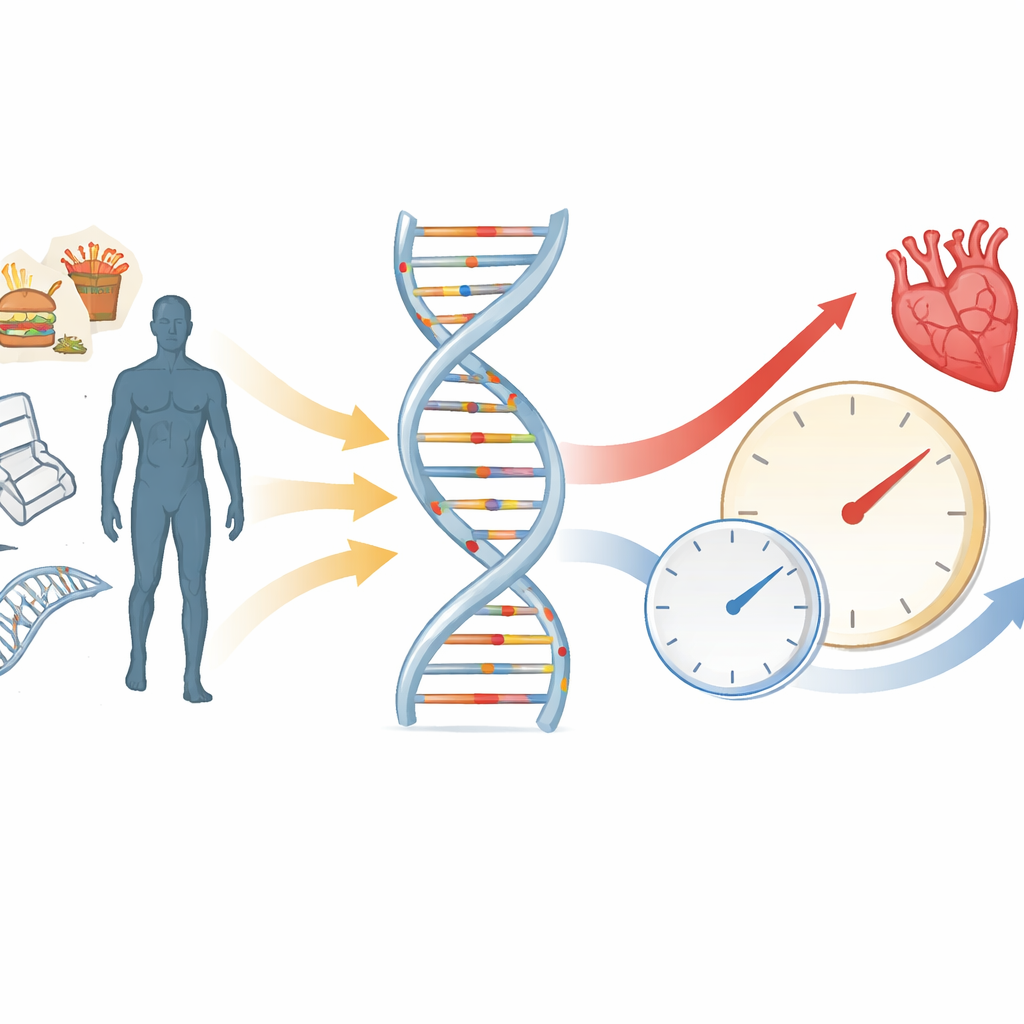
Our birth certificates tell us our chronological age, but our cells can look older or younger than that number. Researchers have learned that certain tiny DNA sites gain or lose methyl groups – small chemical tags – in regular patterns as we age. By reading thousands of these sites at once, they can build “epigenetic clocks” that estimate biological age from a blood sample. If the clock age is higher than a person’s actual age, this is called epigenetic age acceleration, suggesting the body has experienced extra wear and tear. Several generations of these clocks now exist, some based purely on age-related sites and others tuned to predict disease and lifespan.
What the Researchers Looked For
The authors systematically searched six large databases for human studies since 2000 that measured DNA methylation and blood pressure or hypertension in adults. They included work that looked broadly across the genome, focused on specific genes, or calculated epigenetic age. In total, 165 studies from 34 countries met the criteria, covering more than 17,000 people in some individual cohorts and examining blood, saliva, and various tissues. Because the designs and laboratory methods varied widely, most results were summarized qualitatively, but a subset of eight studies using established epigenetic clocks allowed a full statistical meta-analysis.
DNA Marks, Blood Pressure, and Confusing Signals
Across the literature, DNA methylation clearly relates to blood pressure, but not always in simple ways. Studies of “global” methylation – broad measures based on repetitive DNA elements or overall methyl-cytosine content – often found that people with higher blood pressure or diagnosed hypertension had lower levels of methylation, hinting at a general loosening of genome control. Targeted studies of more than 130 individual genes turned up links between methylation and blood pressure for 88 genes, including ones involved in blood vessel tone, salt handling, inflammation, and folate metabolism. However, directions often conflicted from one study to another, reflecting differences in populations, tissues, and statistical power. Large epigenome-wide projects uncovered over a thousand specific DNA sites associated with systolic or diastolic pressure, and pathway analyses pointed toward processes like circadian rhythm control, chromatin structure, and cell signaling.
Hypertension and a Faster Ticking Biological Clock
The clearest picture emerged when the authors focused on epigenetic clocks themselves. Pooling data from 16,136 participants across eight studies, they found that people with hypertension had consistently higher epigenetic age than those without, even after accounting for normal aging. On average, epigenetic age acceleration was modest but significant, and it appeared across three different clock designs (Horvath, Hannum, and PhenoAge), suggesting a broad impact on the genome rather than a single pathway. Importantly, this pattern was strong when high blood pressure was diagnosed by clinical measurements, but much weaker or absent when hypertension was based only on self-report, underscoring how crucial accurate diagnosis is in this type of research.
What This Means for Patients and the Future
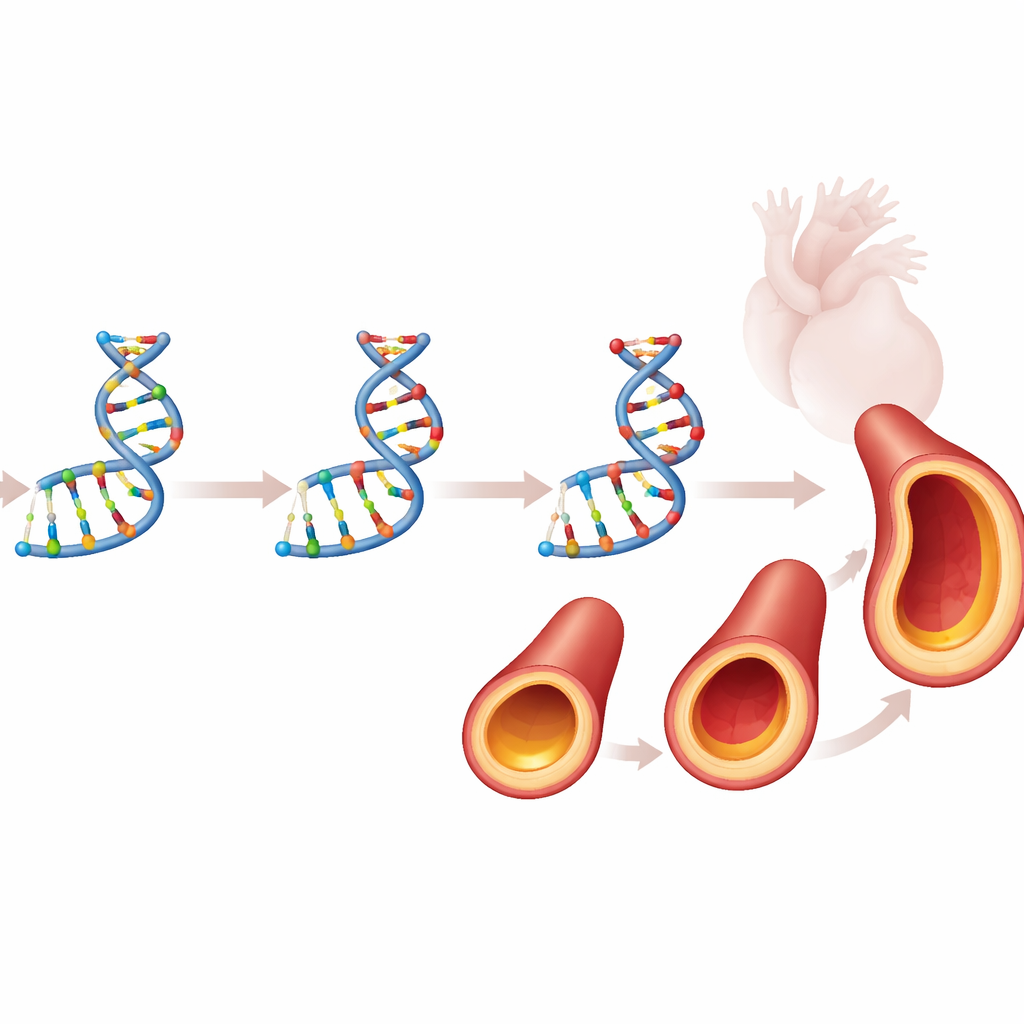
To a non-specialist, the message is that high blood pressure is not just a number on a cuff; it is linked to changes deep within our DNA that make our bodies biologically older. While scientists still do not know whether these epigenetic changes cause hypertension, result from it, or form a self-reinforcing loop, the association is now clear. In the future, epigenetic clocks and specific methylation markers might help doctors spot people whose cardiovascular systems are aging faster than expected and tailor lifestyle or drug treatments accordingly. The authors conclude that carefully measured blood pressure, paired with modern epigenetic tools, could open a new window onto why some people develop hypertension and how to design more precise therapies to slow both blood pressure rise and biological aging.
Citation: Dollin, C., Ward, M., Stafford, M.Y.C. et al. Accelerated epigenetic age in hypertension: a systematic review and meta-analysis. Hypertens Res 49, 1265–1303 (2026). https://doi.org/10.1038/s41440-025-02470-y
Keywords: epigenetic age, hypertension, DNA methylation, biological aging, blood pressure