Clear Sky Science · en
Prognostic impact of systolic blood pressure and antithrombotic strategy in patients with atrial fibrillation and stable coronary artery disease: a post-hoc analysis of the AFIRE trial
Why Blood Pressure and Heart Rhythm Matter Together
Many people live with both “clogged” heart arteries and an irregular heartbeat called atrial fibrillation. Doctors often give strong blood-thinning drugs to prevent clots and heart attacks in these patients, but that raises the risk of dangerous bleeding. This study asks a simple but important question: does a patient’s top blood pressure number (systolic blood pressure) change how safe and effective these blood thinners are—and can some patients do just as well, or better, on fewer drugs?
Two Heart Problems, One Delicate Balancing Act
Atrial fibrillation makes the heart’s upper chambers quiver instead of beating regularly, which can let blood pool and form clots that may cause a stroke. Stable coronary artery disease means the heart’s own blood vessels are narrowed but not in the middle of a fresh heart attack. Standard practice has often combined two types of blood thinners: an anticoagulant to prevent clots from atrial fibrillation, and an antiplatelet drug to protect the heart arteries. The original AFIRE trial, run in Japan, had already shown that a single anticoagulant pill called rivaroxaban was as good at preventing heart and brain events—and safer for bleeding—than taking rivaroxaban plus an antiplatelet pill in these patients. The new analysis goes a step further by asking how patients’ blood pressure at the start of the study shaped their chances of bad outcomes.
Dividing Patients by Blood Pressure
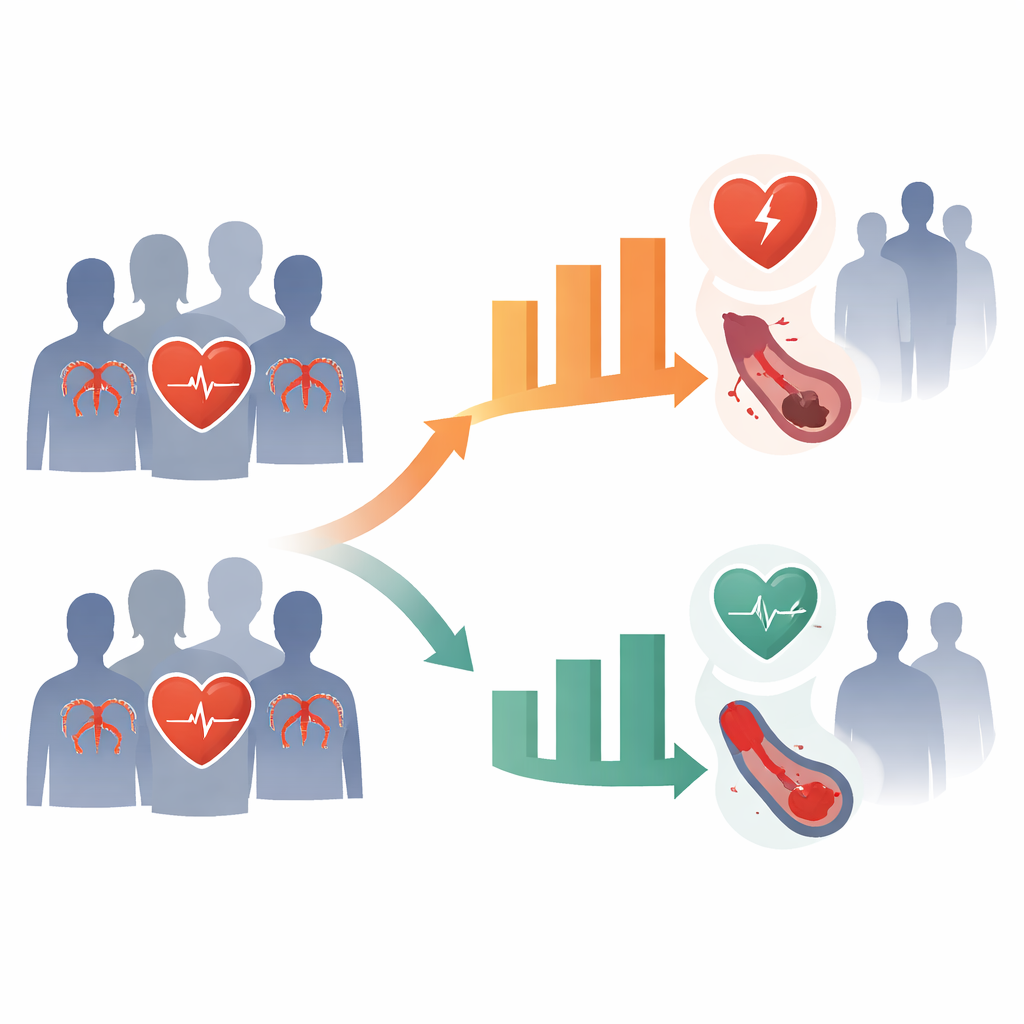
Researchers studied 2,135 people with both atrial fibrillation and stable coronary disease. They split them into two similarly sized groups using the median systolic blood pressure of 126 millimeters of mercury (mmHg) at the time they entered the trial. One group had a higher reading, above 126, and the other had a lower reading, at or below 126. They then followed patients for strokes, heart attacks, hospitalizations for chest pain, deaths from any cause, and major bleeding. To make the comparison as fair as possible, the team used a matching technique to pair patients from the low- and high-pressure groups who shared similar ages, medical histories, kidney function, and other key traits.
Surprising Risk in People with Lower Pressure
Contrary to the common belief that lower blood pressure is always better, patients starting the study with lower systolic pressure had more serious heart and brain problems and deaths than those with higher readings, even after careful matching. In other words, among people who all had both clogged heart arteries and atrial fibrillation, those with lower top blood pressure numbers turned out to be more fragile. They more often had a history of heart failure, previous heart attacks, and reduced kidney function—signs that their hearts and blood vessels were already under strain. One explanation is that when the pressure is too low in this vulnerable group, organs may not get enough blood flow, tipping the balance toward more heart-related events.
Fewer Drugs Looked Better for High‑Risk Patients
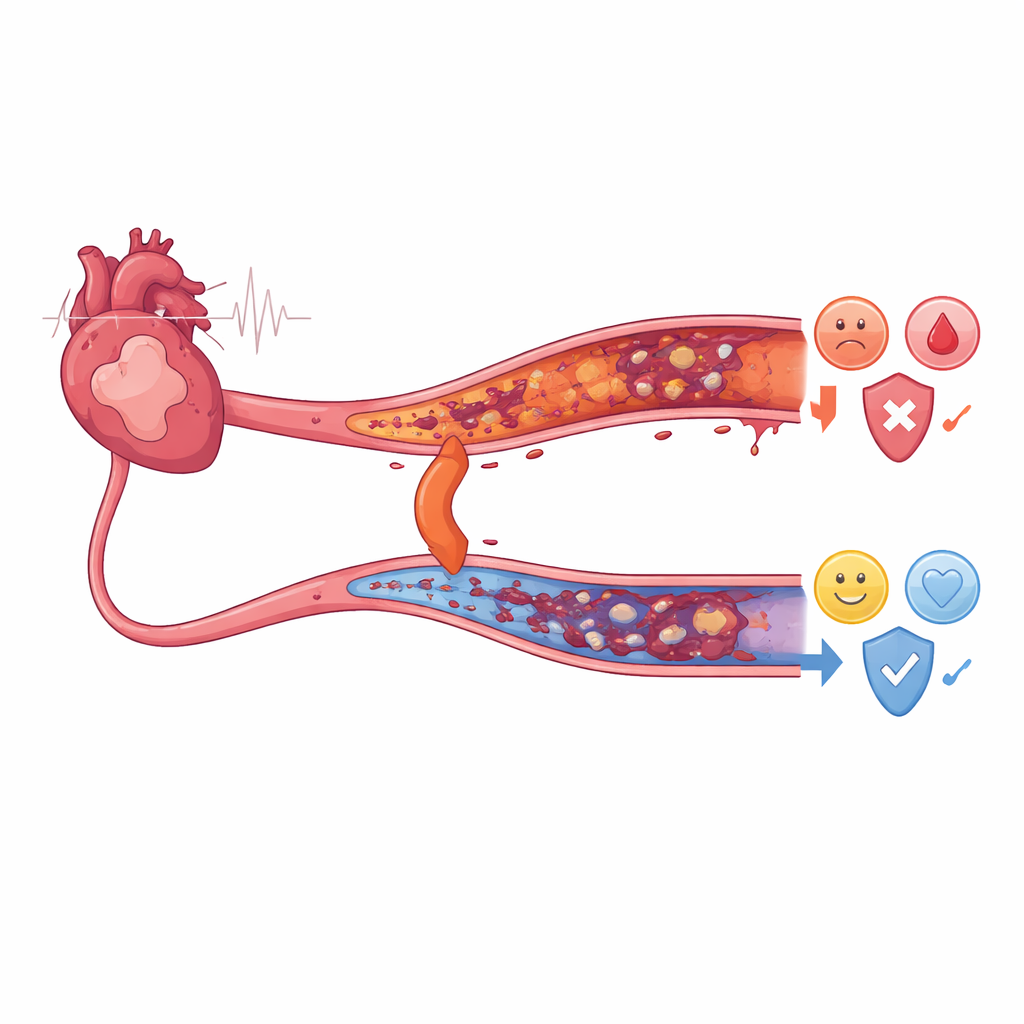
The study also compared those who took rivaroxaban alone with those who took rivaroxaban plus an antiplatelet drug, within each blood pressure group. In the low-pressure group, patients on rivaroxaban alone had fewer combined events of stroke, heart attack, serious chest pain needing a procedure, or death, and they also had less major bleeding. By contrast, in the higher-pressure group, taking the extra antiplatelet pill did not clearly help or harm: outcomes were similar whether patients took one drug or two. This suggests that in patients whose blood pressure is already on the low side and whose overall health is more fragile, simplifying treatment to a single anticoagulant can improve the balance between protecting against clots and avoiding dangerous bleeding.
What This Means for Patients and Care
For people with both atrial fibrillation and stable coronary artery disease, this study highlights that “how low to go” for blood pressure is not straightforward, especially when multiple serious conditions coexist. In this high‑risk group, lower systolic pressure was linked to more heart problems and deaths, and taking only rivaroxaban generally led to better outcomes than combining it with an antiplatelet drug. While the work is based on Japanese patients and looks back at trial data rather than testing a new plan from scratch, it supports a more tailored approach: doctors may want to consider both blood pressure levels and overall fragility when deciding how many blood-thinning drugs to prescribe, and in many lower‑pressure patients, one carefully chosen anticoagulant may be enough.
Citation: Yamanaka, S., Noda, T., Nochioka, K. et al. Prognostic impact of systolic blood pressure and antithrombotic strategy in patients with atrial fibrillation and stable coronary artery disease: a post-hoc analysis of the AFIRE trial. Hypertens Res 49, 1139–1149 (2026). https://doi.org/10.1038/s41440-025-02449-9
Keywords: atrial fibrillation, stable coronary artery disease, systolic blood pressure, rivaroxaban monotherapy, antithrombotic therapy