Clear Sky Science · en
ZMYND11 p.Arg600Trp variant associated with a distinctive neurodevelopmental phenotype
Why this rare gene story matters
Many families struggle with children who develop more slowly than expected, yet never receive a clear explanation. This study zooms in on one rare genetic change, named p.Arg600Trp in the ZMYND11 gene, and shows how it is linked to a recognizable pattern of developmental and physical traits. By carefully documenting one affected child and comparing him with dozens of previously reported cases worldwide, the researchers reveal how subtle variations in the same gene can shape different forms of neurodevelopmental disorder. Their work helps clinicians recognize this condition earlier, guides genetic counseling for families, and hints at how delicate our brain-building machinery really is.
A single patient with many clues
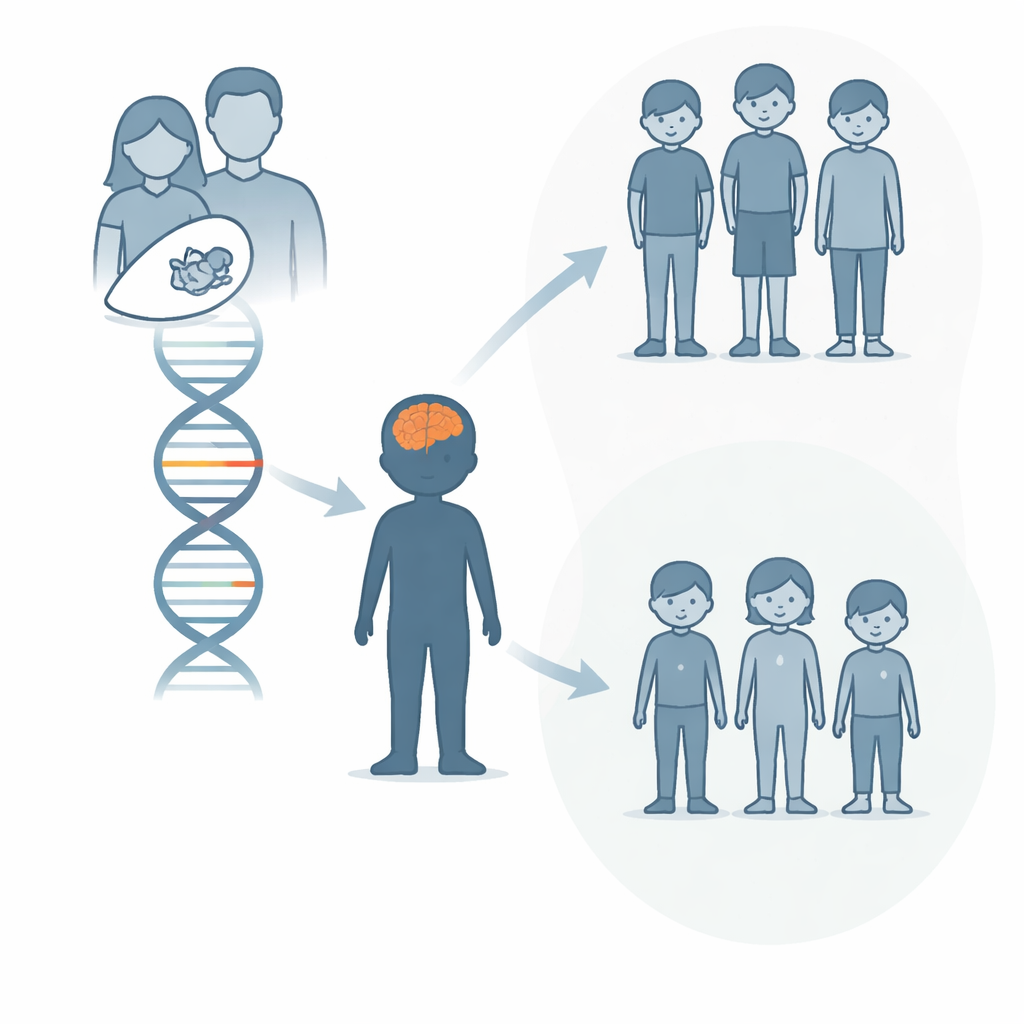
The heart of the report is a boy born slightly small for his gestational age, with a smaller-than-average head and weak muscle tone from birth. He had trouble breathing and feeding and needed care in a neonatal intensive care unit. As he grew, doctors noticed global developmental delay: head control came late, independent sitting took more than two years, and speech and understanding were clearly behind his peers. He also showed distinctive facial and body features, including a broad nasal bridge with wide nostrils, low-set ears, and unusual nipples, along with short stature, an undescended testis, and a right-sided inguinal hernia. Eye misalignment and far-sightedness added to the clinical picture, while brain scans appeared structurally normal.
Discovering the gene change
Standard chromosome tests did not explain the boy’s difficulties. Through Japan’s nationwide Initiative on Rare and Undiagnosed Diseases, the team performed whole-exome sequencing, which reads the protein-coding regions of nearly all genes at once. This revealed a single-letter change in the ZMYND11 gene that alters one amino acid building block at position 600 of the protein. The change was not found in large population databases and was absent in both parents, meaning it arose anew in the child. Computer tools that predict the impact of such changes flagged it as strongly damaging, and international clinical guidelines classify it as a pathogenic variant—evidence that this is very likely the cause of the boy’s condition.
Placing one child in a wider pattern
To understand what this finding means more broadly, the authors combed the medical literature and assembled data from 50 people with changes in ZMYND11. Most previously known cases involve loss-of-function variants, which disable one copy of the gene and are thought to act by simply lowering the amount of working protein. In contrast, only 13 individuals, including the present patient, carried missense variants, where the protein is altered but not completely lost. When the team compared features across these groups, they found that developmental and speech delay and intellectual disability were common to almost everyone, but important differences emerged. People with missense variants, especially those with p.Arg600Trp, more often had severe intellectual disability, low muscle tone, eye misalignment, smaller heads, short stature, and undescended testes—features that were less typical of those with protein-truncating changes.
What the protein normally does
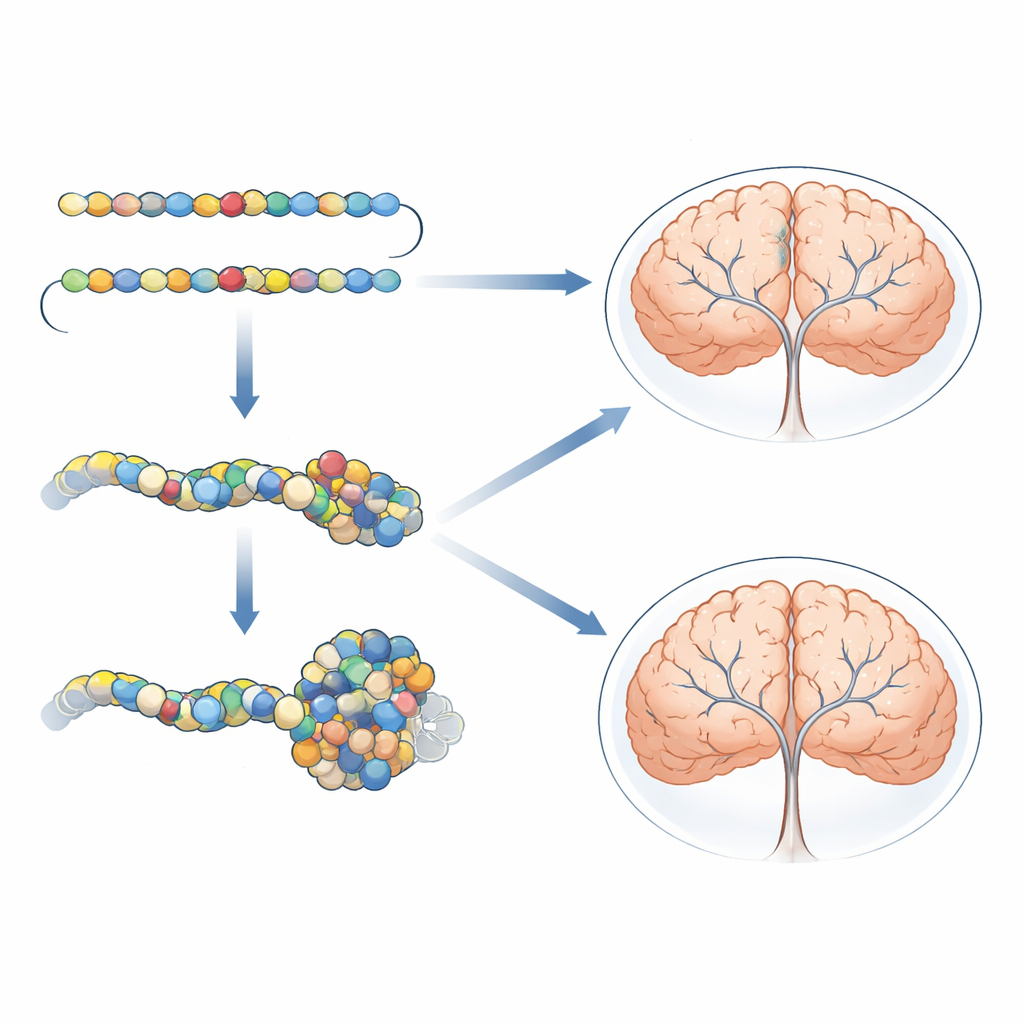
ZMYND11 is not a brain-structure gene in the traditional sense; instead, it acts as a molecular “reader” that binds to specific chemical marks on DNA-packaging proteins and helps fine-tune gene activity. It contains several linked regions, including one called the MYND domain, which uses zinc to hold its shape and to recruit other regulatory proteins. Laboratory studies in mice have shown that losing ZMYND11 disrupts how nerve cells are generated and mature during early development. The p.Arg600Trp change sits in this crucial MYND domain at a position known to be important for binding partner molecules. The authors suggest that this single swapped amino acid may distort the way ZMYND11 assembles its molecular team, not just lowering its activity but perhaps misdirecting it, leading to a pattern of symptoms that is distinct from simple loss of the gene.
What this means for families and future research
For families, the study underscores that a specific genetic diagnosis can turn a bewildering collection of symptoms into a named, understandable condition, even when only a handful of cases are known worldwide. The work shows that the p.Arg600Trp change in ZMYND11 marks a small but recognizable subgroup of neurodevelopmental disorder with consistent growth, facial, and reproductive traits. For scientists, it raises the possibility that some missense variants in regulatory genes may act through more complex mechanisms than simply turning a gene off. Confirming this will require more cases and laboratory experiments, but the message for non-specialists is clear: tiny alterations in the genome’s control machinery can ripple outward into the developing brain and body, and carefully documenting rare patients is essential to revealing these hidden links.
Citation: Yoshimatsu, H., Kido, J., Sawada, T. et al. ZMYND11 p.Arg600Trp variant associated with a distinctive neurodevelopmental phenotype. Hum Genome Var 13, 7 (2026). https://doi.org/10.1038/s41439-026-00339-1
Keywords: neurodevelopmental disorder, ZMYND11, genetic variant, intellectual disability, rare disease