Clear Sky Science · en
Decoding miRNA-Mediated Immunoregulation in SARS-CoV-2, HBV, HIV, and HSV Infections
How Tiny RNA Switches Shape Our Defenses
Why do some people clear viruses quickly, while others develop long‑lasting or severe infections? This review article explores an unexpected answer: tiny genetic switches called microRNAs. These short RNA fragments do not build proteins themselves, but they quietly fine‑tune how our immune system reacts to viruses such as the coronavirus that causes COVID‑19, hepatitis B, HIV, and herpes. Understanding these microscopic regulators could open new paths to smarter diagnostics and treatments that calm harmful inflammation without weakening protection.
Small Messages with Big Impact
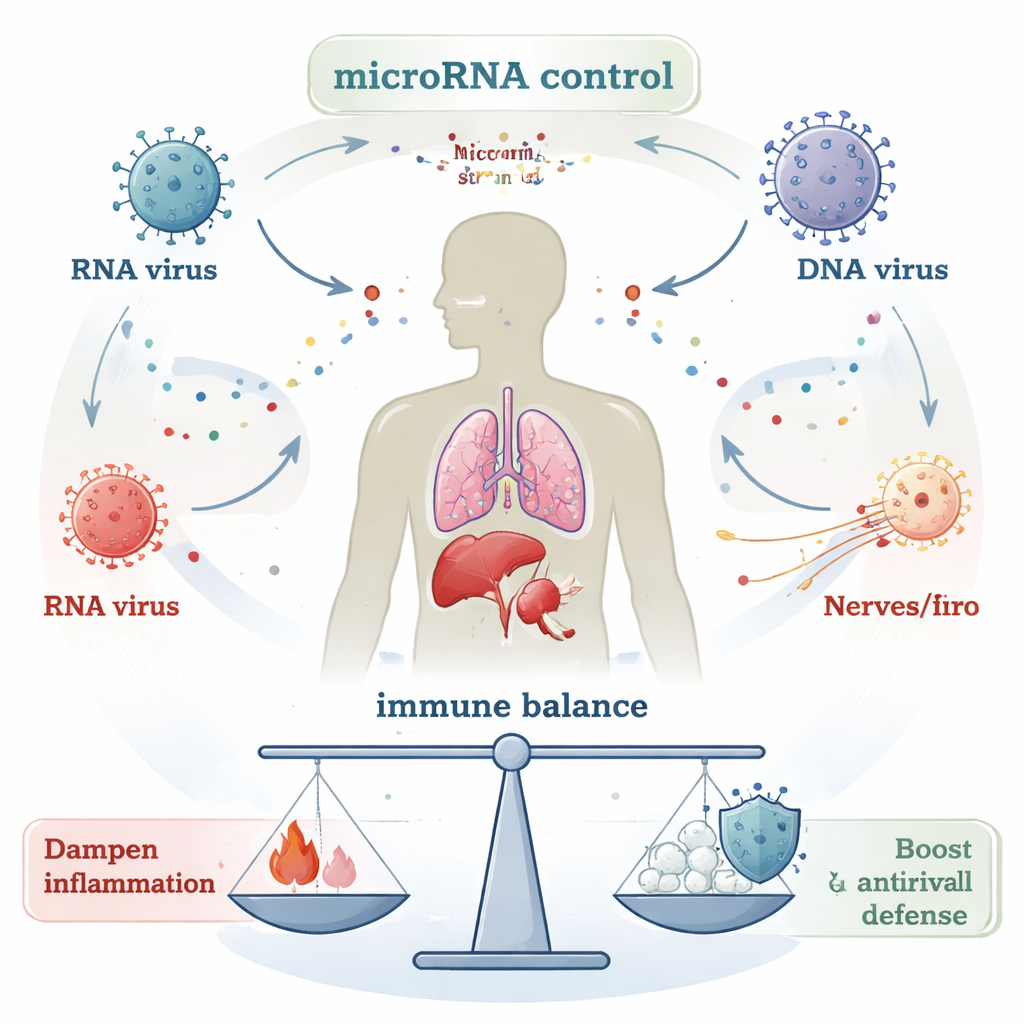
Every cell in our body must decide which genes to turn on and off at any given moment. MicroRNAs act like adjustable dimmers, binding to messenger RNAs and reducing the amount of protein made from them. The authors show that during viral infections, these dimmers do not work in isolation: they operate in extensive networks that also involve other non‑coding RNAs and extracellular vesicles—tiny packets that cells use to exchange molecular messages. Across many studies from the past five years, a recurring theme emerges: microRNAs shape whether the immune response remains balanced and effective or tips into dangerous overreaction and chronic disease.
Four Viruses, Shared Control Knobs
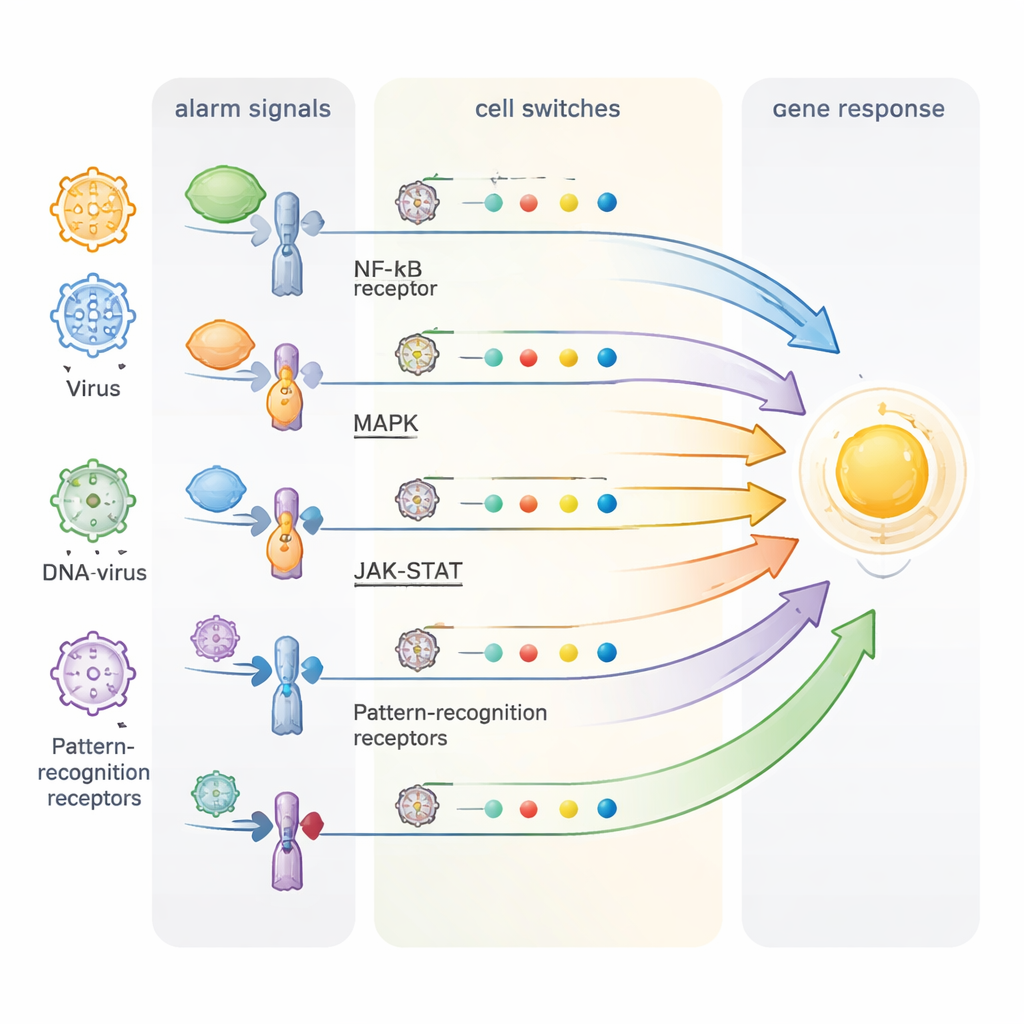
Although the review spans four very different viruses—SARS‑CoV‑2 in the lungs, hepatitis B in the liver, HIV in immune cells, and herpes in nerves and skin—the same core signaling routes keep appearing. These routes include pathways that sense invaders, drive inflammation, relay interferon “antiviral” signals, and control tissue scarring. MicroRNAs such as miR‑21, miR‑146a, miR‑150, and miR‑155 repeatedly turn up as key regulators along these routes. By adjusting how strongly cells respond to alarm signals, these microRNAs influence whether macrophages become pro‑ or anti‑inflammatory, how T cells and natural killer cells attack infected targets, and how efficiently viral fragments are shown to the immune system for recognition.
When Viruses Hack the Regulators
Viruses do not just endure this layer of control—they exploit it. Some, like hepatitis B and herpes simplex virus, even encode their own microRNAs. These viral microRNAs can block molecules that would otherwise limit replication or awaken immune cells, helping the virus to hide in a latent state or persist for years. SARS‑CoV‑2 and HIV mainly reprogram the host’s own microRNAs, tilting the balance toward weaker antiviral defenses or prolonged inflammation. The review also highlights competitive interactions where viral and host microRNAs may target the same genes, acting like rival hands on the same volume knob for immune signaling.
Signals in the Bloodstream
Because microRNAs are stable and can travel in the blood inside protective vesicles, they leave detectable fingerprints of what is happening deep in organs. Patterns of circulating microRNAs can distinguish mild from severe COVID‑19, predict liver scarring in chronic hepatitis B, mark poor immune recovery in treated HIV infection, or flag unusual vulnerability to severe herpes disease. This makes them attractive candidates for blood tests that could forecast who is at risk of complications, who is responding well to therapy, or when a dormant virus is about to reactivate.
From Molecular Maps to Future Medicines
To a lay reader, the central message is that a relatively small set of microRNAs acts as a common control panel for many serious viral infections. By learning exactly how these tiny regulators tune immune pathways—sometimes protecting us, sometimes helping the virus—researchers hope to design precision tools that mimic or block selected microRNAs. Such strategies could one day dampen cytokine storms in COVID‑19, reinvigorate exhausted T cells in chronic hepatitis B or HIV, or prevent painful herpes flare‑ups, all while preserving the body’s essential ability to fight infection.
Citation: Arziman, S., Aydemir, S. & Bozok, V. Decoding miRNA-Mediated Immunoregulation in SARS-CoV-2, HBV, HIV, and HSV Infections. Genes Immun 27, 1–12 (2026). https://doi.org/10.1038/s41435-026-00376-4
Keywords: microRNA, antiviral immunity, viral infections, immune regulation, biomarkers