Clear Sky Science · en
Biologic therapy is associated with reduced ocular disease in psoriasis: a real-world study
Why this matters for people with psoriasis
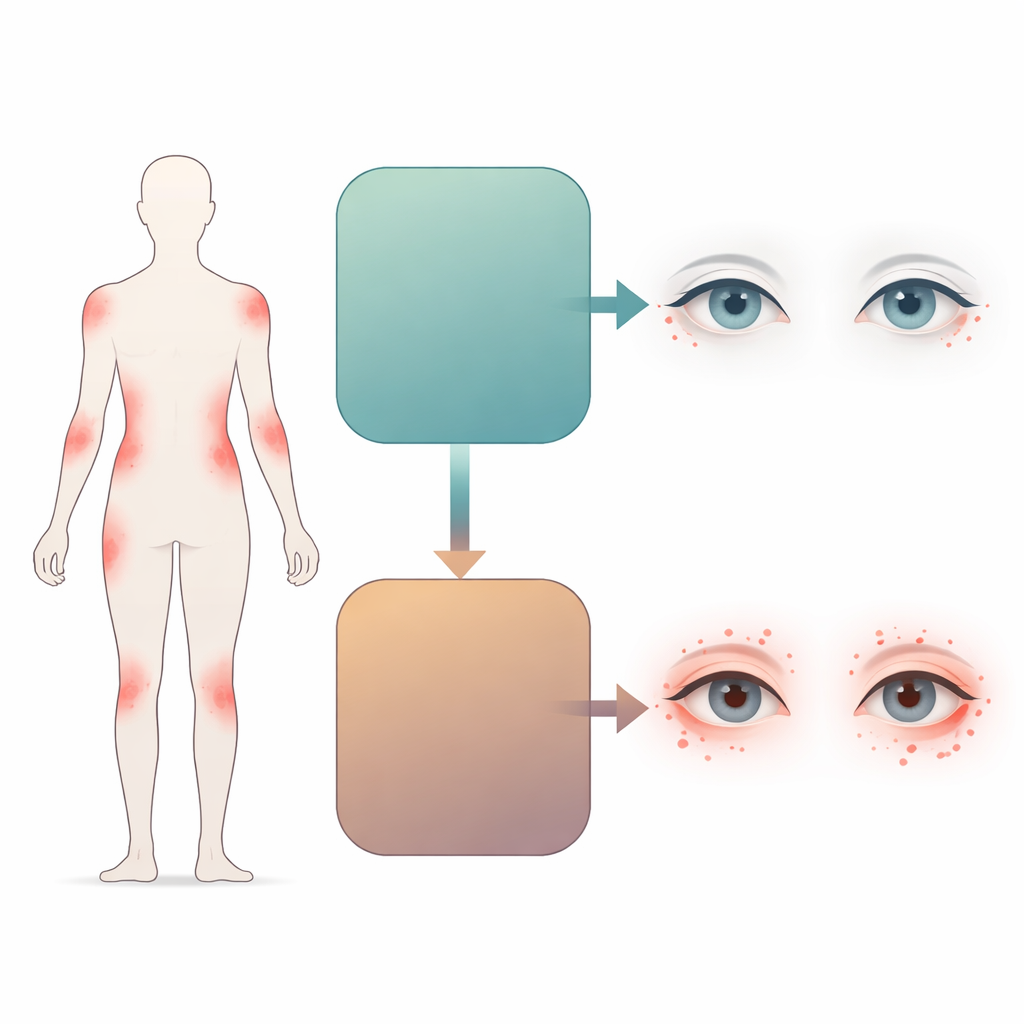
Psoriasis is usually thought of as a skin problem, but it can quietly affect the eyes as well, causing irritation, pain, and even vision changes over time. This study asks a question that matters to many patients and their doctors: do the newer, targeted "biologic" drugs for psoriasis not only clear the skin, but also help protect the eyes compared with older pill-based treatments?
Looking at eyes through a global health window
To explore this, researchers turned to a massive international database of electronic medical records that includes more than 160 million patients. From this resource, they identified adults with psoriasis who started either biologic drugs (which act on specific immune signals) or traditional non-biologic systemic treatments such as methotrexate or cyclosporine. They then followed these patients for up to 10 years, tracking 68 different eye diagnoses, from common surface problems like dry eye and conjunctivitis to deeper conditions such as glaucoma, cataract, and retinal disease. To make a fair comparison between the two groups, the team used a matching method that paired patients with similar ages, sex, common medical problems, and other background factors.
Clear pattern for the eye’s surface
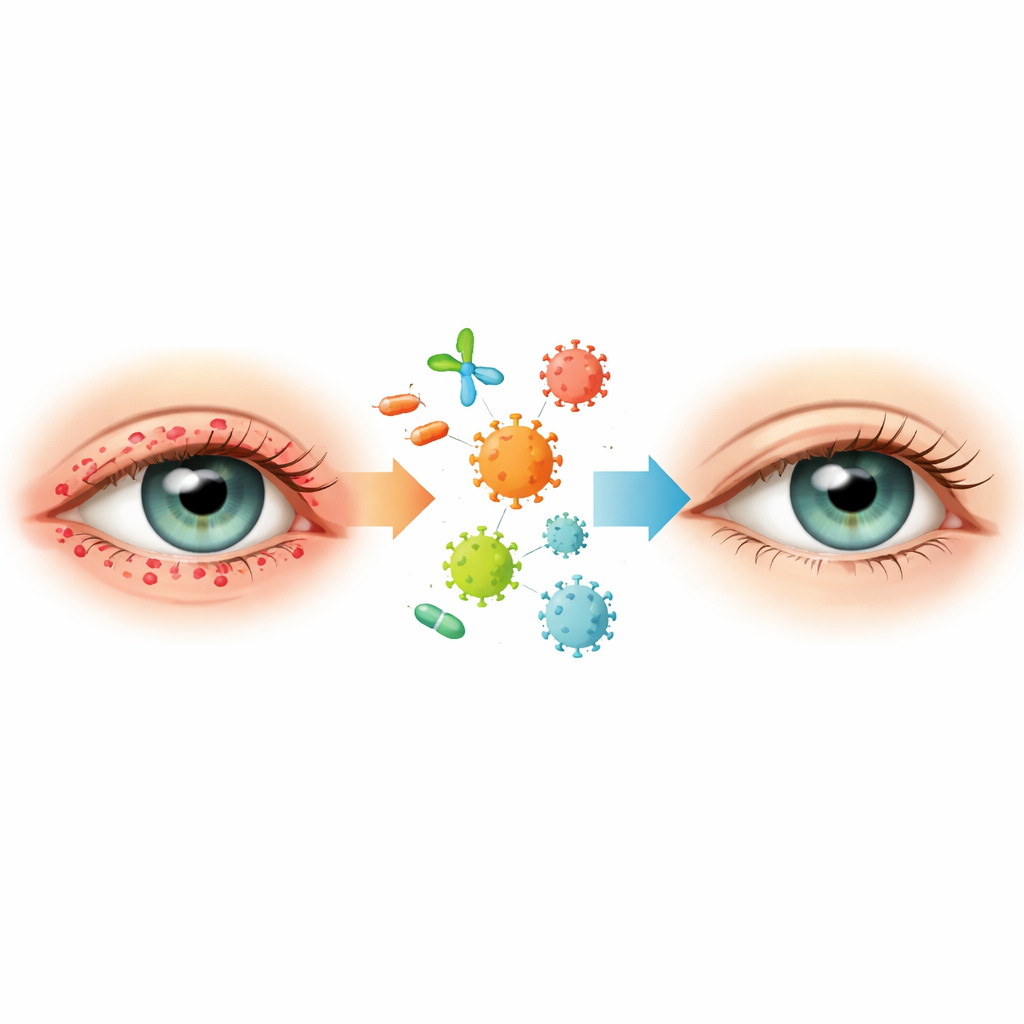
The clearest signal emerged at the level of the eye’s outer layer. Patients on biologic treatment were less likely to be diagnosed with common surface problems such as dry eye disease, conjunctivitis (inflammation of the white of the eye), and keratitis (inflammation of the cornea). Across multiple time points, starting as early as six months and extending to a decade, the risk for these conditions was roughly 30–60% lower in people receiving biologics than in those on older systemic drugs. Similar, though somewhat weaker, reductions were seen for other surface and eyelid conditions like blepharitis. These trends held up in separate analyses restricted to patients from the United States and from Europe and the Middle East, suggesting that the pattern was not limited to a single health system.
Clues for deeper eye problems
When the researchers looked deeper into the eye, the picture was more mixed but still intriguing. People receiving biologic drugs had modestly lower rates of glaucoma and age-related cataract, conditions that can slowly damage vision over time. Some forms of retinal disease, such as age-related macular degeneration, also appeared less frequent in biologic-treated patients in several analyses. However, other retinal and vitreous problems did not follow a consistent pattern, and certain types of inner eye inflammation, like iridocyclitis, were sometimes more common with specific biologic drug classes. This suggests that the protective effects of biologics may be strongest on the eye’s surface and drainage structures, and may vary depending on which immune pathways each drug targets.
Testing the strength of the findings
Because this was a real-world, observational study rather than a controlled clinical trial, the team took extra steps to check whether hidden biases might explain the results. They repeated the analyses using different sets of background variables, looked separately at patients with joint involvement (psoriatic arthritis), and compared several different biologic drug families with each other. They also examined medical problems unrelated to psoriasis or eye disease, such as appendicitis and wrist fractures, as “negative controls.” For these unrelated conditions, there was no meaningful difference between biologic and non-biologic groups, supporting the idea that the lower eye disease rates were not simply due to overall differences in how often patients saw doctors or had diagnoses recorded.
What this means for patients and doctors
In everyday terms, this study suggests that for people with psoriasis, biologic treatments are linked not only to better control of skin and joint symptoms, but also to fewer eye surface problems and possibly some protection against certain other eye diseases. The research cannot prove that biologics directly prevent these eye conditions, because patients were not randomly assigned to treatments and some important details—such as psoriasis severity and exact eye exam findings—were not available. Still, the consistent patterns across large groups of patients point to the eye as another organ that may benefit when psoriasis-related inflammation is better controlled. For patients who struggle with recurrent eye irritation or have sight-threatening eye inflammation, these findings support closer collaboration between skin, joint, and eye specialists when choosing and monitoring treatment.
Citation: Kubovsky, S., Lishinsky-Fischer, N., Chowers, I. et al. Biologic therapy is associated with reduced ocular disease in psoriasis: a real-world study. Eye 40, 676–681 (2026). https://doi.org/10.1038/s41433-026-04274-x
Keywords: psoriasis, biologic therapy, dry eye, ocular inflammation, real-world evidence