Clear Sky Science · en
Association between eye disorders and the development of ADHD/ADD: a nationwide retrospective cohort study
Why Your Child’s Eye Checkup Might Say More Than You Think
Parents and teachers often wonder why some children struggle to sit still, follow instructions, or stay focused in class. Attention-deficit hyperactivity disorder and attention-deficit disorder (ADHD/ADD) are well-known explanations—but what if common vision problems also play a role? This study looked at the medical records of hundreds of thousands of young people to see whether everyday eye conditions, like nearsightedness or a lazy eye, are linked to a greater chance of later being diagnosed with ADHD/ADD.
Looking for Clues in a Whole Nation’s Medical Records
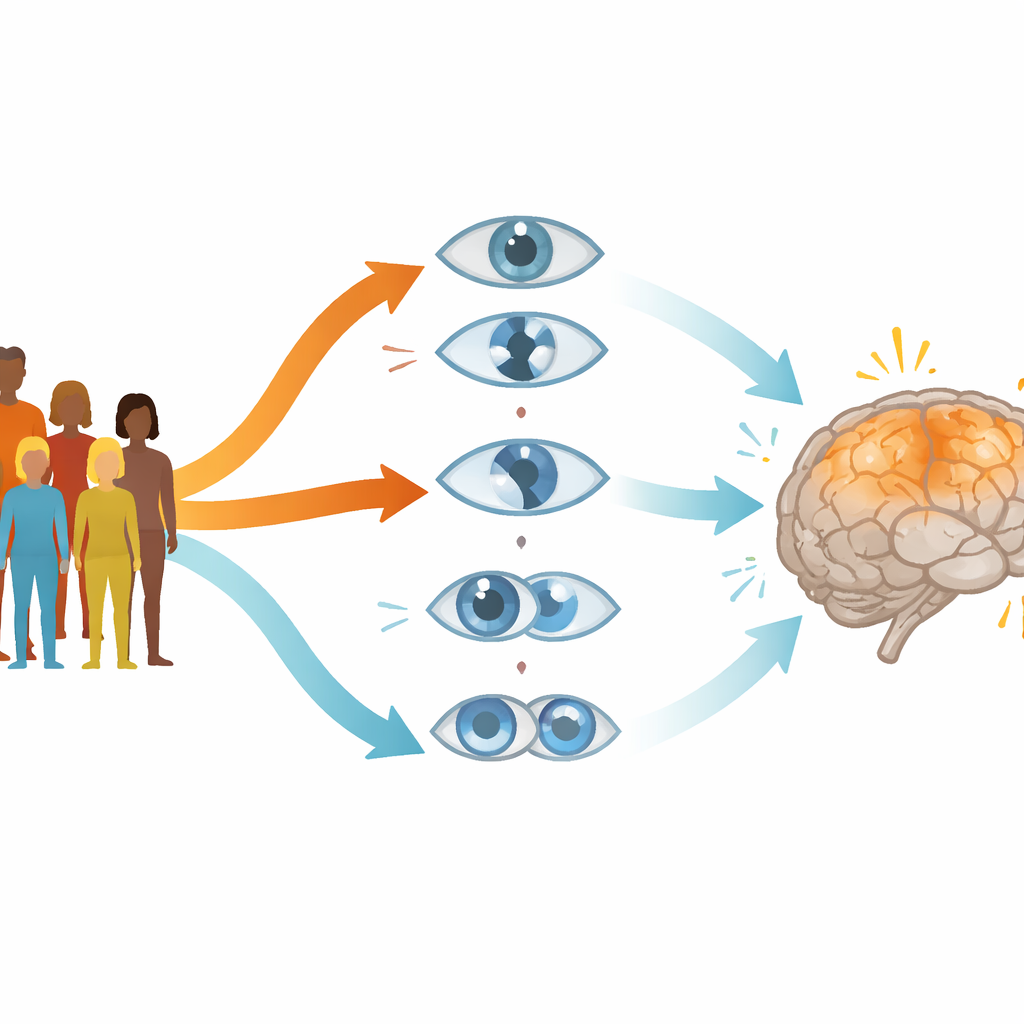
The researchers used data from Maccabi Health Services, one of Israel’s largest health providers, which keeps long-term electronic medical records on more than two million people. They focused on everyone aged 5 to 30 who was insured between 2010 and 2022. From more than 1.6 million people, they built a carefully matched group of 665,121 individuals, pairing those who had certain eye problems with similar people who did not. By doing this, they could compare groups that were alike in age and sex while differing mainly in whether they had an eye disorder.
Common Vision Problems and a Higher Chance of ADHD
The team examined several widespread eye conditions: nearsightedness (myopia), farsightedness (hyperopia), astigmatism (irregular focus of the eye), misaligned eyes (strabismus) and reduced vision in one eye (amblyopia). They then tracked who went on to receive a diagnosis of ADHD/ADD. Out of the total group, about one in ten developed ADHD/ADD. But that number was higher—about one in eight—among those with at least one of the eye conditions. Statistical analyses showed that each type of eye problem was linked to a clearly increased risk of later ADHD/ADD, even when accounting for other factors. For example, children and young adults with strabismus or with hyperopia and astigmatism had noticeably higher chances of eventually being diagnosed.
Timing, Combinations, and Who Is Most Affected
It was not only how many people developed ADHD/ADD that changed, but also when. On average, those with eye disorders received their ADHD/ADD diagnosis several months earlier than those without eye problems. The pattern held for most eye conditions, suggesting the link is consistent rather than a fluke. When the researchers looked at combinations of eye disorders—such as having both strabismus and hyperopia, or both hyperopia and astigmatism—they again found a stronger connection with ADHD/ADD. Interestingly, these combinations raised risk but did not clearly multiply it beyond what would be expected from each problem alone, hinting that the simple fact of impaired vision may be what matters most.
Stronger Links in Girls and in Younger Patients
One of the most striking findings was that the association between eye problems and ADHD/ADD was much stronger in females than in males. The link was also more pronounced in children and teenagers than in adults. This could reflect real biological differences, social patterns in who gets referred for testing, or the fact that ADHD/ADD is often missed in adults. It may also be that some eye disorders are picked up earlier in life, giving doctors more opportunity to notice attention difficulties in younger patients.
What This Means for Families and Doctors
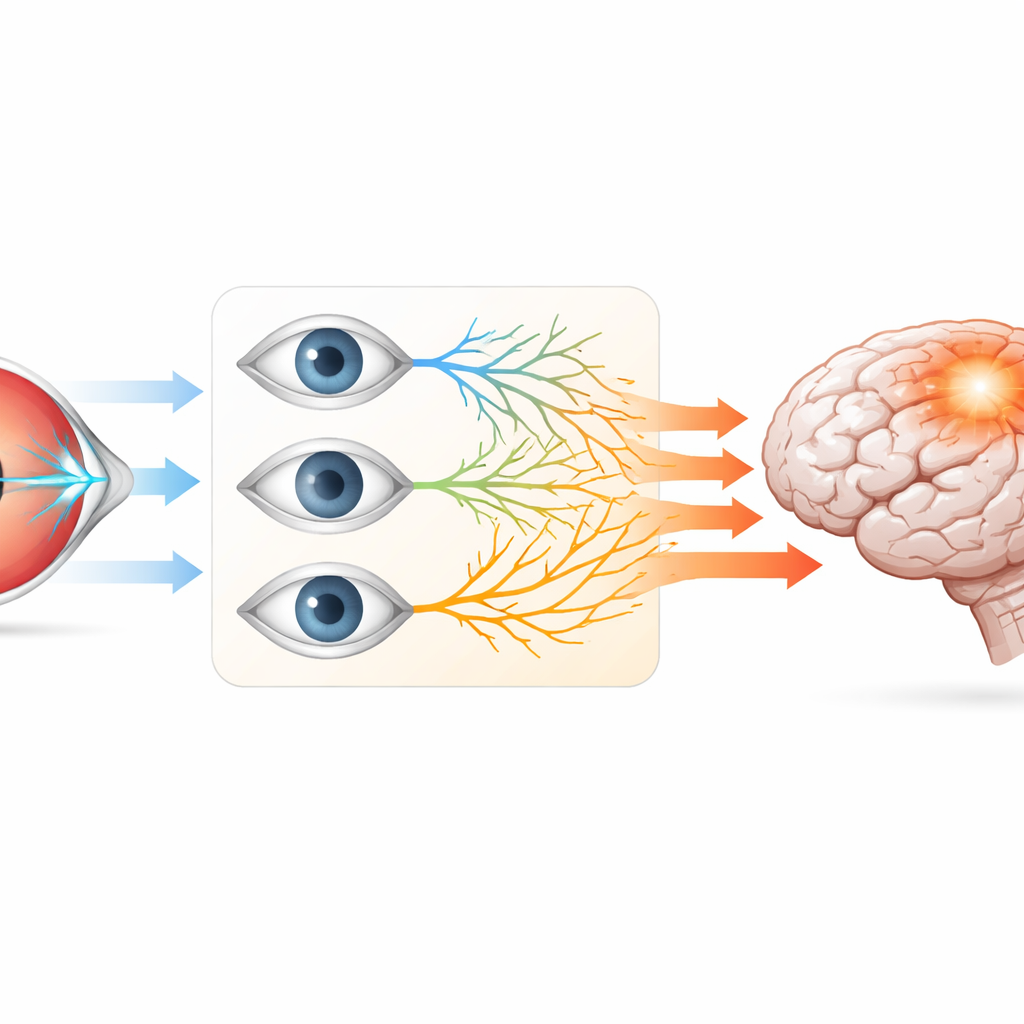
This study cannot prove that eye problems directly cause ADHD/ADD, and the authors are careful to point out that other hidden factors may be involved. Still, by following more than half a million people over many years, the work strongly suggests that common vision issues are useful warning signs for attention difficulties, especially in girls and in children and teens. For families, this means that a routine visit to the eye doctor may also be a chance to flag possible attention concerns. For primary care doctors, neurologists and eye specialists, it suggests that when a young person has significant or multiple eye disorders, it may be wise to consider early screening for ADHD/ADD so that support and treatment can begin sooner if needed.
Citation: Israeli, A., Mezer, E. Association between eye disorders and the development of ADHD/ADD: a nationwide retrospective cohort study. Eye 40, 550–556 (2026). https://doi.org/10.1038/s41433-025-04227-w
Keywords: ADHD, vision problems, children, eye disorders, attention