Clear Sky Science · en
Inherited retinal disorders in Scotland: A 5 year assessment
Why this matters for sight and families
Inherited problems of the light‑sensing layer at the back of the eye are now the leading cause of blindness in working‑age adults in parts of the UK. New gene‑based treatments and options for planning a family mean that finding the exact faulty gene in each patient has become more important than ever. This study looks at how people across Scotland with these conditions were diagnosed over five years, and how often doctors were able to pinpoint the underlying genetic cause.
Who was studied in Scotland
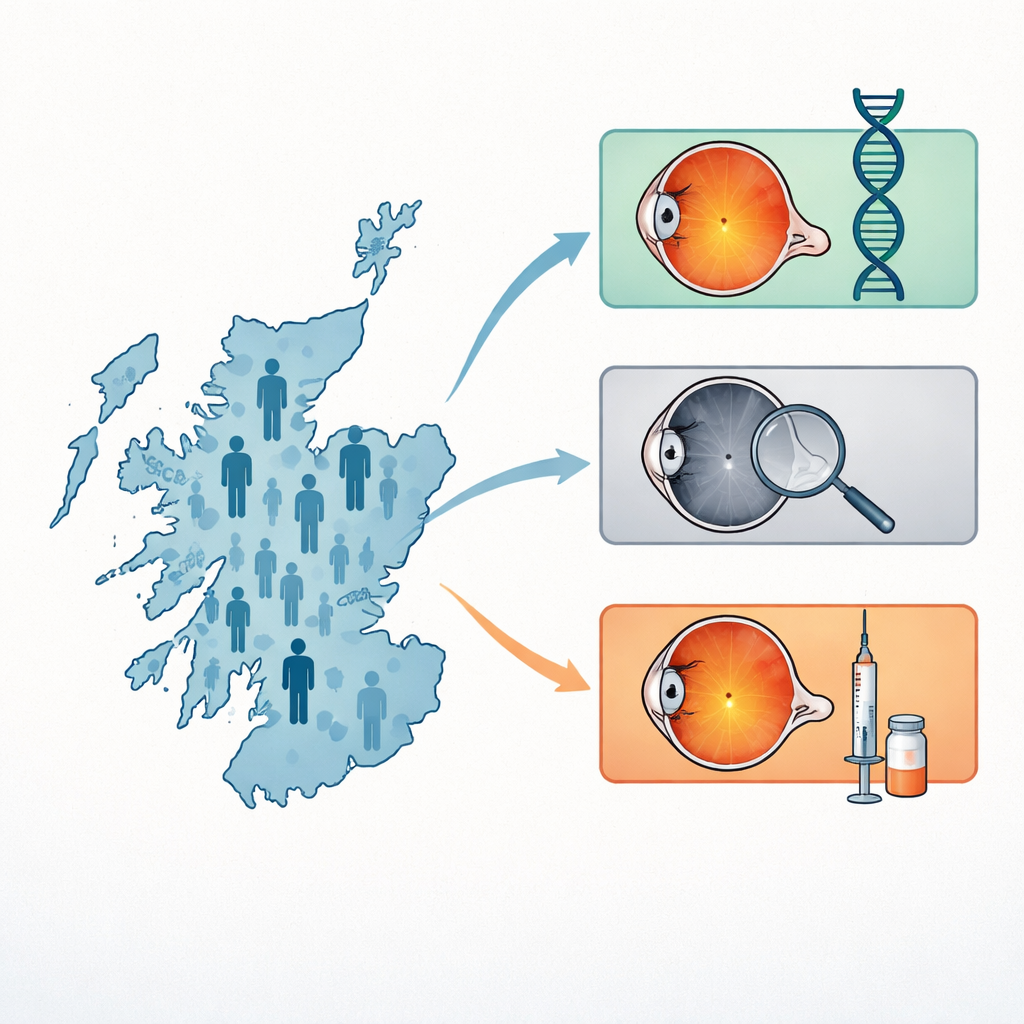
Researchers reviewed records from specialist eye‑genetics clinics in Edinburgh, Glasgow, Dundee and Aberdeen between 2018 and 2023. They included 532 people who had an inherited retinal disorder, a broad group of conditions in which changes in a single gene gradually damage the retina and reduce vision. The team collected information on age, where patients lived, what type of eye disease they had, whether there was a family history, which genetic tests were used and how long it took to get results.
The most common eye conditions
The study showed that one condition, retinitis pigmentosa, made up just over 40% of diagnosed cases. This disorder typically begins with night blindness and narrowing of side vision and can progress to severe sight loss. The next most common was Stargardt disease, which mainly harms central reading vision, accounting for about 9% of patients. Some people had a broader category of rod‑cone or cone‑rod problems, while others had rarer named conditions. Around one in six people with retinitis pigmentosa also had a wider syndrome affecting hearing or other organs, most often Usher syndrome, which combines hearing loss with progressive sight loss.
How genes were tested
To search for the underlying cause, most patients underwent a large panel test that looks at 176 known retina‑related genes in one go. Others first had more targeted tests for a single gene when their eye appearance strongly suggested a particular fault, such as in the ABCA4 or C1QTNF5 genes, and then proceeded to the larger panel if needed. Testing strategies varied by region: clinics in the west of Scotland were more likely to use the broad panel as a first step, while other regions more often started with a single‑gene test. On average, patients waited several months from giving a sample to receiving a result, with some differences in turnaround time between health boards.
What the gene results revealed
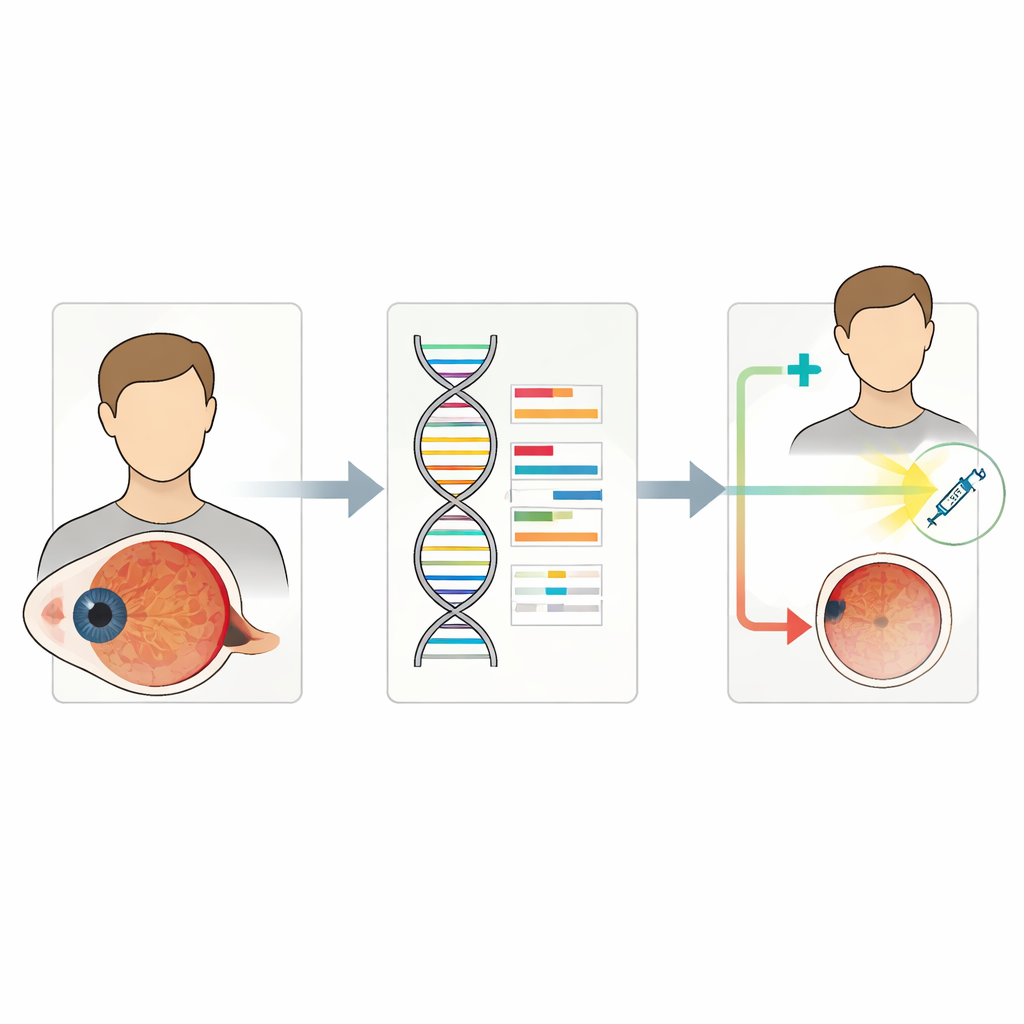
Among patients whose tests had been completed, about two‑thirds received a clear molecular diagnosis pinpointing one or more faulty genes. The single most frequently involved gene was ABCA4, which is strongly linked to Stargardt disease and some related conditions. Other common genes included USH2A, associated with Usher syndrome and some forms of retinitis pigmentosa, and PRPH2 (also known as RDS), which can cause a range of macular and retinal problems. Targeted tests for specific genes with a very characteristic pattern in the eye, such as C1QTNF5 in late‑onset retinal degeneration, were particularly successful, often finding a disease‑causing change in the great majority of those tested. Younger patients, especially those whose symptoms began in childhood or the teenage years, were more likely to receive a definite genetic answer.
Why some answers are still missing
Even with modern methods, more than 30% of Scottish patients in this study still did not receive a firm genetic diagnosis. Some of these cases may be due to changes in regions of the DNA that standard panel tests do not capture, or to disease genes that have yet to be discovered. Whole‑genome sequencing, which reads almost all of a person’s DNA, has already been shown in other projects to boost the number of solved cases by around 10–15%. England has begun offering whole‑genome testing for many rare diseases, while Scotland initially chose to refine its panel‑based approach. The Scottish Government now plans to expand to whole‑genome testing and to link genetic data across the health service, which could help reduce regional differences and speed up diagnosis.
What this means for patients and care
For people in Scotland living with inherited retinal disorders, this study brings encouraging news: most patients who undergo testing already receive a specific genetic explanation for their sight loss, opening the door to better advice on prognosis, family planning and eligibility for gene‑targeted therapies as they emerge. At the same time, the work highlights where there is room to improve, from shortening waiting times to adopting more comprehensive DNA tests so that fewer families are left without answers. By mapping out the current landscape, the study offers a starting point for building a more uniform and future‑proof eye‑genetics service across the country.
Citation: Hazelwood, J.E., Sevgi, M., Osborne, F. et al. Inherited retinal disorders in Scotland: A 5 year assessment. Eye 40, 487–492 (2026). https://doi.org/10.1038/s41433-025-04216-z
Keywords: inherited retinal disease, genetic testing, retinitis pigmentosa, Stargardt disease, Scotland ophthalmology