Clear Sky Science · en
Pickleball and Ball Sports-Related Ocular Trauma in the United States
Why a Backyard Game Can Threaten Your Sight
Pickleball, dodgeball, and kickball are usually seen as fun, low-cost ways to stay active—especially for kids at school and older adults at community centers. Yet this study shows that these familiar games can send people to the emergency room with serious eye injuries, including broken bones around the eye socket. As pickleball surges in popularity, particularly among older adults, understanding these hidden risks and how to prevent them matters for anyone who steps onto the court or watches loved ones play. 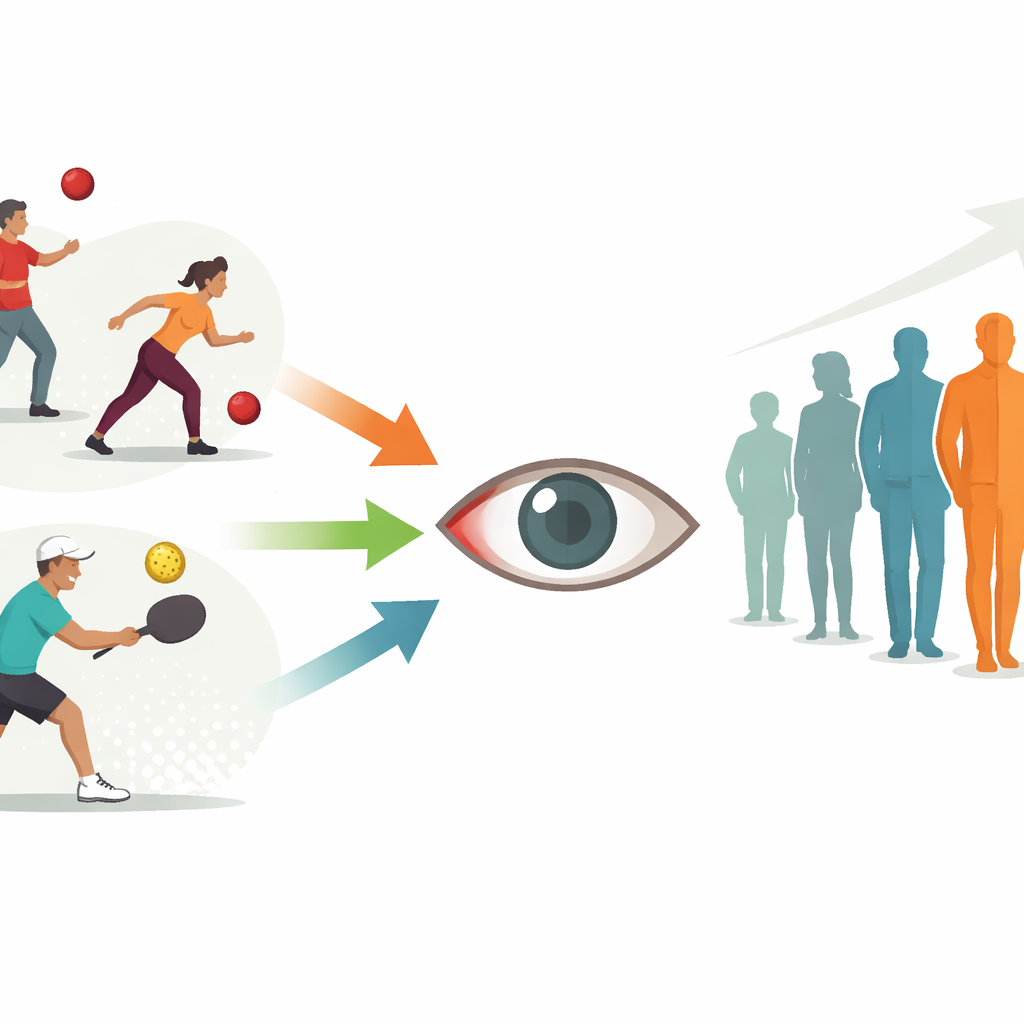
Looking Nationally at Eye Injuries from Popular Ball Games
The researchers dug into a nationwide U.S. database that tracks emergency department visits related to consumer products and sports. They focused on cases where the eye, face, or head were injured and where the narrative clearly mentioned pickleball, dodgeball, or kickball between 2014 and 2023. After screening more than two thousand ball-sport injuries, they found 120 confirmed eye or eye-socket injuries tied to these three games. Because the database uses statistical weights, these 120 cases translate to an estimated 7,974 injuries nationwide over the decade—about half from dodgeball, a third from pickleball, and the rest from kickball.
Who Gets Hurt, Where, and When
Although dodgeball and kickball produced more raw cases in the database, the pattern of who was injured differed sharply from pickleball. Dodgeball and kickball eye injuries mostly struck children and teenagers, typically during school activities. By contrast, pickleball eye injuries clustered among older adults, with an average age close to 60. Most of these pickleball injuries happened at sports or recreation centers rather than at schools or in informal spaces like parks or homes. Across all three sports, most patients were treated in the emergency department and then sent home, but a notable minority had more serious problems, including broken bones around the eye and bleeding inside the eye. 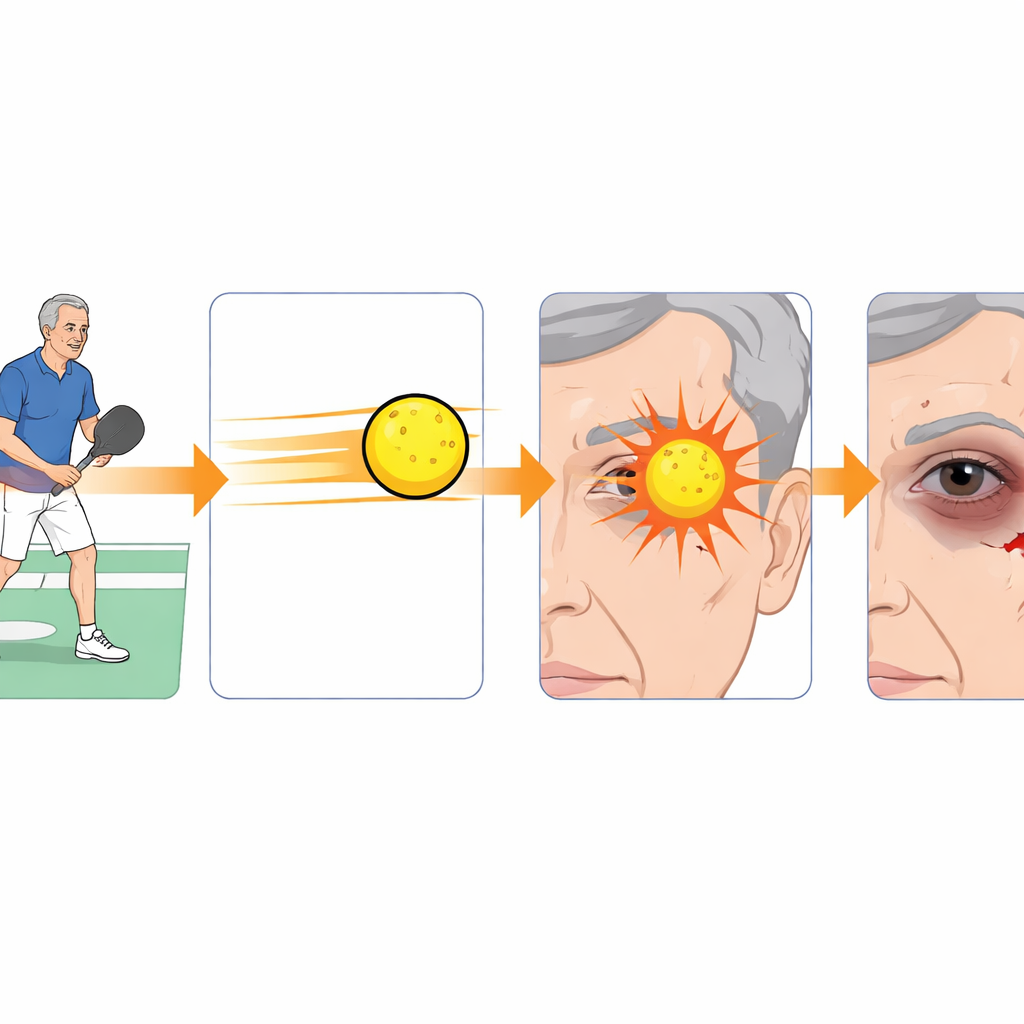
How the Injuries Happen and What Doctors See
The most common way people were hurt in all three sports was simple and direct: a ball striking the eye. In dodgeball and kickball, this often followed hard throws or kicks at close range. In pickleball, fast plastic balls traveling around 40 miles per hour created similar impact, but falls played a larger role. About 15% of pickleball eye injuries happened when players fell, a concern for older adults who already face higher fall risk due to balance and vision changes. The single most frequent diagnosis was a scratch on the clear front surface of the eye, known as a corneal abrasion. However, pickleball injuries also included a relatively high share of orbital fractures—cracks in the bones around the eye—as well as deeper inflammation and damage to the gel inside the eye, all of which can threaten long-term vision if not carefully followed.
A Rapid Rise in Pickleball-Related Eye Trauma
When the team examined trends over time, one sport clearly stood out. From 2014 to 2023, pickleball-related eye injuries increased significantly, both in raw national estimates and in rates adjusted for the size of the U.S. population. Between 2021 and 2023 alone, the weighted number of pickleball eye injuries rose more than eighteen-fold, far outpacing even the sport’s explosive growth in participation during the early 2020s. In contrast, eye injuries linked to dodgeball and kickball stayed relatively flat over the same years. This suggests that pickleball is becoming an increasingly important contributor to sports-related eye trauma, particularly among older players in urban and suburban recreation centers.
What Can Be Done to Protect Players’ Eyes
The authors emphasize that many of these injuries could be prevented. Prior work suggests that up to 90% of sports-related eye injuries are avoidable with proper protective eyewear made from impact-resistant materials. Lab studies show that such eyewear can dramatically reduce the force reaching the retina, and real-world rule changes in sports like squash and women’s lacrosse have slashed eye injury rates. Yet formal eye protection rules are still uncommon in pickleball, and a recent proposal to require eyewear in sanctioned tournaments was rejected. Based on their findings, the authors call for age- and sport-specific safety efforts: stronger promotion and easier access to protective eyewear in community centers where adults play pickleball, as well as school-based education and gear for children playing dodgeball and kickball. In plain terms, as these games grow, especially pickleball, a simple pair of sports goggles could mean the difference between a fun match and a lasting eye problem.
Citation: Shah, J., Pathuri, S., Shrivastava, A. et al. Pickleball and Ball Sports-Related Ocular Trauma in the United States. Eye 40, 646–653 (2026). https://doi.org/10.1038/s41433-025-04192-4
Keywords: pickleball eye injuries, sports-related ocular trauma, protective eyewear, recreational ball sports, older adult safety