Clear Sky Science · en
ERN GENTURIS guideline on counselling on reproductive options for individuals with a cancer predisposition syndrome (including genturis)
Why Family Planning and Cancer Risk Belong in the Same Conversation
Many people know that certain cancers "run in families," but far fewer realize what this means when they want to have children. This article explains new European guidelines on how doctors should talk with people who carry an inherited risk of cancer about their choices for starting or growing a family. It focuses not just on medical facts, but also on emotions, ethics, and the practical realities of getting the right support at the right time.
Understanding Inherited Cancer Risk in Families
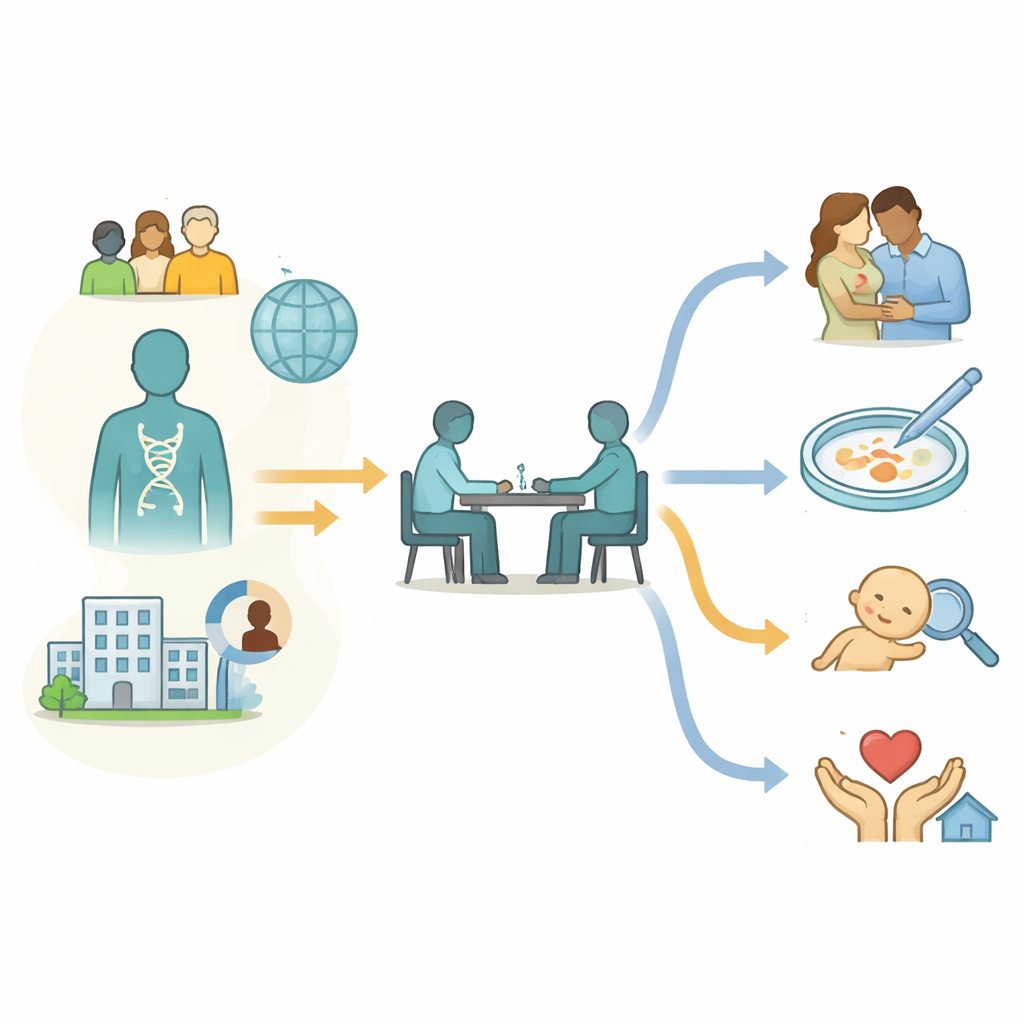
Some people are born with changes in their DNA that greatly increase their chance of developing certain cancers. These conditions, called cancer predisposition syndromes, include well-known examples like hereditary breast and ovarian cancer, Lynch syndrome, and several rare tumour syndromes. Around one in ten cancer patients has such a syndrome. Affected individuals live with two overlapping concerns: their own health and the possibility of passing the risk to their children. While not everyone with a predisposing variant will actually develop cancer, their lifetime risk is much higher than average and can be influenced by other genes and environmental factors.
The Need for Thoughtful, Ongoing Counselling
Until now, many people with inherited cancer risk have struggled to find professionals who can discuss reproductive options in a balanced and informed way. Services differ across European countries, and some individuals never receive counselling at all. To address this gap, the European Reference Network on Genetic Tumour Risk Syndromes (ERN GENTURIS) brought together experts from many countries as well as patient representatives. They reviewed more than 800 scientific papers and used a structured consensus process to agree on 16 key recommendations. A central message is that reproductive counselling should be offered proactively and more than once over a person’s life, not only when pregnancy is already underway.
What Good Counselling Should Cover
The guideline lays out what conversations should look like when someone with an inherited cancer risk is thinking about having children. People and their relevant family members should receive clear information about the genetic variant involved, how severe the condition can be, and how much its impact can vary from person to person. They should hear about all realistic options: natural conception while accepting the risk; prenatal testing during pregnancy; preimplantation genetic testing with in vitro fertilization to select embryos without the familial variant; using donated eggs or sperm; adoption; or choosing not to have biological children. Counselling should be non-directive—professionals must support decisions rather than steer them—and should acknowledge that there is no single “right” choice.
Working Together Across Specialties and Borders
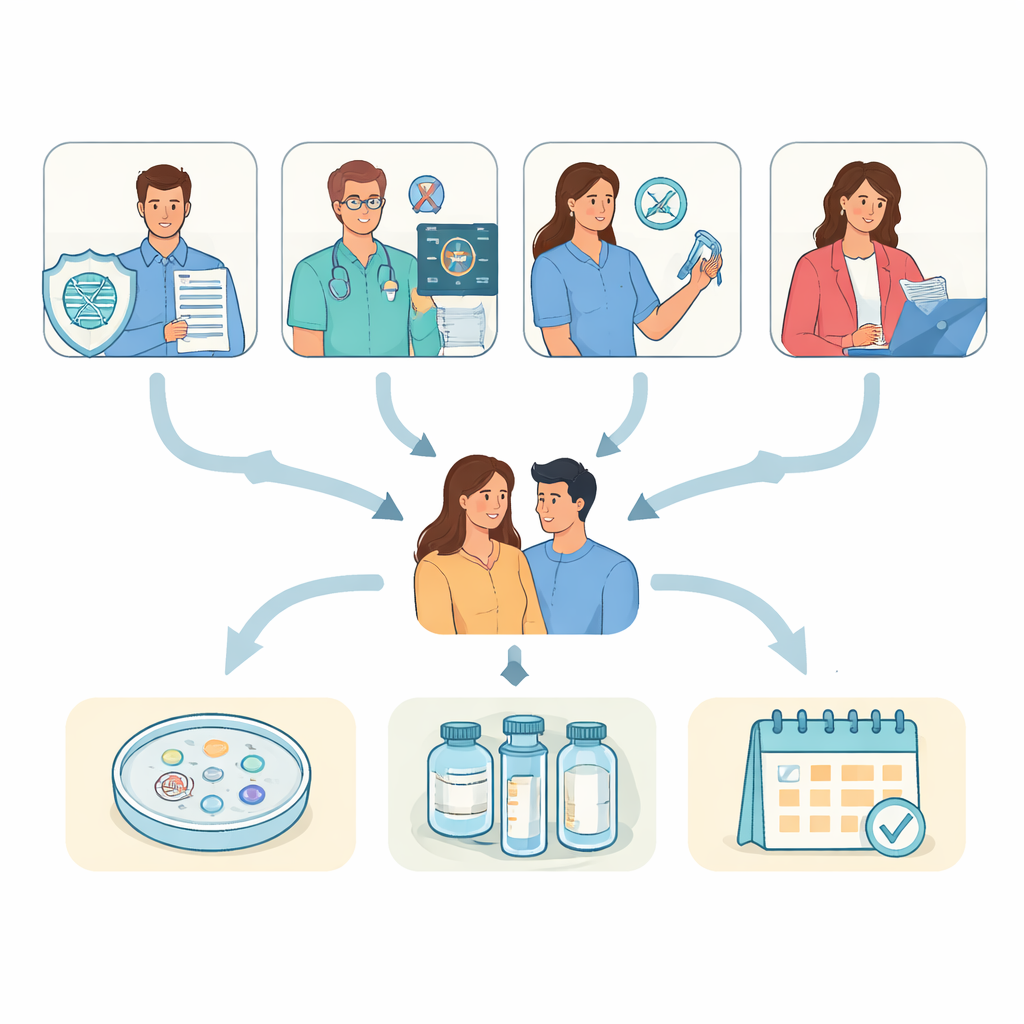
The authors stress that reproductive counselling for inherited cancer risk cannot be handled by a single specialist. Ideally, a team should include a genetic counsellor or clinical geneticist, doctors familiar with the specific cancer syndrome, fertility specialists, and psychologists. This team can explain the medical procedures, chances of success, possible complications, emotional impact, and legal rules that differ between countries, including laws on pregnancy termination and embryo selection. The guideline also highlights the importance of discussing fertility preservation—such as freezing eggs or sperm—when cancer treatment itself may harm fertility, and of tailoring advice to the person’s age, health, and local healthcare system.
Looking Ahead for Patients and Professionals
To a layperson, the guideline’s conclusion is simple: anyone with an inherited cancer risk should have the chance to explore family-building options in a safe, informed, and respectful setting. Rather than leaving people to search for answers on their own, healthcare systems should make reproductive counselling a routine part of care, return to the topic at important life stages, and involve multiple experts. The authors also call for better research, shared data, and clearer ethical frameworks so that future parents and their clinicians can navigate these deeply personal decisions with more confidence and less uncertainty.
Citation: Farschtschi, S.C., Kumps, C., Milagre, T.H. et al. ERN GENTURIS guideline on counselling on reproductive options for individuals with a cancer predisposition syndrome (including genturis). Eur J Hum Genet 34, 307–313 (2026). https://doi.org/10.1038/s41431-025-02007-4
Keywords: inherited cancer risk, reproductive counselling, genetic testing, family planning, fertility preservation