Clear Sky Science · en
Progressive increase of cardiometabolic risk in Brazilian children according to obesity phenotypes
Hidden Risks in a Normal Weight
Many parents and doctors take comfort when a child’s weight looks “normal” on a growth chart. This study from Brazilian schoolchildren shows why that can be misleading. Some children who look average on the scale actually carry too much body fat, and their hearts and metabolisms are already showing early warning signs. Understanding this hidden risk can help families and health services spot problems sooner and protect children from future disease.
Three Types of Childhood Body Shape
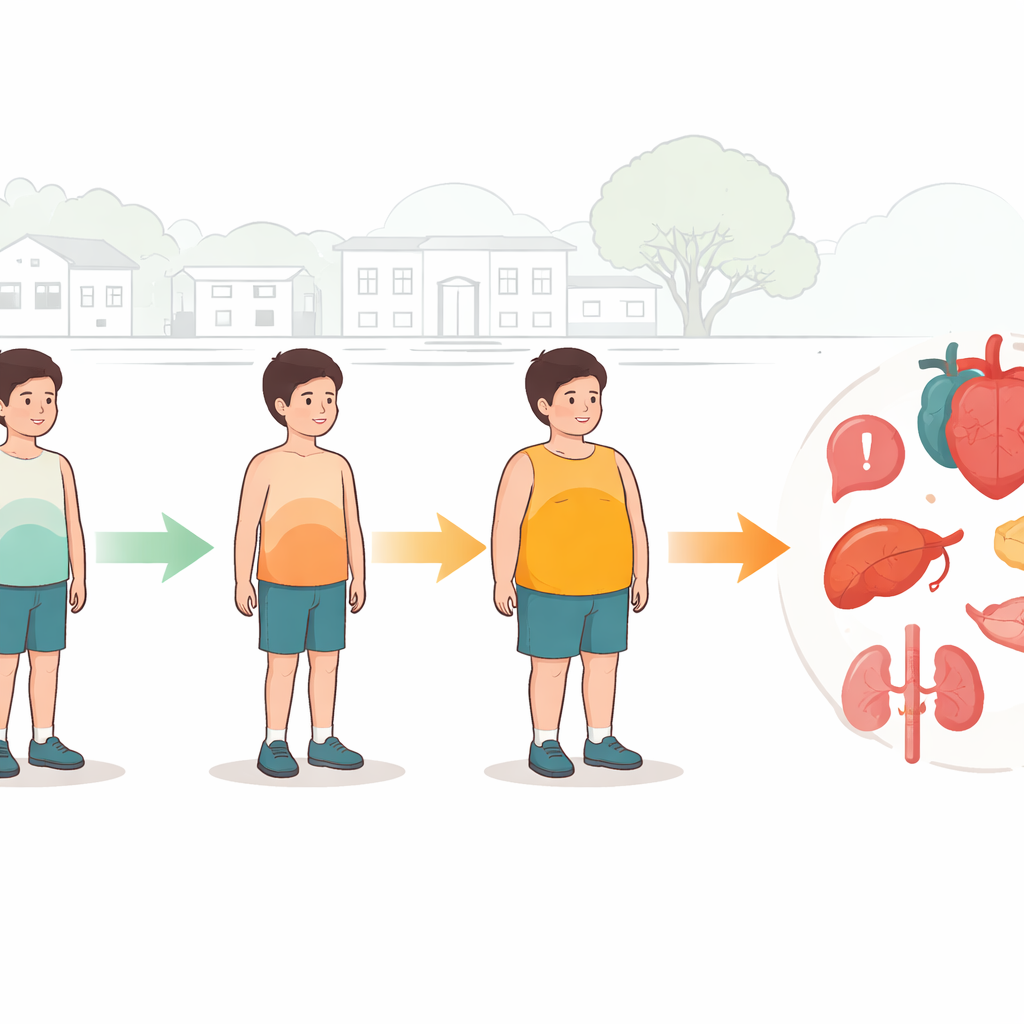
The researchers followed 364 Brazilian children aged 8 and 9 and grouped them into three simple body types. The first group, called normal-weight lean, had a normal body mass index (BMI) and a healthy amount of body fat. A second group had a normal BMI but too much body fat, a pattern known as “normal-weight obesity.” The third group included children with excess weight, who had both a high BMI and high body fat. Body fat was measured with a scan similar to an X-ray, which is more precise than just checking weight and height.
Measuring Early Warning Signs in the Blood
To see how these body types were related to health, the team collected fasting blood samples and blood pressure readings. They combined several measurements—such as waist size, blood pressure, blood fats, blood sugar control, and insulin levels—into an overall “metabolic score” that reflects risk for future heart disease and diabetes. They also measured markers of silent inflammation and chemical stress in the body, including proteins made by fat tissue, substances linked to oxidative damage, and uric acid, a waste product that can rise with poor metabolic health.
A Stepwise Climb in Risk
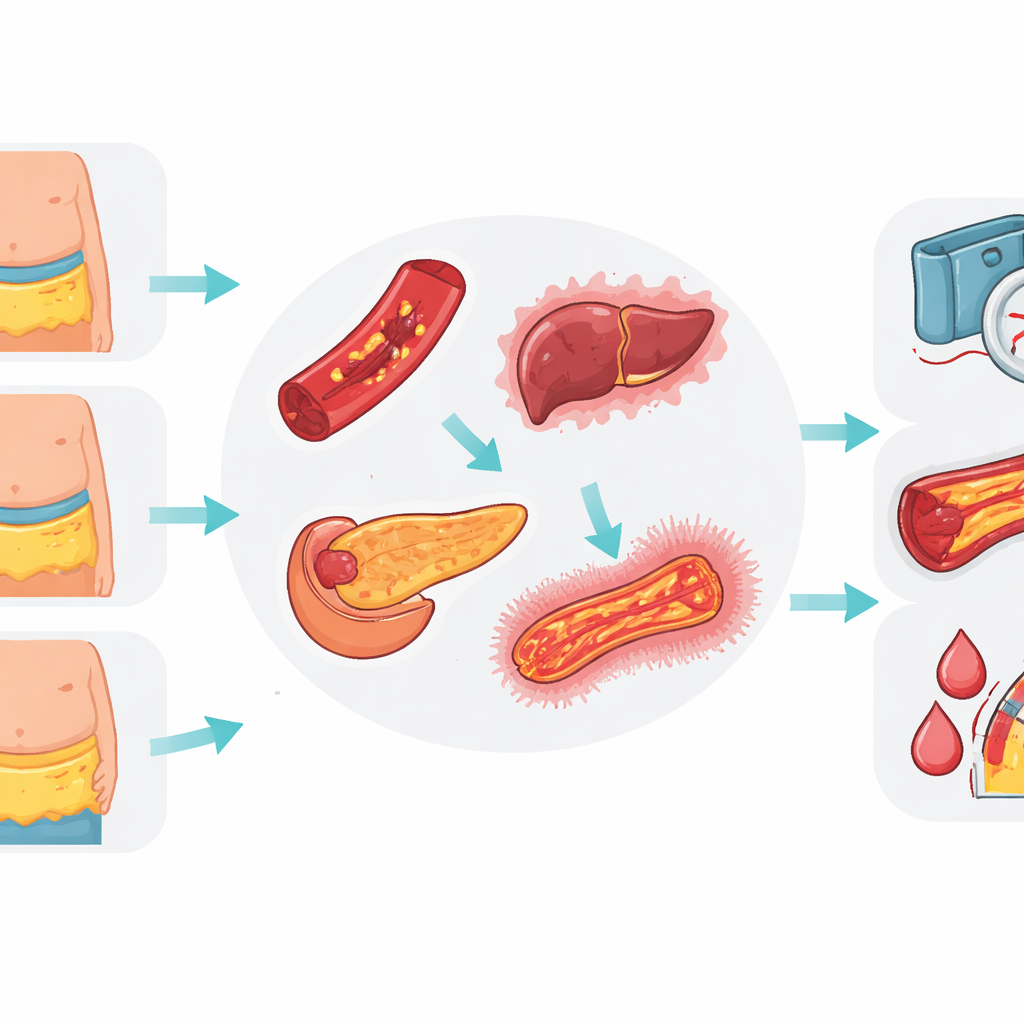
The results showed a clear stepwise pattern. Children with excess weight had the worst metabolic scores, higher waist size and blood pressure, more insulin resistance, higher triglycerides, and lower “good” HDL cholesterol. They also had more signs of silent inflammation and altered antioxidant balance. But children with normal-weight obesity did not look healthy either: compared with lean normal-weight children, they already had larger waists, more insulin resistance, higher uric acid, and higher levels of leptin, a hormone released by fat cells. Overall, their risk sat between the lean group and the clearly overweight group, forming a smooth progression from lowest to highest risk.
Why Fat Distribution Matters More Than the Scale
These findings highlight that where and how fat is stored in the body matters more than the number on the scale alone. Extra fat, especially around the belly, seems to disturb the hormones and chemical messengers released by fat tissue, nudging the body toward higher blood pressure, poorer blood sugar control, and more inflammation. The study also hints that children who eat more highly processed foods may show higher antioxidant readings in blood tests, not because they are healthier, but because these foods often contain added preservative compounds that behave like antioxidants in the lab.
Simple Checks to Protect Children’s Futures
For families and health professionals, the takeaway is that a “normal” BMI is not a guarantee of safety. In this Brazilian sample, more than a quarter of supposedly normal-weight children actually had too much body fat and showed early signs of heart and metabolic strain. The authors argue that simple measurements such as waist circumference, blood pressure, basic blood fats, blood sugar control, and uric acid should be used more widely in routine checkups, even when a child’s weight looks average. Catching these hidden risks early offers a better chance to support healthy habits and prevent serious diseases later in life.
Citation: Cota, B.C., Filgueiras, M.d.S., Dias, N.d.P. et al. Progressive increase of cardiometabolic risk in Brazilian children according to obesity phenotypes. Eur J Clin Nutr 80, 270–277 (2026). https://doi.org/10.1038/s41430-026-01700-x
Keywords: childhood obesity, normal weight obesity, cardiometabolic risk, waist circumference, Brazilian children