Clear Sky Science · en
The impact of intermittent fasting during weight reduction in people living with type 2 diabetes mellitus: a randomized clinical trial
Why timing your meals might matter
For many people living with type 2 diabetes, food advice can feel like an endless list of “don’ts.” This study asks a more hopeful question: could simply shortening the hours when we eat each day, on top of eating fewer calories, make blood sugar control and weight loss a little easier and more effective? Researchers in Egypt tested a practical overnight fasting routine—no food from 8 p.m. to 8 a.m.—to see whether it offered real health benefits beyond a standard calorie‑cutting diet.
A closer look at the eating plans
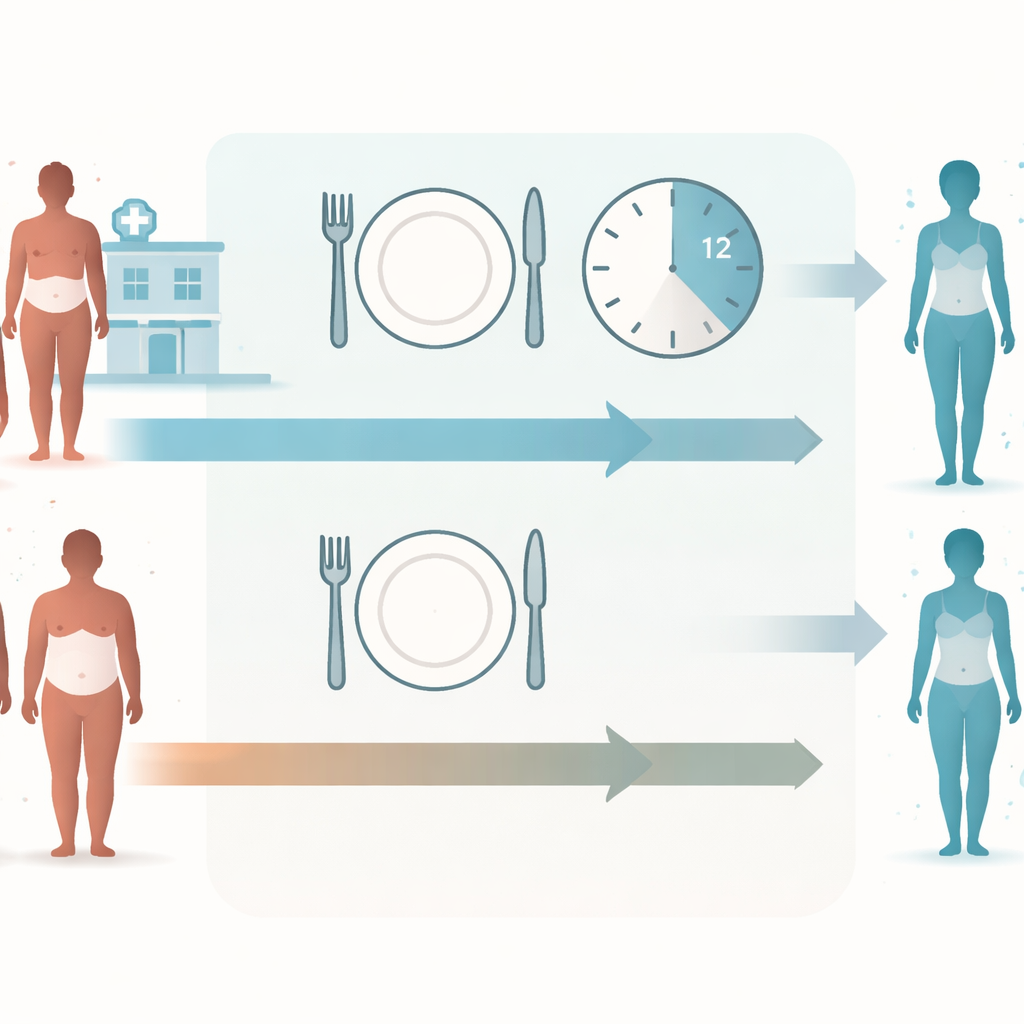
Ninety‑nine adults with type 2 diabetes and obesity took part in a three‑month clinical trial at a university hospital clinic. All were taking the common diabetes drug metformin and had similar ages, body sizes and activity levels. Everyone received a personalized diet that cut about 500 calories per day from their usual needs, with a balanced mix of carbohydrates, protein and fat. Half the participants followed this calorie‑restricted plan alone, while the other half combined the same calorie‑cutting with a simple rule: eat only between 8 a.m. and 8 p.m., drinking only water overnight. This 12‑hour nightly fast was chosen to fit easily into everyday life and local culture.
What changed over three months
Both groups lost weight and improved many health measures, but the group that combined overnight fasting with calorie restriction pulled ahead. On average, they lost about 6.5% of their starting weight, compared with roughly 4.4% in the calorie‑only group. Their waists and hips shrank more, and body composition scans showed a larger drop in body fat mass. These changes are not just cosmetic: less belly fat is strongly tied to lower risk of heart disease and other complications that often accompany type 2 diabetes.
Blood sugar and medication needs
The researchers were especially interested in a long‑term marker of blood sugar called HbA1c, which reflects average glucose levels over several months. Both groups saw their HbA1c fall, but the overnight fasting group showed a significantly larger drop. By the end of 12 weeks, their average HbA1c was lower than that of the calorie‑only group, and the size of the decrease was more than double. Measures of insulin resistance also improved in both groups, suggesting that cutting calories—whether or not fasting is added—helps the body use insulin more effectively. A modest share of participants in each group were able to reduce their metformin dose, hinting that better eating patterns can sometimes lessen the need for medication, though this difference between groups was not statistically clear.
Safety, comfort, and what we still do not know
Any eating plan for diabetes must be safe as well as effective. In this trial, both approaches were well tolerated. A few participants reported mild headaches, but there were no episodes of low blood sugar severe enough to stop the diets. Because the study lasted only three months and most participants were women with relatively recent diabetes, questions remain about how well this pattern works over years, whether men respond similarly, and how fasting affects mood, stress, and daily life. The researchers also note that they did not measure hormones like leptin and adiponectin that might explain exactly how fasting boosts fat loss and blood sugar control.
What this could mean for everyday life
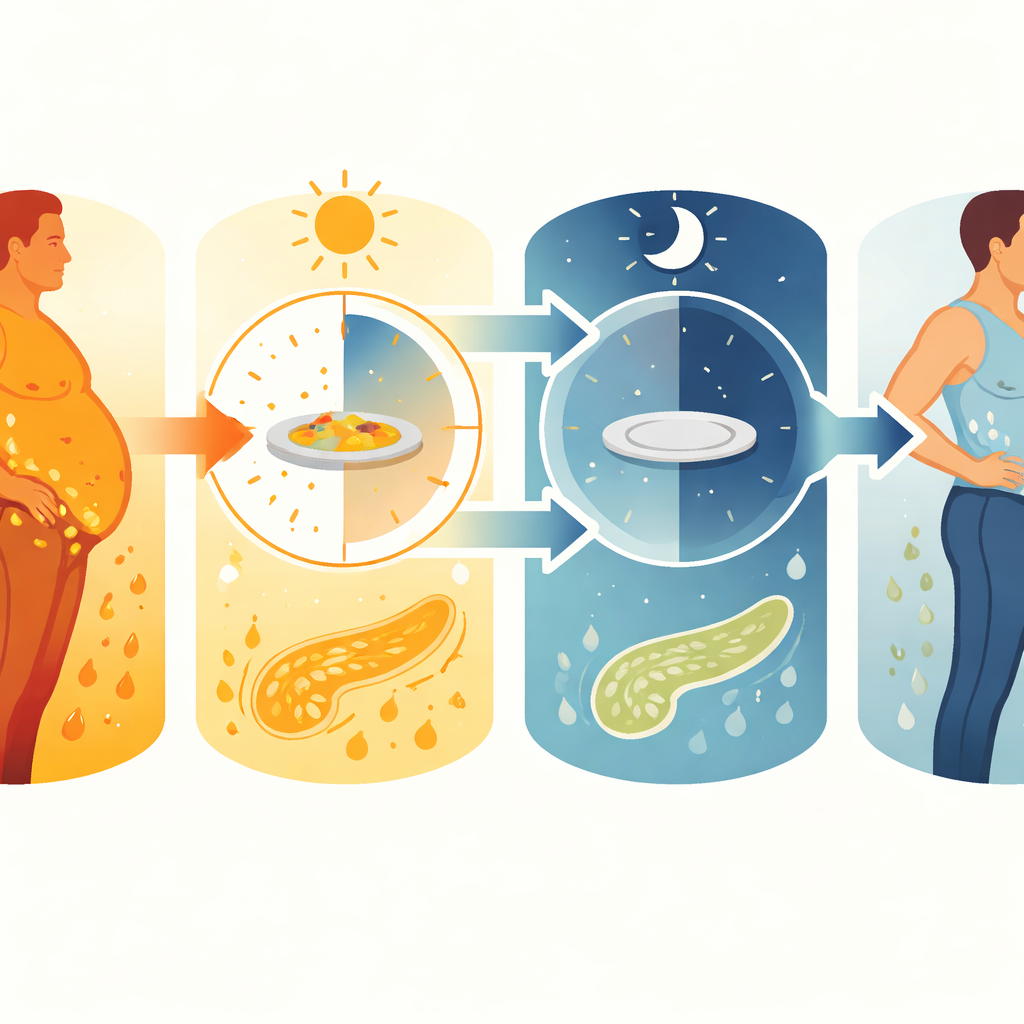
In plain terms, the study suggests that for adults with type 2 diabetes who are already cutting calories, simply closing the kitchen overnight—no snacks between 8 p.m. and 8 a.m.—may deliver extra benefits for weight, body fat, and long‑term blood sugar levels, without adding major risks. This 12‑hour nightly fast is relatively gentle compared with more extreme fasting plans and may be easier to fit into work and family routines. While longer and more diverse studies are needed, the findings support the idea that when we eat is nearly as important as what and how much we eat. For many people with type 2 diabetes, a structured overnight fast, guided by their healthcare team, could become a practical tool in the ongoing effort to live well with the disease.
Citation: M. Abdel Fattah, S., M. Abbassi, M., Abd Elshafy, S. et al. The impact of intermittent fasting during weight reduction in people living with type 2 diabetes mellitus: a randomized clinical trial. Eur J Clin Nutr 80, 299–306 (2026). https://doi.org/10.1038/s41430-025-01693-z
Keywords: intermittent fasting, type 2 diabetes, calorie restriction, weight loss, blood sugar control