Clear Sky Science · en
Lysophosphatidylcholine acyltransferase 1 promotes head and neck squamous cell carcinoma progression by enhancing COX17-dependent oxidative phosphorylation
Why Cell Fuel Matters for Head and Neck Cancer
Head and neck cancers often appear in everyday places like the tongue, throat, and mouth, yet their inner workings remain something of a black box. This study opens that box by asking a simple but powerful question: how do cancer cells in these regions get the fuel they need to grow, spread, and resist treatment? By tracing how changes in certain fats and energy-making machinery inside cells drive tumor behavior, the researchers uncover potential new ways to spot this cancer early and cut off its power supply.
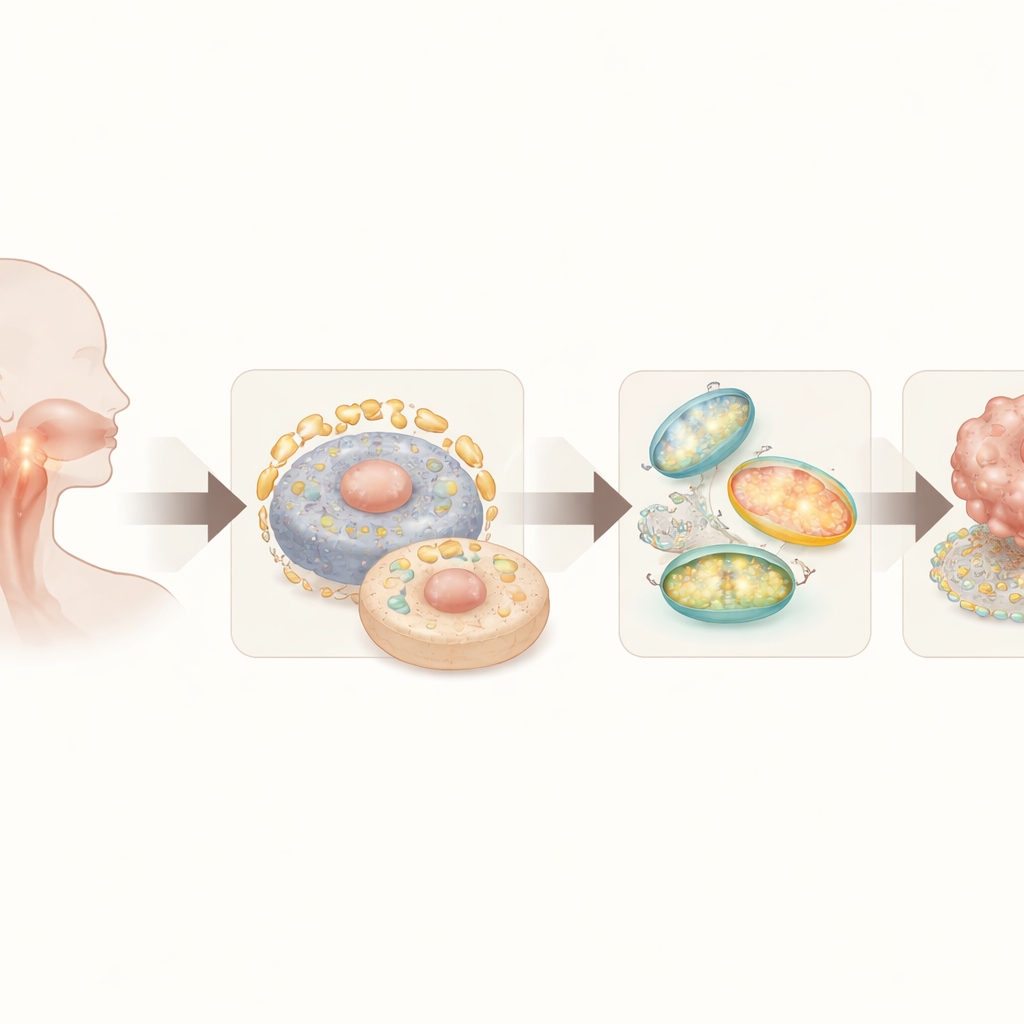
Hidden Clues in Tumor Chemistry
The team began by comparing the chemical makeup of tumor samples from patients with head and neck squamous cell carcinoma to nearby normal tissue. Using a broad survey of small molecules, they found that the overall metabolism of tumor tissue looked very different from healthy tissue. A standout change involved a family of fat-like molecules called phosphatidylcholines, which help build cell membranes. Specific versions of these molecules, particularly those with certain saturated and monounsaturated fat chains, were much more abundant in tumors. This pattern suggests that the way cancer cells rebuild and reorganize their membranes is deeply altered and could serve as a fingerprint for early disease.
A Key Enzyme Turns Up the Volume
Next, the researchers asked which enzymes might be responsible for this skewed fat profile. Mining large public cancer databases and examining patient tissues directly, they homed in on one enzyme, LPCAT1, that was consistently higher in tumors than in normal tissue. LPCAT1 helps remodel membrane fats, including the very phosphatidylcholines that were found to accumulate. When they reduced LPCAT1 levels in head and neck cancer cell lines, the cells slowed their growth, formed fewer colonies, moved less, and became more prone to dying. In mice, tumors formed from LPCAT1-depleted cells grew smaller and showed fewer actively dividing cells. These results point to LPCAT1 as a driver of tumor aggressiveness, not just a passive bystander.
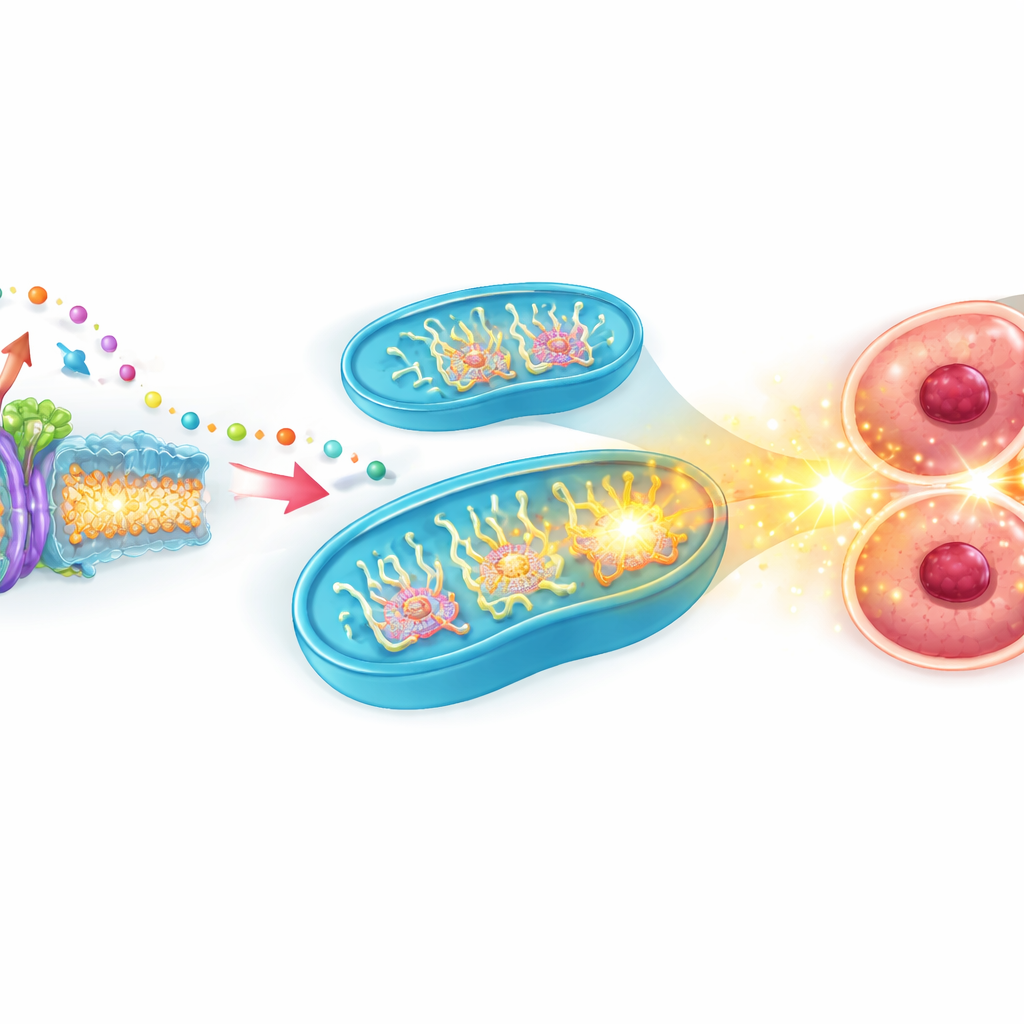
Power Plants Inside Cancer Cells
Surprisingly, the study found that simply adding back one of LPCAT1’s main fat products did not restore fast growth, hinting that the enzyme’s impact goes beyond a single lipid. To dig deeper, the team examined which genes changed when LPCAT1 was knocked down. Many of the affected genes pointed to oxidative phosphorylation, the process by which mitochondria—the cell’s power plants—convert nutrients into the energy molecule ATP. In cells lacking LPCAT1, mitochondrial membrane potential dropped, oxygen consumption slowed, and ATP production fell. The opposite happened when LPCAT1 was overproduced: mitochondria consumed more oxygen and generated more energy, suggesting that this enzyme helps cancer cells maintain a high-energy state that supports rapid growth and spread.
A Copper-Linked Switch in the Power Chain
The researchers then zoomed in on how LPCAT1 influences the mitochondrial machinery itself. They identified COX17, a protein that helps deliver copper to a key component of the respiratory chain called cytochrome c oxidase, as a central player. When LPCAT1 levels were reduced, COX17 levels fell and cytochrome c oxidase activity dropped, weakening oxidative phosphorylation. Boosting COX17 in LPCAT1-depleted cells rescued enzyme activity and energy production, while lowering COX17 blunted the energy surge driven by extra LPCAT1. Additional experiments suggested that LPCAT1 may help usher a transcription factor, SP1, into the nucleus, where it can ramp up COX17 production. Although the exact steps still need confirmation, the overall picture is that LPCAT1 controls a copper-dependent switch that tunes how hard mitochondria run.
What This Means for Patients
To a lay observer, these molecular details might sound remote, but they translate into two very practical ideas. First, the unusual buildup of specific membrane fats in tumor tissue could become a basis for blood or tissue tests that detect head and neck cancer earlier or track how it responds to treatment. Second, because LPCAT1 and its COX17–energy pathway appear to be vital for keeping cancer cells well fueled, drugs that dampen this axis could weaken tumors without necessarily harming all healthy cells. In essence, the study shows that certain head and neck cancers are wired to depend on a fat-driven energy boost—and that dependency could be their Achilles’ heel.
Citation: Zhao, Y., Li, Y., Li, Y. et al. Lysophosphatidylcholine acyltransferase 1 promotes head and neck squamous cell carcinoma progression by enhancing COX17-dependent oxidative phosphorylation. Cell Death Discov. 12, 139 (2026). https://doi.org/10.1038/s41420-026-02994-3
Keywords: head and neck cancer, cancer metabolism, mitochondrial energy, lipid remodeling, LPCAT1