Clear Sky Science · en
Novel mechanism of neuronal hypoxia response: HIF-1α/STOML2 mediated PINK1-dependent mitophagy activation against neuronal injury
Why the Brain’s Response to Low Oxygen Matters
Many common conditions—including stroke, sleep apnea, heart failure, and even high-altitude exposure—deprive the brain of oxygen. When oxygen drops, brain cells are at risk of permanent damage, leading to memory problems and other neurological issues. This study uncovers a built‑in “self‑protection” system that neurons use in the early stages of low oxygen to keep themselves alive and working. Understanding this system could open the door to new treatments that protect the brain before serious injury occurs.
Early Trouble, But Not Yet Disaster
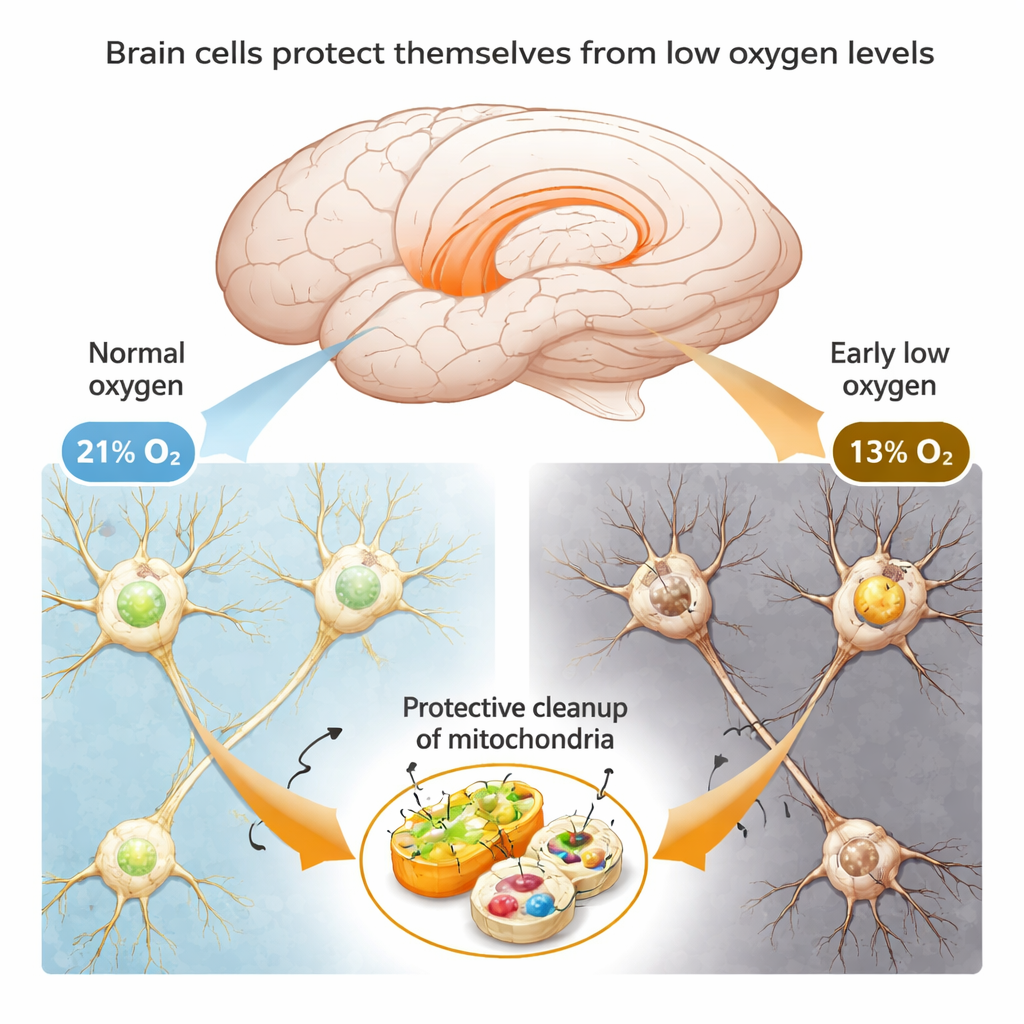
To explore how the brain reacts to low oxygen, the researchers exposed mice to air with about 13% oxygen—similar to living on a high plateau—for different lengths of time. For the first few days, the animals behaved normally in memory and maze tests, and their brain cells looked healthy under the microscope. Only after a full week of reduced oxygen did the mice begin to show clear memory loss and disorganized brain cell structure. This pattern suggested that, at least early on, neurons are not passive victims of oxygen loss; instead, they appear to switch on protective responses that delay or prevent damage.
Cellular Housekeeping: Taking Out Bad Power Plants
A major focus of the study is the cell’s power plants—mitochondria—which are especially important in neurons because thinking and memory demand large amounts of energy. Under low oxygen, mitochondria can falter and leak harmful by‑products that injure cells. The team found that in the early phase of hypoxia, neurons temporarily boost a specialized cleanup process called mitophagy, which selectively removes damaged mitochondria while sparing healthy ones. In both mouse brains and human‑derived nerve cells grown in dishes, markers of this cleanup process rose soon after oxygen dropped, just when cells were still functioning well. When the scientists chemically blocked mitophagy, cell survival fell and signs of injury increased, showing that this tidy‑up step is vital for protection.
A Protective Chain Reaction Inside Neurons
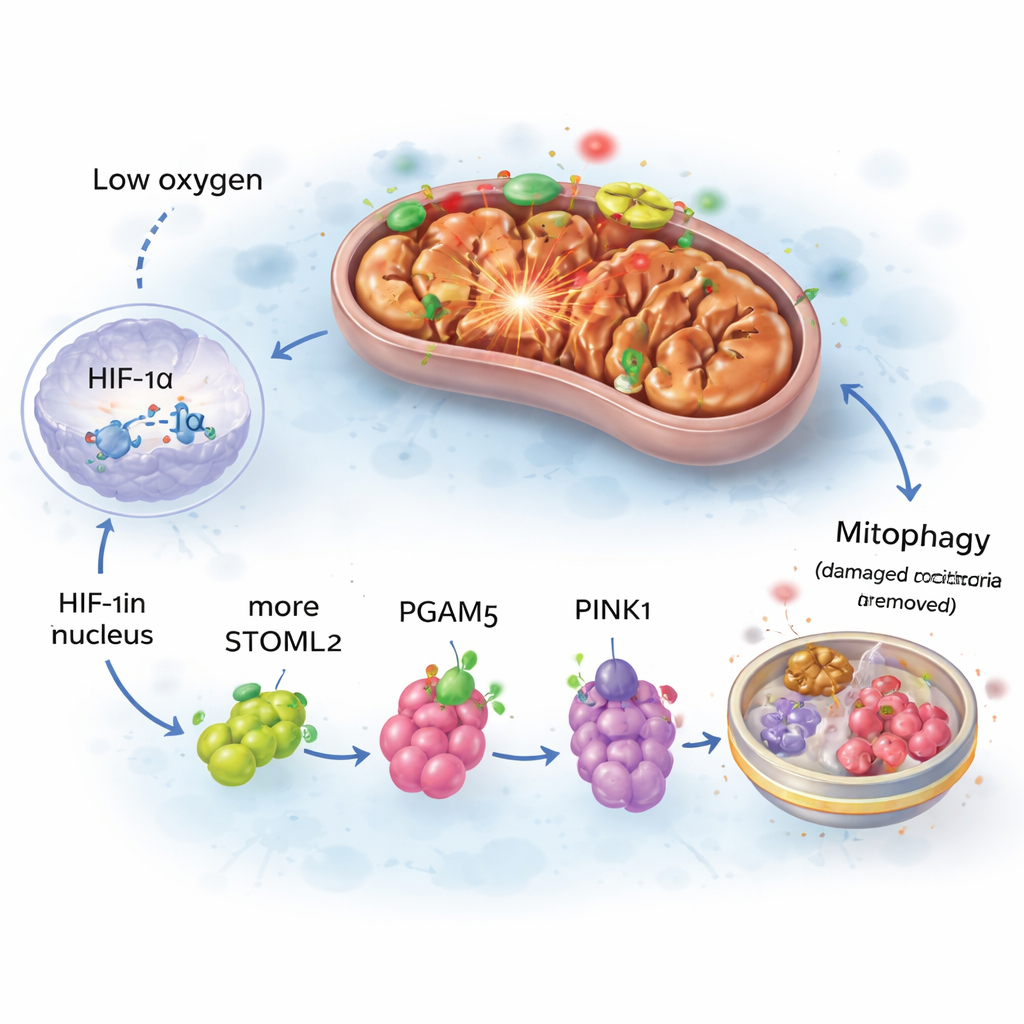
Digging deeper, the researchers traced how this mitochondrial cleanup is switched on. Low oxygen stabilizes a sensor protein called HIF‑1α, which moves into the cell’s nucleus and changes gene activity. One of its targets is STOML2, a protein that relocates to the surface of mitochondria. There, STOML2 helps maintain another protein, PGAM5, in its full‑length form. PGAM5 in turn allows yet another molecule, PINK1, to build up on the outer surface of damaged mitochondria. PINK1 then flags these faulty power plants for removal by the cell’s recycling machinery. When the team selectively reduced HIF‑1α, STOML2, PGAM5, or PINK1 in mouse brains, the early wave of mitophagy disappeared and neurons suffered more damage during low oxygen exposure. This stepwise chain—HIF‑1α to STOML2 to PGAM5 to PINK1—emerged as a core protective pathway.
Training the Brain with Intermittent Low Oxygen
The study also tested a “conditioning” strategy called intermittent hypoxia, in which mice experienced brief, repeated cycles of low and normal oxygen before facing longer‑term low oxygen. This pretreatment turned on the same HIF‑1α/STOML2/PGAM5/PINK1 pathway and boosted mitophagy in the brain. Remarkably, mice that received intermittent hypoxia kept their memory performance even after a week of continuous low oxygen, while untreated animals declined. These findings suggest that carefully controlled bouts of low oxygen can train neurons to activate their own cleanup systems more effectively, much like exercise prepares muscles to handle stress.
What This Means for Protecting the Brain
In everyday terms, the study shows that neurons have a built‑in emergency plan for low‑oxygen situations: they rapidly sense the change, ramp up a protective chain of proteins, and clear out malfunctioning energy factories before they cause widespread damage. When this plan is interrupted, brain cells are far more vulnerable. By mapping this pathway in detail and showing that intermittent hypoxia can trigger it safely, the work points toward future therapies that might mimic or enhance this natural defense. Such approaches could one day help shield the brain from strokes, sleep‑related breathing disorders, and other conditions where oxygen supply is threatened.
Citation: Li, Y., Xu, Z., Tian, Z. et al. Novel mechanism of neuronal hypoxia response: HIF-1α/STOML2 mediated PINK1-dependent mitophagy activation against neuronal injury. Cell Death Discov. 12, 104 (2026). https://doi.org/10.1038/s41420-026-02960-z
Keywords: brain hypoxia, mitophagy, neuronal protection, intermittent hypoxia, mitochondria