Clear Sky Science · en
Taurine is a natural suppressor of urea cycle via targeting ASL
Why a common nutrient matters for liver cancer
Taurine, a familiar ingredient in energy drinks and nutritional supplements, is also a natural molecule made by our bodies. This study explores how taurine can slow the growth of liver tumors by changing how cancer cells handle waste nitrogen. The findings suggest taurine might one day be used alongside existing drugs to make liver cancer treatments more effective and possibly safer.
How liver cancer feeds and cleans itself
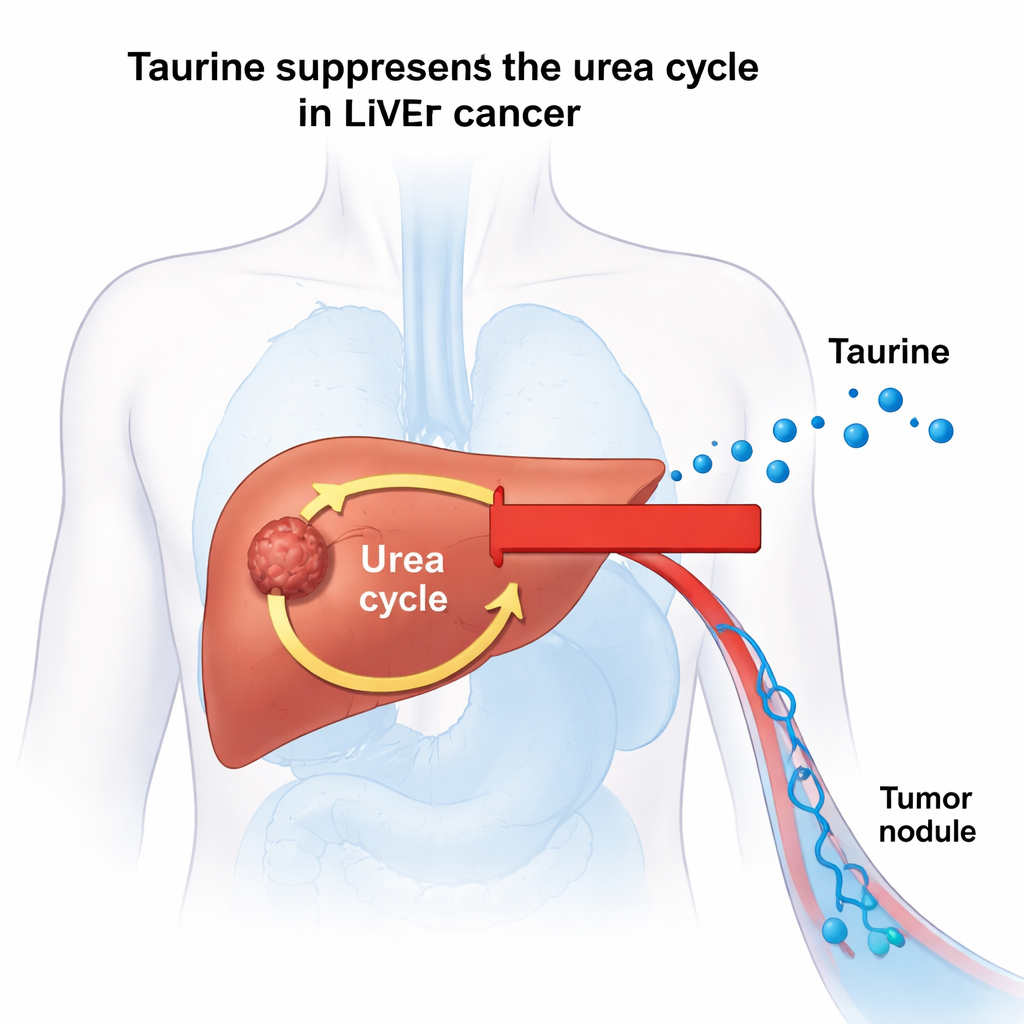
Most primary liver cancers are hepatocellular carcinomas, and they are often diagnosed late, when surgery and standard drugs offer limited benefit. Like all fast-growing cancers, these tumors rewire their metabolism to produce the building blocks they need. One key pathway is the urea cycle, a process largely confined to the liver that converts toxic ammonia into urea so it can be safely excreted. The urea cycle also makes the amino acid arginine, which tumors use to build proteins and other growth-promoting molecules. An enzyme called argininosuccinate lyase (ASL) performs a crucial step in this cycle, generating arginine and a byproduct that fuels the cell’s energy system.
Taurine puts the brakes on a waste-disposal loop
The researchers grew human liver cancer cells in the lab and added taurine at levels closer to those seen in the body than in standard culture media. They found that taurine slowed cancer cell growth over several days. When they examined gene activity, ASL stood out as strongly reduced after taurine treatment. Both the message (mRNA) and protein levels of ASL dropped with time. As ASL declined, the cells produced less arginine and less urea, while toxic ammonia built up inside. In other words, taurine weakened the urea cycle and the cells’ ability to dispose of nitrogen waste, putting stress on the tumor cells.
A hidden switch linking taurine to gene control
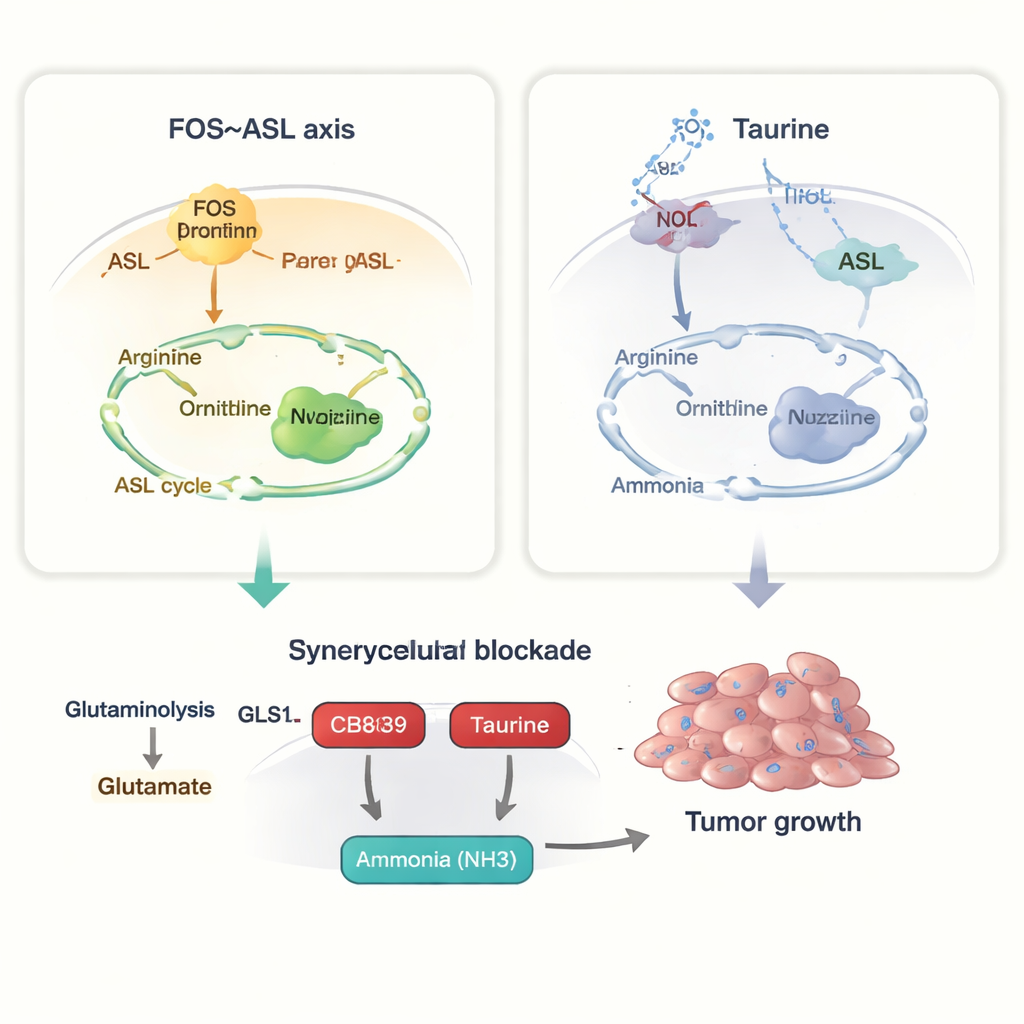
To understand how taurine silences ASL, the team looked for transcription factors—proteins that turn genes on—binding near the ASL gene. They identified binding sites for a factor called FOS, part of a well-known FOS:JUN complex that controls many growth-related genes. Taurine treatment sharply lowered FOS levels. When the scientists deleted FOS in liver cancer cells, ASL levels fell and the urea cycle weakened, mimicking the effect of taurine. Under these conditions, adding taurine had little extra impact, showing that FOS is a key intermediary. When they forced cells to overproduce ASL, taurine could no longer shut down the urea cycle or stop the cells from dividing, confirming that the FOS–ASL pair forms a central metabolic switch controlled by taurine.
Turning taurine into a treatment helper
The study then moved from dishes to mice, implanting liver cancer cells under the skin. Giving taurine by mouth slowed tumor growth, but this effect largely disappeared when ASL had already been reduced, reinforcing that ASL is taurine’s main target. The authors also tested a drug called CB839, which blocks glutaminolysis—a pathway that converts the amino acid glutamine into fuel and ammonia, feeding both energy production and the urea cycle. On its own, CB839 only partially hindered tumor cells. However, when taurine was combined with CB839, the urea cycle was more strongly disrupted, cell growth dropped further in culture, and tumors in mice shrank more than with CB839 alone. This dual hit on both glutamine breakdown and nitrogen disposal created a powerful metabolic bottleneck for the cancer.
What this means for future patients
For non-specialists, the core message is that a naturally occurring amino acid, taurine, can switch off a key enzyme that liver tumors use to process waste and make vital nutrients. By dialing down the FOS–ASL axis, taurine hampers the urea cycle, stresses cancer cells, and boosts the effect of an existing experimental drug that targets glutamine use. While this does not mean people should self-medicate with taurine, the work points to a future where a simple, well-tolerated nutrient could be added to cancer treatment regimens to make targeted drugs more effective and possibly reduce required doses. Carefully designed clinical trials will be needed to test whether this promising laboratory strategy can translate into real benefits for patients with liver cancer.
Citation: Rao, K., Zheng, K., Sun, Y. et al. Taurine is a natural suppressor of urea cycle via targeting ASL. Cell Death Discov. 12, 99 (2026). https://doi.org/10.1038/s41420-026-02959-6
Keywords: taurine, liver cancer, urea cycle, cancer metabolism, combination therapy