Clear Sky Science · en
CREB suppresses PGRP-SC2 to drive age-related immune senescence and gut dysbiosis in Drosophila
Why our aging guts matter
As we grow older, our intestines host different communities of microbes and our immune defenses become less finely tuned. This shift is linked not only to digestive troubles, but also to inflammation, frailty, and shorter lifespan. Using the fruit fly Drosophila as a model, this study uncovers a key molecular switch in gut cells that connects aging, loss of immune balance, and changes in the microbiome—offering clues that may one day inform strategies to keep the aging gut healthier for longer.
A control switch that changes with age
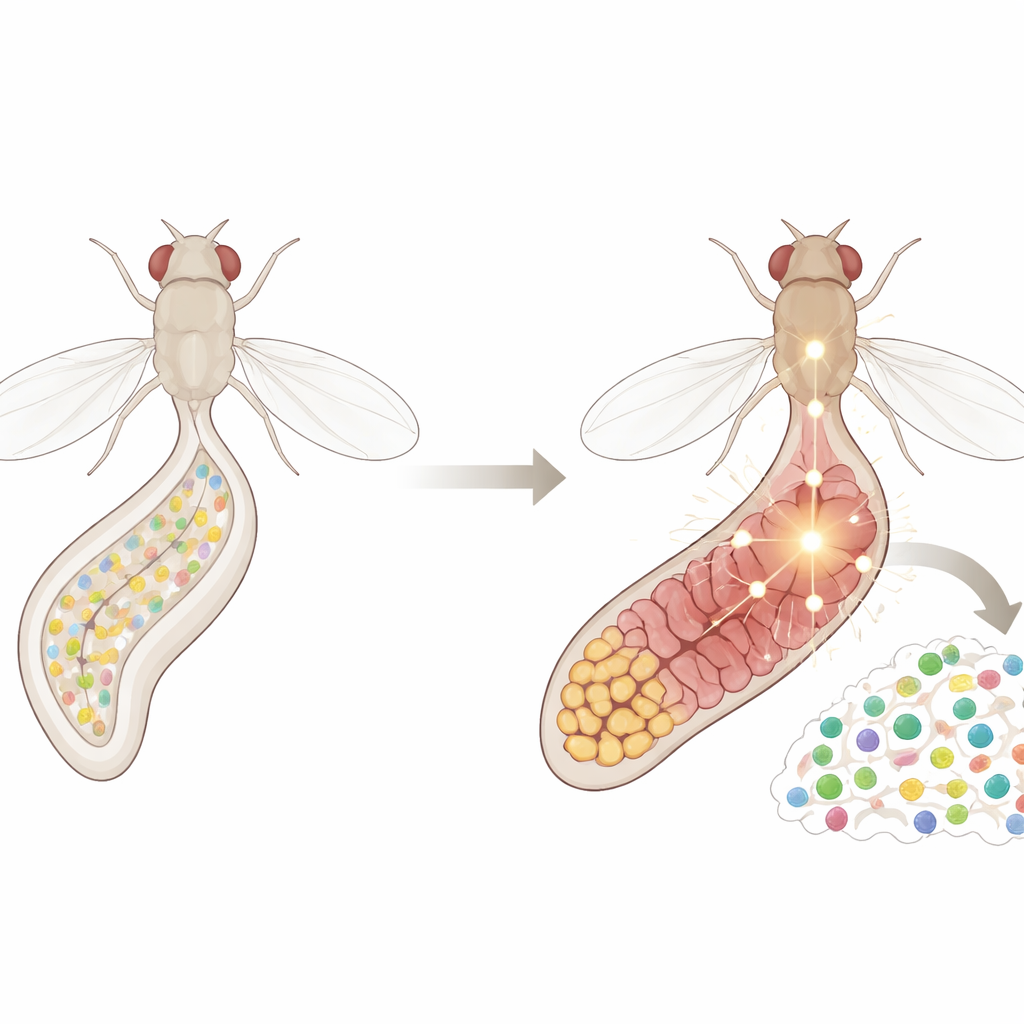
The researchers focus on a protein called CREB, a transcription factor that turns many genes on or off in response to signals inside cells. In young fly guts, CREB activity is relatively low. As flies age, a stress-responsive pathway known as JNK becomes chronically active in the intestinal lining. The team shows that this persistent JNK activity strongly boosts CREB activity in gut epithelial cells, as measured by molecular markers and reporter assays. When JNK is blocked genetically or with a chemical inhibitor, CREB activity in aged guts drops back down, indicating that JNK acts upstream as a main on-switch for CREB during aging.
Microbial balance tips in the aging intestine
To see how this molecular shift affects gut life, the authors examined both the total number of microbes and the types of bacteria living in the fly intestine. When they artificially increased CREB signaling in gut cells, flies developed classic signs of an aged gut: overstimulated stem cells, thickened and disorganized tissue, bacterial overgrowth, and a shorter lifespan. Conversely, flies lacking CREB had fewer bacteria overall and lived longer. Sequencing of bacterial 16S rRNA genes revealed that CREB does not just change how many microbes are present, but also reshapes which groups dominate. In particular, high CREB activity lowered the ratio of Firmicutes to Bacteroidetes—an imbalance also seen in aged flies and in older humans, and often associated with unhealthy inflammation and metabolic problems.
A molecular peacekeeper gets silenced
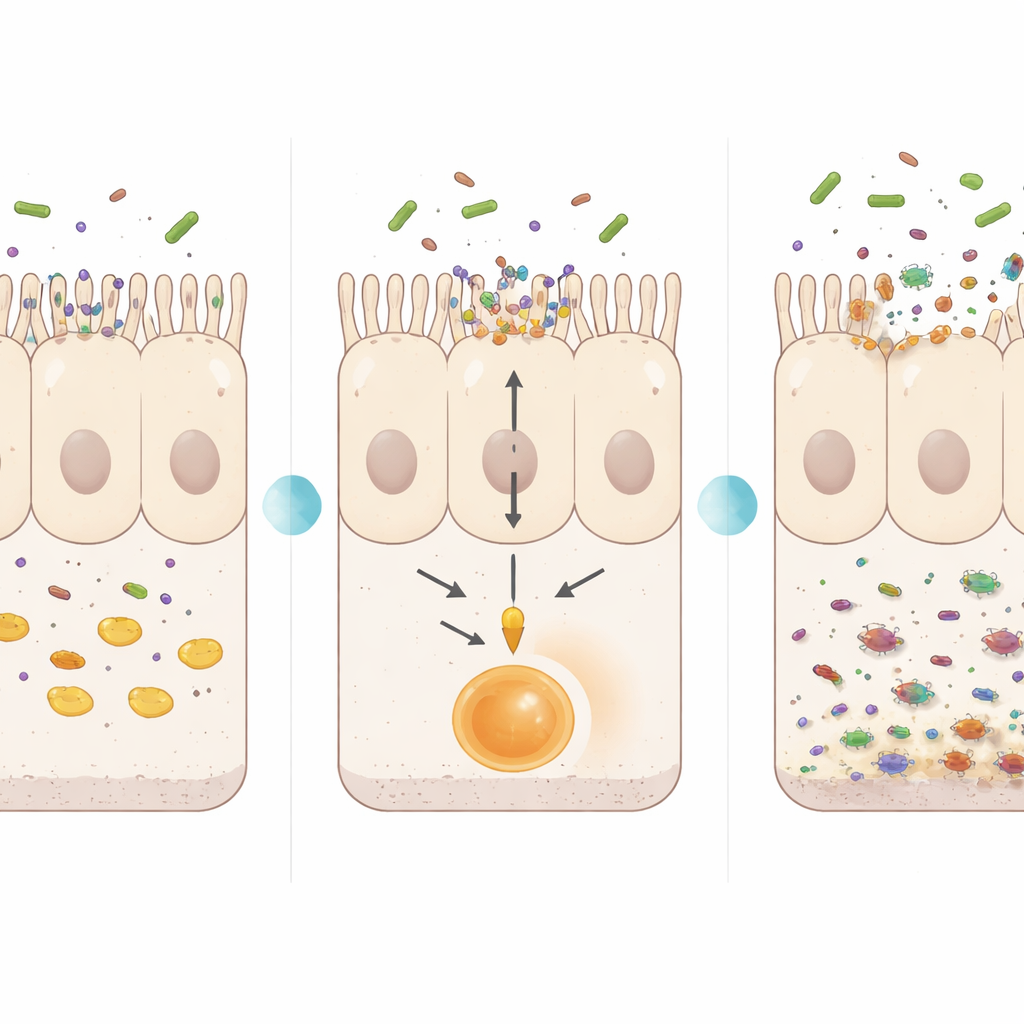
Digging deeper, the team searched for specific immune-related genes controlled by CREB. They identified PGRP-SC2, a member of a family of proteins that recognize bacterial cell-wall fragments and, in this case, help dampen excessive immune reactions by enzymatically breaking down those fragments. In flies with heightened CREB activity in the gut, expression of PGRP-SC2 and its related genes dropped sharply. Biochemical experiments showed that CREB binds directly to regulatory regions in the PGRP-SC2 gene, confirming it as a direct target. Importantly, this regulation operates largely independently of the well-known Imd/Relish pathway (the fly version of certain NF-κB immune signals), revealing a separate layer of immune control that kicks in with age.
From local switch to whole-body consequences
The consequences of turning down PGRP-SC2 were striking. When CREB or its co-activator CRTC were overactive in the gut, flies showed an overactive immune response, stem cell overgrowth, disrupted tissue architecture, and microbial imbalance. But when the researchers simultaneously boosted PGRP-SC2, many of these problems were reversed: stem cell activity normalized, bacterial load and composition moved toward a healthier state, and lifespan improved. Tests also suggested that PGRP-SC2 made in distant tissues such as the fat body (a fly organ analogous to liver and fat) was not the main driver of gut aging. Instead, the harmful changes in immunity and microbes trace back to CREB’s actions directly within the intestinal lining itself.
What this means for healthy aging
To a non-specialist, the key message is that a stress-activated control protein in gut cells, CREB, becomes chronically switched on with age and in turn shuts down a natural immune “brake” called PGRP-SC2. Losing this brake pushes the gut immune system into a dysfunctional state, leading to microbial overgrowth, disturbed microbial balance, damage to the intestinal wall, and overall shorter life. By pinpointing this CREB–PGRP-SC2 axis as a central culprit in age-related immune decline and dysbiosis in flies, the study highlights a potential target pathway that, if similarly conserved in humans, might one day be tuned to promote a healthier gut and healthier aging.
Citation: Wang, S., Qi, B., Ma, P. et al. CREB suppresses PGRP-SC2 to drive age-related immune senescence and gut dysbiosis in Drosophila. Cell Death Discov. 12, 108 (2026). https://doi.org/10.1038/s41420-026-02955-w
Keywords: gut aging, microbiome, immune regulation, Drosophila, CREB signaling