Clear Sky Science · en
Dual targeting of PI3Kδ and PPARα enhances antitumor activity via FoxO1 activation in follicular lymphoma
Why pairing smart drugs could matter for lymphoma
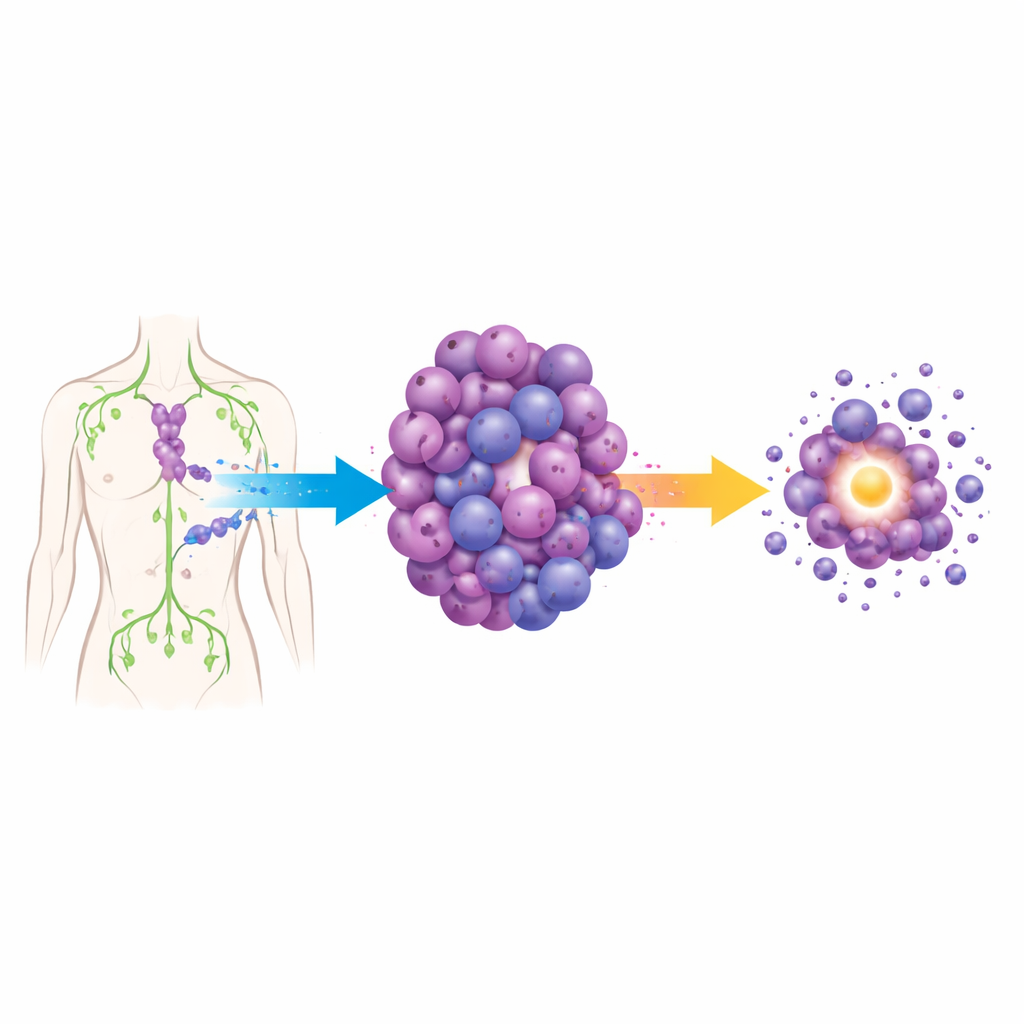
Follicular lymphoma is a common blood cancer that often returns after initially successful treatment. Many newer drugs aim to choke off the survival signals that lymphoma cells rely on, but tumors can adapt and begin growing again. This study explores a strategy that hits the cancer from two angles at once—blocking a key growth signal while rewiring the tumor’s energy use—to push lymphoma cells into a deeper and more lasting shutdown.
A stubborn lymphoma that keeps coming back
Follicular lymphoma develops in the lymph nodes and usually grows slowly, but it is rarely cured with standard chemo‑antibody combinations. More than half of patients relapse within a decade, and some cases transform into faster‑growing disease. One promising class of drugs inhibits PI3Kδ, a molecule that helps transmit growth and survival signals inside B cells, the type of white blood cell from which this lymphoma arises. The PI3Kδ blocker linperlisib can shrink tumors in patients who have already tried several treatments. However, responses often fade because cancer cells find alternative ways to survive, highlighting the need for drug partners that close off escape routes.
Using cancer metabolism as a second weak spot
Cancer cells do not just rely on faulty growth signals; they also rewire how they make and use energy. Follicular lymphoma cells tend to favor rapid sugar burning (glycolysis), which supports their survival. The drug chiglitazar activates a protein called PPARα, a master controller of how cells process fats and sugars. By nudging cells away from glycolysis toward more orderly energy production, PPARα activation can stress tumors that depend on flexible metabolism. The researchers reasoned that combining linperlisib, which cuts growth signals, with chiglitazar, which tightens metabolic control, might give lymphoma cells less room to adapt.
Two drugs together stop growth and trigger cell death
In three different follicular lymphoma cell lines, each drug alone slowed growth, but the combination consistently worked better than either on its own. The paired drugs sharply reduced DNA copying, trapped cells at the checkpoint where they decide whether to divide, and triggered much higher levels of programmed cell death. Detailed protein measurements showed that pro‑death proteins increased, survival proteins fell, and key engines of cell‑cycle progression were switched off. In mouse models carrying human lymphoma—both from cell lines and from patient samples—the combination shrank tumors more, lowered markers of cell proliferation, and did so without causing obvious weight loss or other major toxicity.

Reawakening an internal safety switch inside cancer cells
The team then asked what unifying mechanism could explain these effects. By scanning changes in gene activity and cell metabolism, they focused on a transcription factor called FoxO1, a protein that acts like an internal safety switch, promoting orderly cell death and halting division when needed. In many B‑cell cancers, FoxO1 is silenced by the very PI3K/AKT signals that linperlisib targets. The researchers found that the drug pair not only weakened this signaling but also boosted activity of PPARα, which in turn directly switched on the FoxO1 gene and reduced sugar‑burning pathways that normally keep FoxO1 in check. As a result, FoxO1 moved into the cell nucleus, where it could turn on genes that drive cell death and cell‑cycle arrest.
Proving FoxO1 is the key link
To test whether FoxO1 was truly essential, the scientists engineered lymphoma cells to produce much less of this protein. In these FoxO1‑reduced cells, the combination treatment was far less effective: fewer cells died, more kept dividing, and the usual shifts in death‑promoting and cell‑cycle proteins were blunted. In mice carrying patient‑derived tumors, the strongest tumor control coincided with the greatest FoxO1 activation and the lowest activity of the PI3K/AKT pathway. Together, the results indicate that FoxO1 sits at the crossroads of signal blocking and metabolic tightening, converting the dual drug hit into a strong anti‑tumor response.
What this could mean for patients
To a non‑specialist, the takeaway is that the study offers a blueprint for making targeted lymphoma drugs work harder and longer by pairing them with agents that rewire how cancer cells fuel themselves. By jointly blocking a growth switch (PI3Kδ) and reshaping metabolism through PPARα, the combination of linperlisib and chiglitazar reactivates the cell’s own internal brake, FoxO1, forcing lymphoma cells to stop dividing and self‑destruct. Because this approach controlled tumors better than either drug alone and appeared well tolerated in preclinical models, the authors argue it is ready to be tested in patients, with FoxO1 levels serving as a potential marker to identify who is most likely to benefit.
Citation: Wang, W., Zhou, H., Tan, S. et al. Dual targeting of PI3Kδ and PPARα enhances antitumor activity via FoxO1 activation in follicular lymphoma. Cell Death Dis 17, 341 (2026). https://doi.org/10.1038/s41419-026-08593-5
Keywords: follicular lymphoma, targeted therapy, cancer metabolism, PI3K inhibitors, FoxO1