Clear Sky Science · en
HNRNPH1 drives glioblastoma progression by regulating the splicing of cell cycle genes
Why this brain cancer study matters
Glioblastoma is one of the deadliest forms of brain cancer, in part because its cells divide quickly yet still manage to avoid self-destruction. This study uncovers how a little-known molecule inside tumor cells helps them keep dividing in an orderly way, instead of falling apart. By exposing this hidden support system, the work points to new ways doctors might one day push glioblastoma cells over the edge and stop tumors from growing.
The hidden helper inside tumor cells
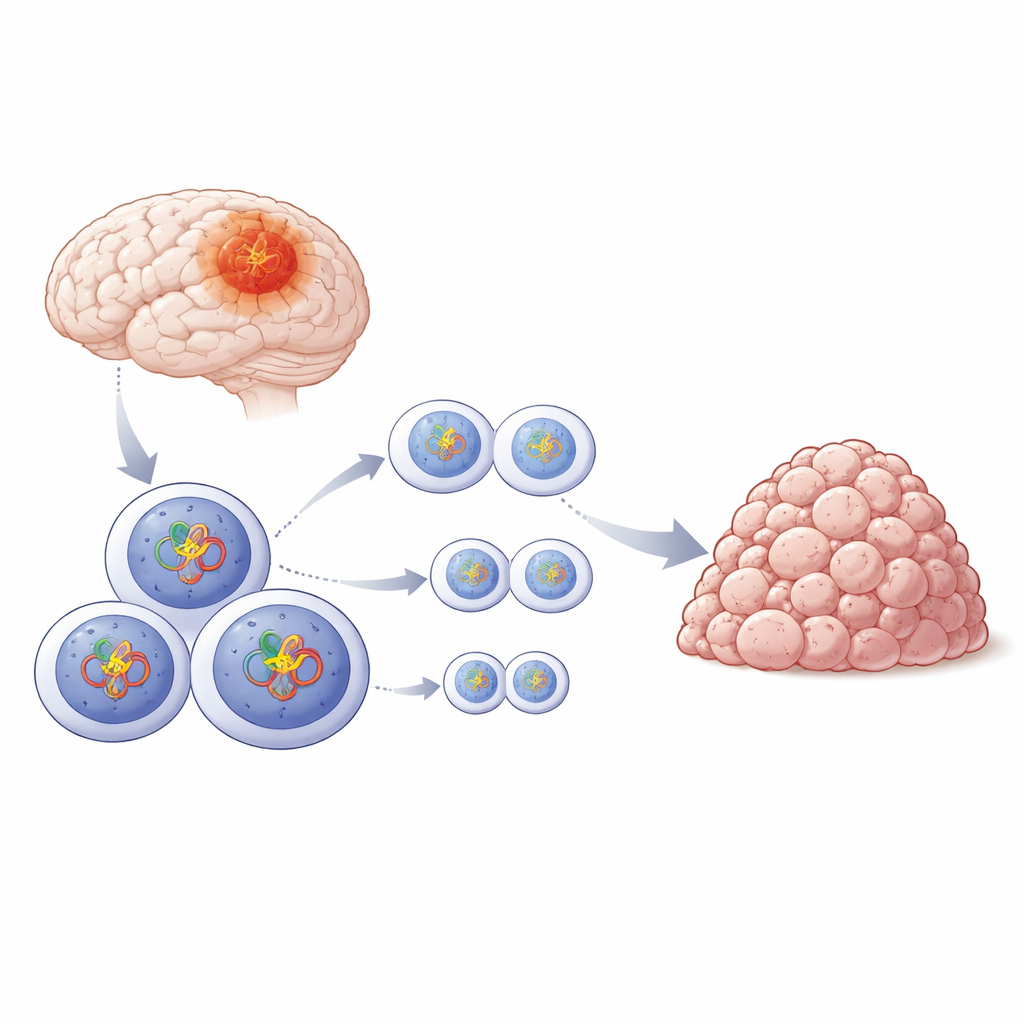
The researchers focused on glioblastoma, an aggressive brain tumor that often resists surgery, radiation, and chemotherapy. Cancer cells usually carry many DNA mutations that drive them to divide, but they still rely on intact machinery to copy and separate their chromosomes during each cell cycle. If this machinery fails, cells can die in a process called “mitotic catastrophe.” The team asked which molecular players help glioblastoma cells preserve this delicate division process, despite their damaged genomes.
A traffic controller for genetic messages
They homed in on a protein called HNRNPH1, part of a family of molecules that bind RNA—the short-lived messages copied from DNA. These proteins help decide how raw RNA transcripts are cut and stitched together before being turned into proteins, a process known as splicing. By analyzing large patient datasets and tumor samples, the scientists found that HNRNPH1 is produced at much higher levels in glioblastoma tissue than in normal brain. Single-cell and spatial mapping showed that it is especially abundant in tumor cells that resemble immature, fast-dividing brain cells and in well-oxygenated, highly proliferative regions of the tumor, but much lower in oxygen-poor, stressed areas.
How HNRNPH1 keeps cell division on track
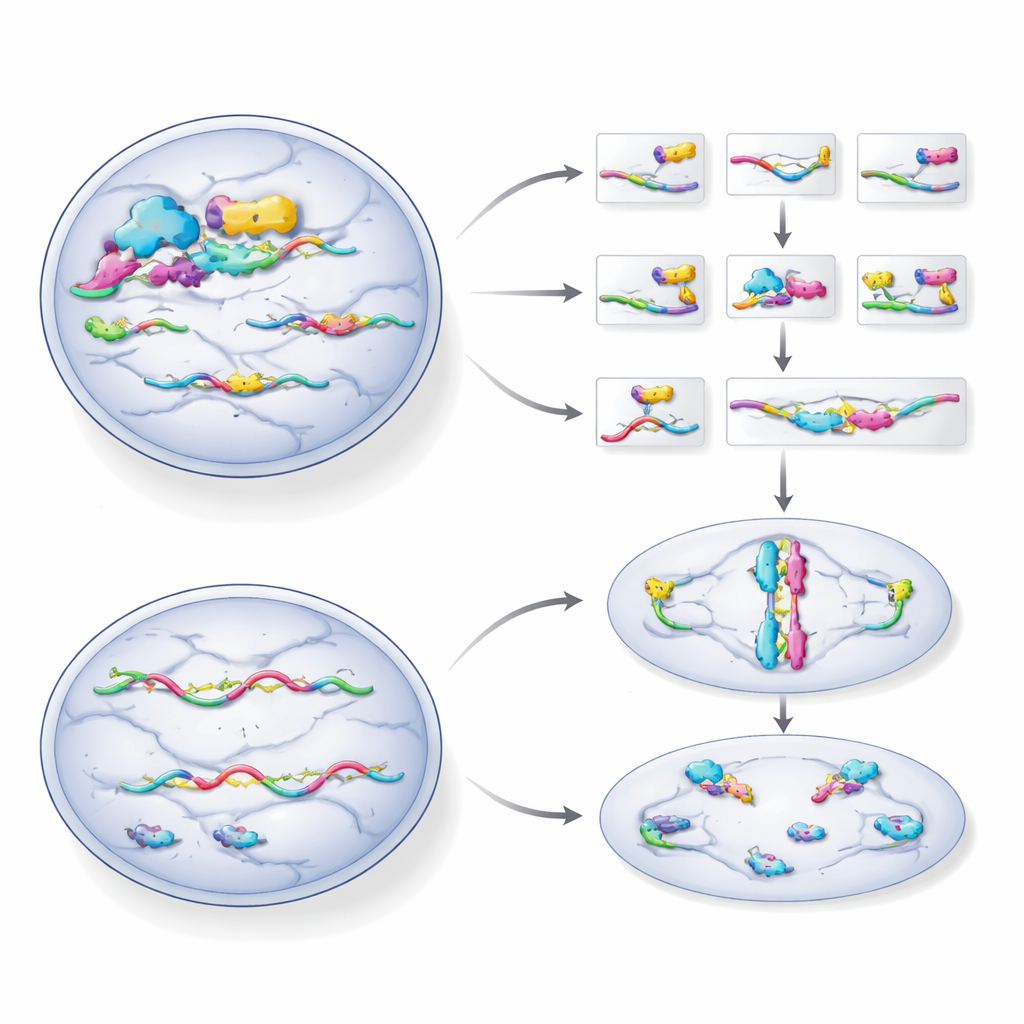
To see what happens when HNRNPH1 is removed, the team used gene-editing and RNA-silencing tools to reduce this protein in cultured glioblastoma cells. This triggered sweeping changes in the activity of thousands of genes, with especially strong effects on those that govern the G2/M checkpoint—the final quality-control step before a cell divides. HNRNPH1 was found to bind directly to the RNA blueprints of several key division regulators, including proteins that help chromosomes separate correctly. When HNRNPH1 was lost, these RNAs were spliced incorrectly or produced in lower amounts, leading to fewer of the proteins needed for orderly mitosis.
When the helper is gone, cell division falters
Cells lacking HNRNPH1 slowed their growth, accumulated in the late stages of the cell cycle, and developed enlarged, misshapen, or fragmented nuclei—classic signs that division is going wrong. Under the microscope, there were fewer cells caught in the act of normal mitosis, and their internal scaffolding for pulling chromosomes apart was disrupted. The team also discovered that HNRNPH1 steers the splicing of another regulator, UHRF2, shifting its RNA between a productive form and a defective one. Without HNRNPH1, more UHRF2 messages were mis-edited, lowering the amount of working protein and further disturbing cell-cycle control.
Evidence from tumors in living brains
The scientists then tested the importance of HNRNPH1 in mouse models. They implanted human glioblastoma cells, either normal or engineered to have reduced HNRNPH1, into the brains of mice. Animals that received control cells quickly developed large tumors and died sooner. Mice given cells with HNRNPH1 knocked down developed much smaller or delayed tumors and survived longer. However, the tumors that eventually grew had regained HNRNPH1 activity, suggesting that cells unable to restore this protein were at a strong disadvantage and could not sustain tumor growth.
What this means for future treatment
Overall, the study shows that glioblastoma cells depend on HNRNPH1 to correctly process a network of genetic messages that control cell division, allowing them to proliferate without immediately destroying themselves. For a layperson, this protein can be thought of as a behind-the-scenes editor that keeps the cancer cell’s instruction manual readable. Disrupting HNRNPH1—or the specific splicing events it controls—could make tumor cells more prone to fatal errors during division, opening a potential new route for therapies that push glioblastoma past its breaking point while complementing existing treatments.
Citation: Villa, G.R., Alimonti, P., Toker, J.S. et al. HNRNPH1 drives glioblastoma progression by regulating the splicing of cell cycle genes. Cell Death Dis 17, 352 (2026). https://doi.org/10.1038/s41419-026-08576-6
Keywords: glioblastoma, cell cycle, RNA splicing, tumor biology, brain cancer