Clear Sky Science · en
Marrow leptin-LEPR signaling rewires mitochondrial oxidative metabolism to confer chemoresistance in acute myeloid leukemia
Why Fat in Bone Marrow Matters for Leukemia Treatment
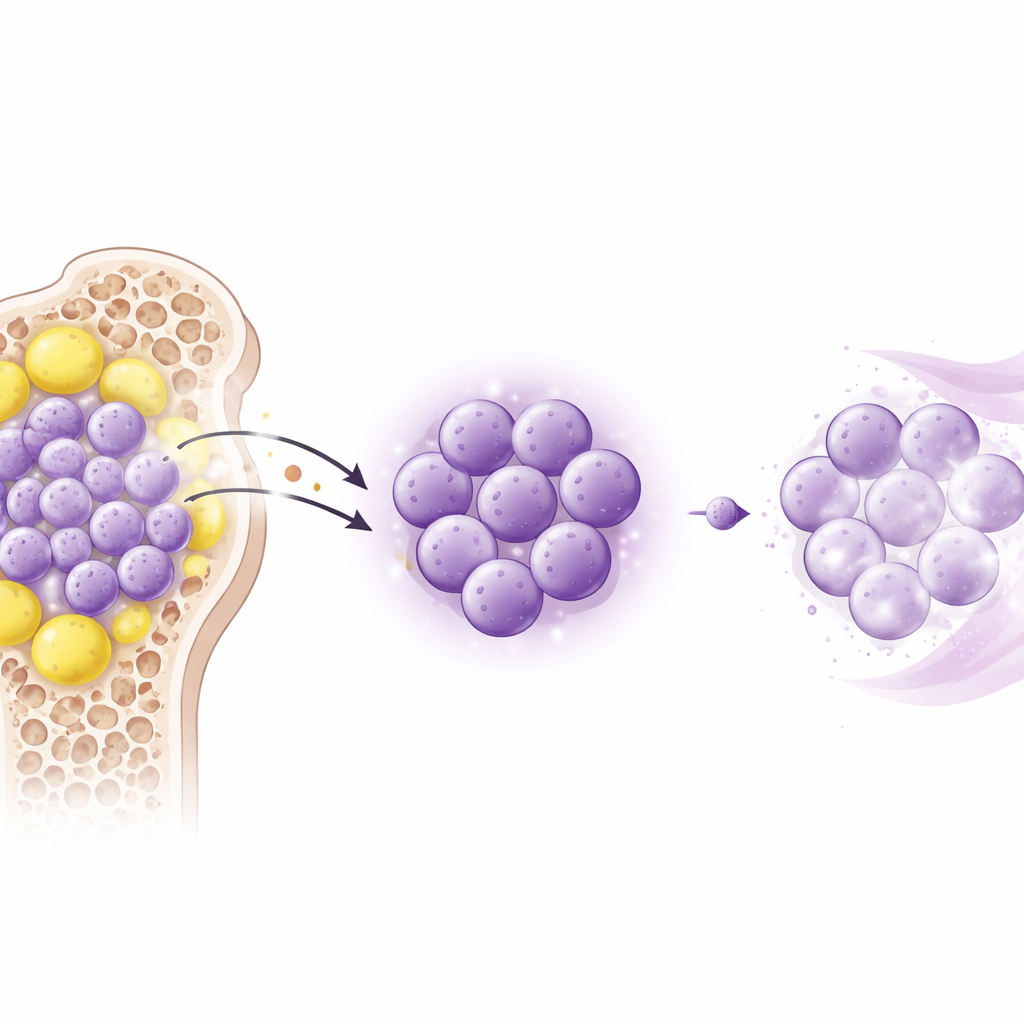
Many people have heard that body fat can influence diseases like diabetes and heart trouble, but few realize that fat hidden inside our bones may also affect how blood cancers respond to treatment. This study explores how a hormone made by fat cells, called leptin, helps shield acute myeloid leukemia (AML) cells from standard chemotherapy. Understanding this hidden protection system could point to new ways to make existing drugs work better for patients.
A Hormone that Tips the Odds Against Chemotherapy
The researchers began by studying bone marrow samples from adults newly diagnosed with AML. They measured leptin levels in the marrow and looked at how well patients cleared leukemia cells after receiving a common chemotherapy drug called cytarabine. Patients with higher marrow leptin and higher levels of its receptor on leukemia cells were less likely to respond to treatment and had shorter survival. Even after taking into account other risk factors, leptin remained a strong indicator that chemotherapy would work poorly. This suggested that the fat-derived hormone was doing more than simply mirroring disease severity; it was actively linked to resistance.
Animal Models Reveal a Hidden Shield
To test whether leptin actually causes drug resistance, the team turned to two mouse models of AML that closely mimic the human disease. Mice received cytarabine alone, cytarabine plus extra leptin, or cytarabine together with a small peptide that blocks the leptin receptor. Adding leptin shortened survival, enlarged the spleen and liver, and allowed leukemia cells to flood these organs despite chemotherapy. In contrast, blocking the receptor did not slow leukemia growth on its own but significantly boosted the impact of cytarabine, shrinking diseased organs and reducing leukemia burden. These findings show that leptin’s main effect is not to speed cancer growth directly, but to make leukemia cells harder to kill when chemotherapy is applied.
Powering Up the Cell’s Energy Centers
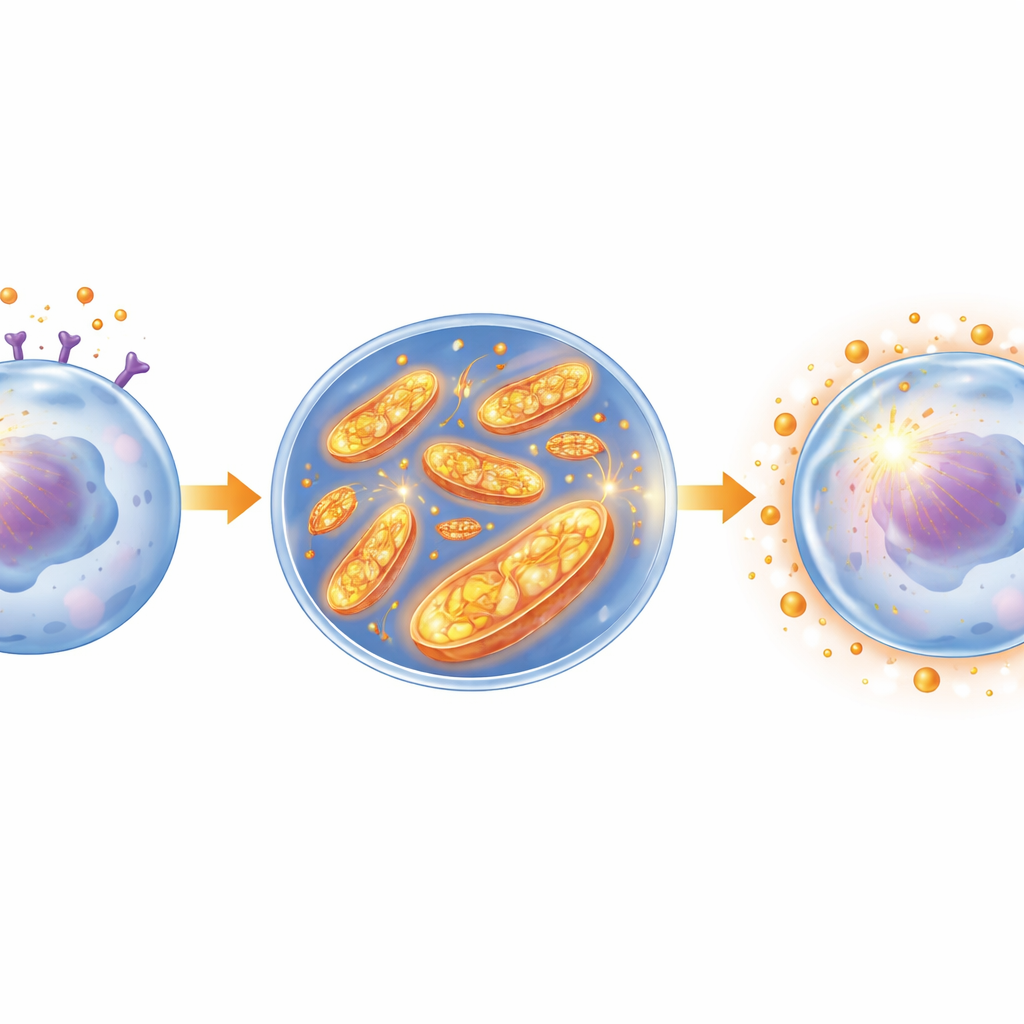
Diving deeper, the scientists examined how leptin changes leukemia cell metabolism. They found that leptin turns on a signaling chain inside the cell, known as JAK2/STAT3, which in turn revs up the mitochondria—the tiny power plants that produce energy. In both mouse leukemia cells and human AML cell lines, leptin boosted the activity of one key mitochondrial component, complex I, and increased overall oxidative metabolism. This shift generated more reactive oxygen species inside mitochondria. Paradoxically, instead of damaging the cells, this steady rise in reactive molecules triggered an adaptive response: leukemia cells ramped up their antioxidant defenses, such as glutathione and detoxifying enzymes, creating a powerful internal shield.
When Stress Becomes Armor
The team showed that this shield is central to chemoresistance. Leptin-treated leukemia cells displayed higher total antioxidant capacity and were less affected by cytarabine and another drug, daunorubicin. Removing the leptin receptor using gene editing weakened this antioxidant network, lowered protective molecule levels, and made cells far more sensitive to treatment, even without leptin present. Additional experiments confirmed that a sharp burst of mitochondrial stress could also trigger a similar protective program, while scavenging these reactive molecules tore down the shield and restored drug sensitivity. Importantly, blocking JAK2/STAT3 signaling or the leptin receptor itself prevented complex I activation, reduced mitochondrial stress signals, collapsed the antioxidant barrier, and made chemotherapy effective again.
Turning a Weakness into a New Treatment Angle
For patients, the study’s message is that leukemia cells can exploit a hormone made by nearby fat cells to survive chemotherapy. Leptin from bone marrow fat binds to its receptor on leukemia cells, rewires their mitochondria into high-gear energy producers, and uses the resulting low-level stress to switch on an antioxidant safety net. This net protects the cells from the harsher damage caused by cancer drugs. By blocking the leptin receptor or its downstream signaling, doctors may one day be able to strip away this protection and allow existing chemotherapies to work as intended, without necessarily increasing drug doses. In this way, a better understanding of how bone marrow fat talks to leukemia cells could directly translate into more durable remissions for people living with AML.
Citation: Liao, X., Dai, W., Xu, X. et al. Marrow leptin-LEPR signaling rewires mitochondrial oxidative metabolism to confer chemoresistance in acute myeloid leukemia. Cell Death Dis 17, 249 (2026). https://doi.org/10.1038/s41419-026-08528-0
Keywords: acute myeloid leukemia, leptin, chemoresistance, mitochondria, oxidative stress