Clear Sky Science · en
Targeting replication stress in neuroblastoma by exploiting the synergistic potential of second generation RRM2 and CHK1 inhibitors
Stopping Childhood Tumors at Their Weak Spot
Neuroblastoma is one of the most dangerous childhood cancers, and current treatments still fail too many children. This study explores a clever strategy: instead of attacking tumor cells broadly, it exploits a built‑in weakness in how these cells copy their DNA. By pairing two new types of drugs that push cancer cells’ replication machinery beyond its limits, the researchers aim to kill aggressive tumors more precisely while sparing healthy tissue.
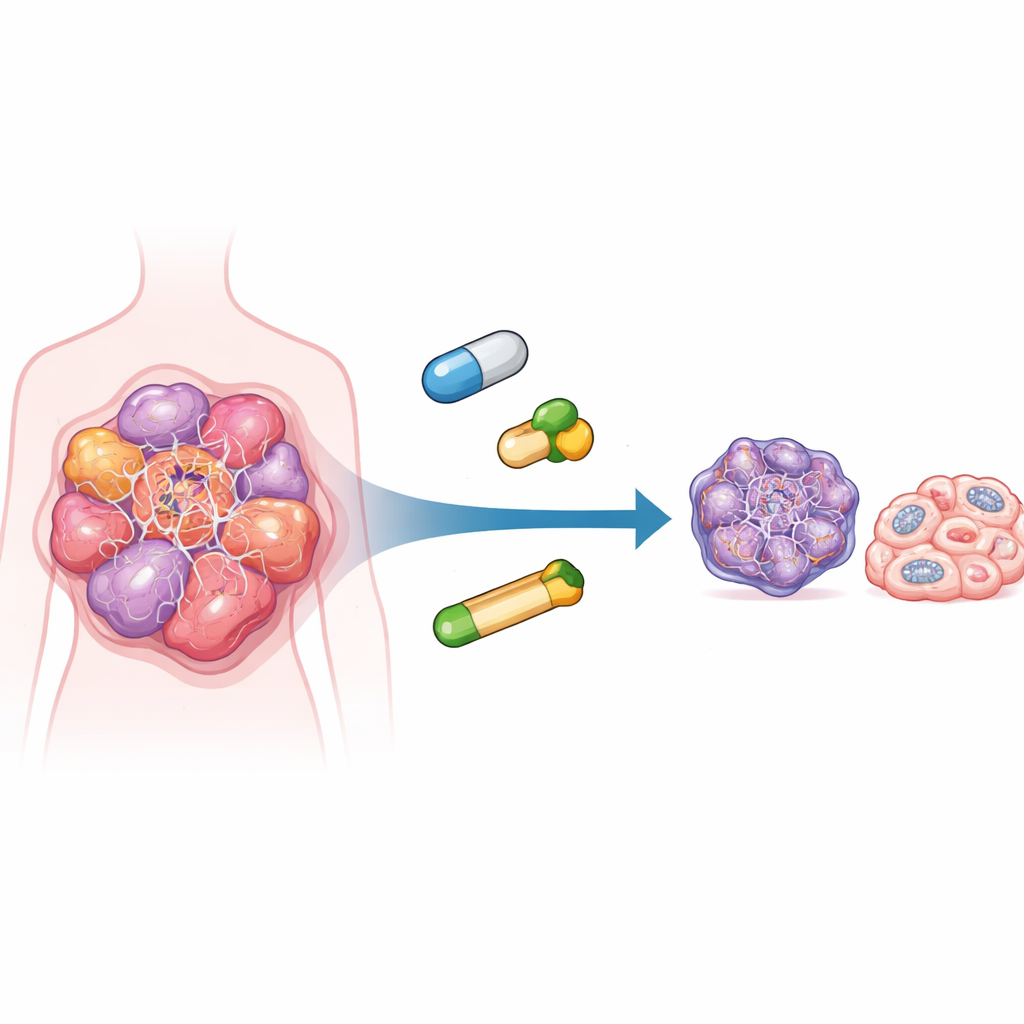
Fast-Growing Cancer Cells Under Pressure
Cancer cells grow and divide at breakneck speed, which puts enormous strain on the process of copying their DNA. When this copying, or “replication,” slows or stalls, it creates what scientists call replication stress. Neuroblastoma cells already live close to this breaking point, relying heavily on emergency repair systems to survive. One key helper is an enzyme called ribonucleotide reductase, which supplies the building blocks needed to make fresh DNA. Its RRM2 component is especially important in fast-dividing cells, making it an attractive target for anti-cancer therapy.
A New Type of Drug Aims at DNA Building Blocks
Older drugs that interfere with RRM2, such as hydroxyurea and triapine, showed promise but caused serious side effects and resistance in patients. In this work, the team tested TAS1553, a new compound specifically designed to break the physical link between the two halves of the DNA-building enzyme, RRM1 and RRM2. When they treated neuroblastoma cells grown in dishes and in three-dimensional “tumoroids,” TAS1553 slowed growth, starved cells of DNA building blocks, and triggered clear signs of DNA damage and programmed cell death. Importantly, healthy control cells were much less affected, hinting at a therapeutic window where tumor cells are more vulnerable than normal tissue.
Two-Drug Combinations Hit Tumors Much Harder
Because cancer cells often adapt to single drugs, the researchers focused on combinations. They paired TAS1553 with drugs that block CHK1, a protein that normally helps cells pause and repair problems during DNA replication. Using two different CHK1 inhibitors, prexasertib and the more selective SRA737, they observed strong synergy: together, the drugs reduced tumor cell growth far more than either alone and sharply boosted markers of cell death. This effect showed up not only in standard cell lines, but also in patient-derived tumoroids and in pediatric sarcoma models, suggesting that the approach could be useful beyond neuroblastoma.
Proof of Concept in Living Zebrafish
To test whether the combination works in a living organism, the team implanted human neuroblastoma cells into tiny zebrafish larvae, creating “avatar” tumors that can be watched under the microscope. Treating these fish with TAS1553 plus either CHK1 inhibitor, at doses that did not harm the animals, led to a surge of dying cancer cells inside the grafted tumors compared with either drug alone. This in vivo evidence strengthens the idea that dual targeting of DNA building and DNA safety checks can push already stressed tumor cells over the edge while leaving the host relatively unharmed.
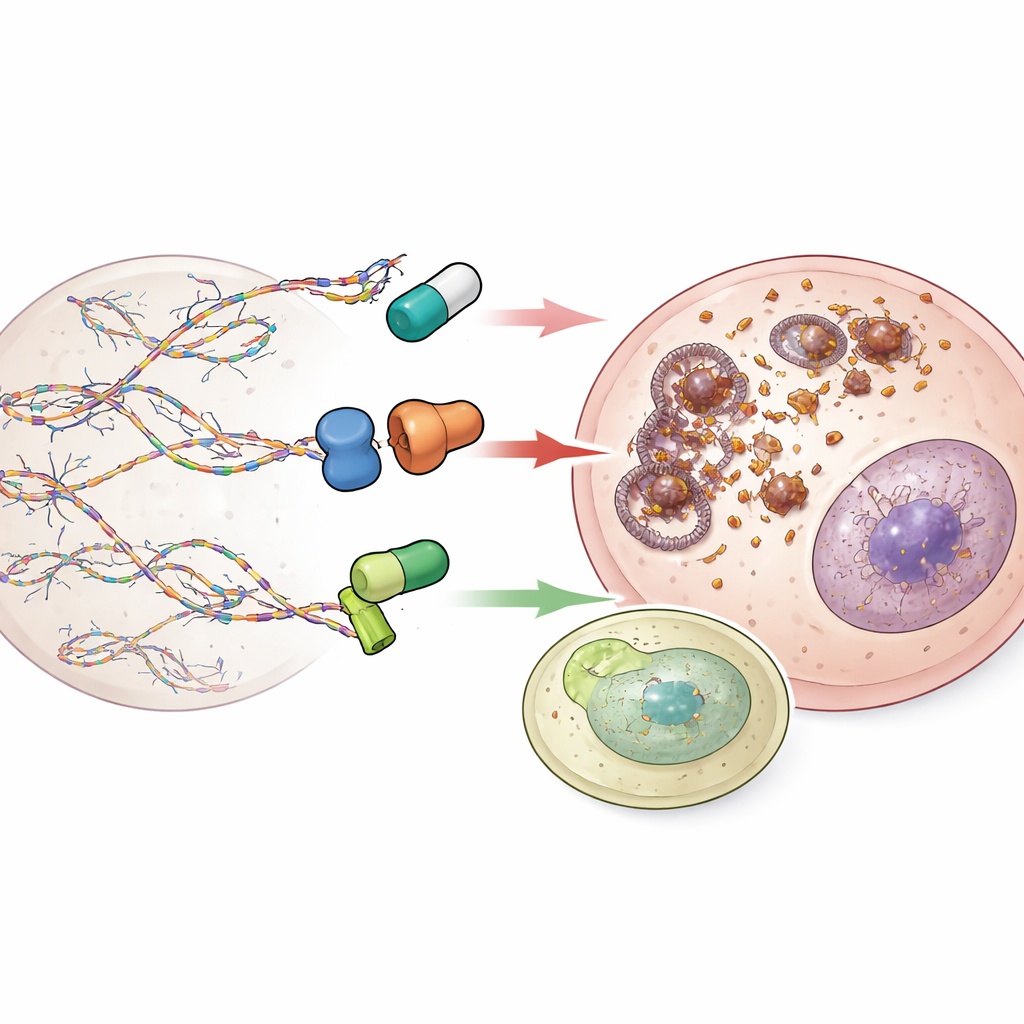
Unexpected Clues in Gene Activity and RNA Processing
By examining which genes were switched on or off after treatment, the researchers found that TAS1553 alone and in combination activated cell-death pathways and weakened programs driven by MYC and MYCN, powerful growth-promoting genes often elevated in aggressive cancers. Surprisingly, TAS1553 also dampened the activity of many components of the cell’s RNA splicing machinery, which edits raw genetic messages before they are used. Because faulty splicing is linked to genome instability, this extra pressure may further unbalance tumor cells and could open the door to future combinations with splicing-targeted drugs.
What This Could Mean for Future Treatments
In simple terms, this study shows that neuroblastoma and related childhood tumors can be attacked by simultaneously cutting off their DNA building supplies and blocking their emergency repair brakes. The new RRM2 disruptor TAS1553, especially when combined with modern CHK1 inhibitors like SRA737, pushes cancer cells beyond their ability to cope with replication stress, leading to selective tumor cell death in both lab models and zebrafish. While more work is needed before these combinations reach children—particularly to confirm safety and effectiveness in human trials—the research outlines a promising path toward smarter, more targeted therapies for high‑risk pediatric cancers.
Citation: Nelen, I.H., Leys, S., Bekaert, SL. et al. Targeting replication stress in neuroblastoma by exploiting the synergistic potential of second generation RRM2 and CHK1 inhibitors. Cell Death Dis 17, 263 (2026). https://doi.org/10.1038/s41419-026-08514-6
Keywords: neuroblastoma, DNA replication stress, combination therapy, CHK1 inhibitor, RRM2 inhibitor