Clear Sky Science · en
ROR1-PI3K/AKT signaling drives adaptive resistance to cell cycle blockade in TP53 mutated ovarian cancer
Why this research matters for women’s health
Ovarian cancer is one of the deadliest cancers in women largely because tumors often become resistant to chemotherapy. This study asks a crucial question: when powerful drugs are designed to push cancer cells into a lethal division error, how do those cells still find ways to survive, and can that escape route itself be turned into a weakness? By tracking ovarian cancer cells over weeks to months of treatment, the researchers uncover a central control system inside the cells that decides whether they keep dividing or hunker down and repair damage—and reveal a new way to attack tumors that have already learned to resist standard drugs. 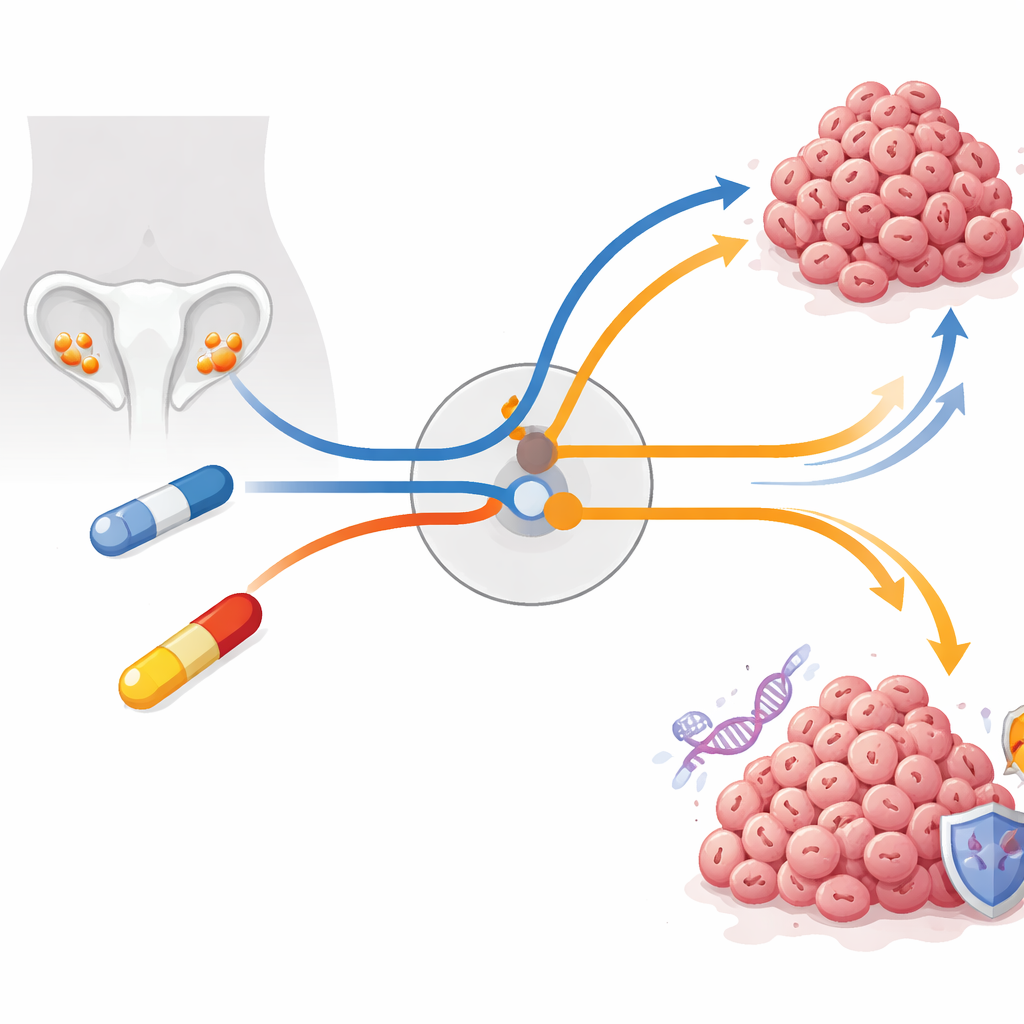
Two common drugs, one shared escape route
The team focused on high-grade serous ovarian cancer, the most aggressive and common form of the disease, which almost always carries mutations in the TP53 “guardian of the genome” gene. Because TP53 is broken, these tumors are unusually dependent on later checkpoints in the cell division cycle. Two drugs widely used or tested in this setting exploit that weakness: adavosertib, an experimental WEE1 inhibitor that pushes damaged cells prematurely into division, and paclitaxel, a backbone chemotherapy that freezes the internal scaffolding needed for chromosomes to separate. In theory, both should drive cancer cells into “mitotic catastrophe”—a fatal division failure. Yet in the clinic and lab, tumors frequently adapt. The researchers created long-term resistant cell models by slowly escalating drug doses over months, better mimicking what happens in patients than short, high-dose experiments.
How cancer cells remodel themselves to survive
Using advanced imaging and “Cell Painting”—a technique that stains multiple cell structures at once—the scientists saw that resistant cells did not simply look like their former selves. Many had multiple nuclei, reorganized internal scaffolds, and formed more tightly packed clusters and smaller, more scattered 3D spheroids, hallmarks of partial shape-shifting known as epithelial–mesenchymal transition. These physical changes hinted that the cells had rewired how they moved, divided, and interacted. At the same time, detailed single-cell RNA sequencing revealed that each drug and cell line evolved its own pattern of altered genes and chromosomes. Despite this genetic diversity, a consistent theme emerged: activity of a growth and survival pathway centered on PI3K and AKT rose across resistant models, often accompanied by related signaling routes such as MAPK and NF-κB.
A cellular switch between “fast bypass” and “slow repair”
Diving deeper, the researchers found that this PI3K/AKT system acts like a switch that toggles cancer cells between two survival strategies. In a “fast-bypass” mode, high PI3K/AKT activity disables the FOXO3 brake protein and weakens cell-cycle checkpoints, allowing cells to keep dividing and dodge the lethal effects of adavosertib or paclitaxel. In a contrasting “slow-repair” mode, PI3K/AKT activity is lower, FOXO3 remains active in the nucleus, and cells slow their replication, engage DNA repair programs, and pump drugs out more efficiently. Remarkably, early short-term drug exposure triggered a sharp burst of PI3K/AKT activity in all models; longer-term resistance then settled into either the fast-bypass or slow-repair state depending on the cancer’s genetic background and prior signaling. This shows that the same central hub can support very different escape routes. 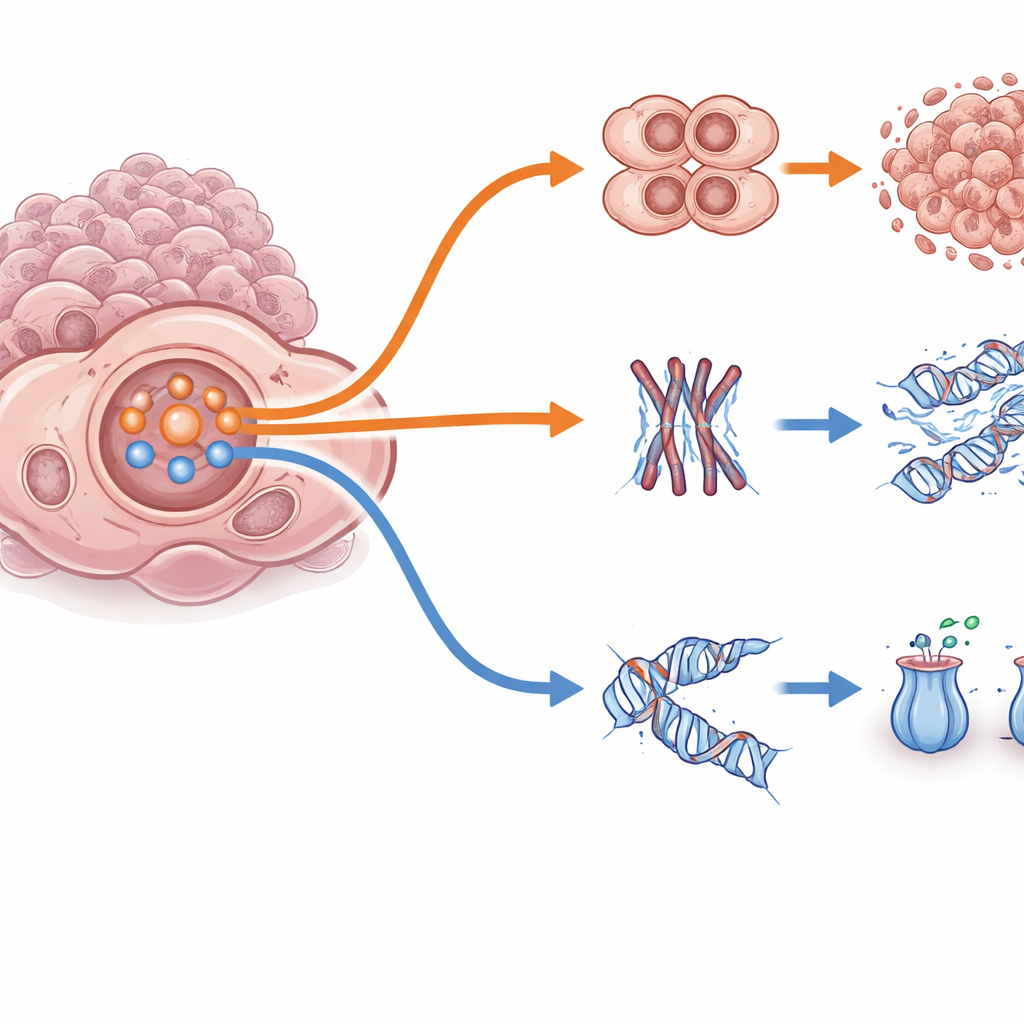
Turning a resistance signal into a treatment target
A key upstream player in this hub is ROR1, a receptor protein usually scarce in normal adult tissues but elevated in several cancers. In many resistant ovarian cancer models, ROR1 levels climbed alongside PI3K/AKT activity. The team showed that dialing ROR1 up or down could alter how readily cells acquired resistance to adavosertib or paclitaxel, in a context-dependent way. Most importantly, they tested zilovertamab-vedotin, an antibody–drug conjugate that homes in on ROR1 and delivers a toxic payload. In both cell lines and patient-derived 3D organoids, ROR1-high, adavosertib-resistant tumors were particularly vulnerable to this agent, and combining it with adavosertib often boosted cell killing. Some paclitaxel-resistant models were less responsive, likely because they had also strengthened their ability to expel drugs.
What this means for future ovarian cancer treatment
This work reframes drug resistance in TP53-mutated ovarian cancer not as a random event but as a coordinated response governed by a central signaling switch. By identifying the PI3K/AKT–FOXO3 axis and ROR1 as key nodes, the study points to practical strategies: pair mitosis-targeting drugs like adavosertib and paclitaxel with therapies that block the resistance hub or exploit ROR1 on resistant cells. Because ROR1 is largely absent from healthy tissues, such combinations could selectively attack recurrent, drug-hardened tumors while sparing normal cells. Although these results come from laboratory models and patient-derived cultures rather than completed clinical trials, they offer a clear roadmap for designing smarter, more durable treatments for women facing high-grade serous ovarian cancer.
Citation: Raivola, J., Rantanen, F., Dini, A. et al. ROR1-PI3K/AKT signaling drives adaptive resistance to cell cycle blockade in TP53 mutated ovarian cancer. Cell Death Dis 17, 276 (2026). https://doi.org/10.1038/s41419-026-08501-x
Keywords: ovarian cancer, drug resistance, PI3K AKT pathway, ROR1 antibody therapy, cell cycle inhibitors