Clear Sky Science · en
Targeting fatty acid synthase suppresses tumor development in NF2/CDKN2A-deficient pleural mesothelioma
Why this matters for people exposed to asbestos
Pleural mesothelioma is a rare but almost always deadly cancer that grows on the lining around the lungs, most often after asbestos exposure decades earlier. Once diagnosed, it is hard to treat and usually resists standard chemotherapy. This study explores a different angle: instead of attacking the tumor with traditional drugs, the researchers try to starve cancer cells by cutting off a key source of their building blocks and energy, pointing toward a more tailored treatment for a major genetic subset of mesothelioma.
How tumor cells misuse fat-making machinery
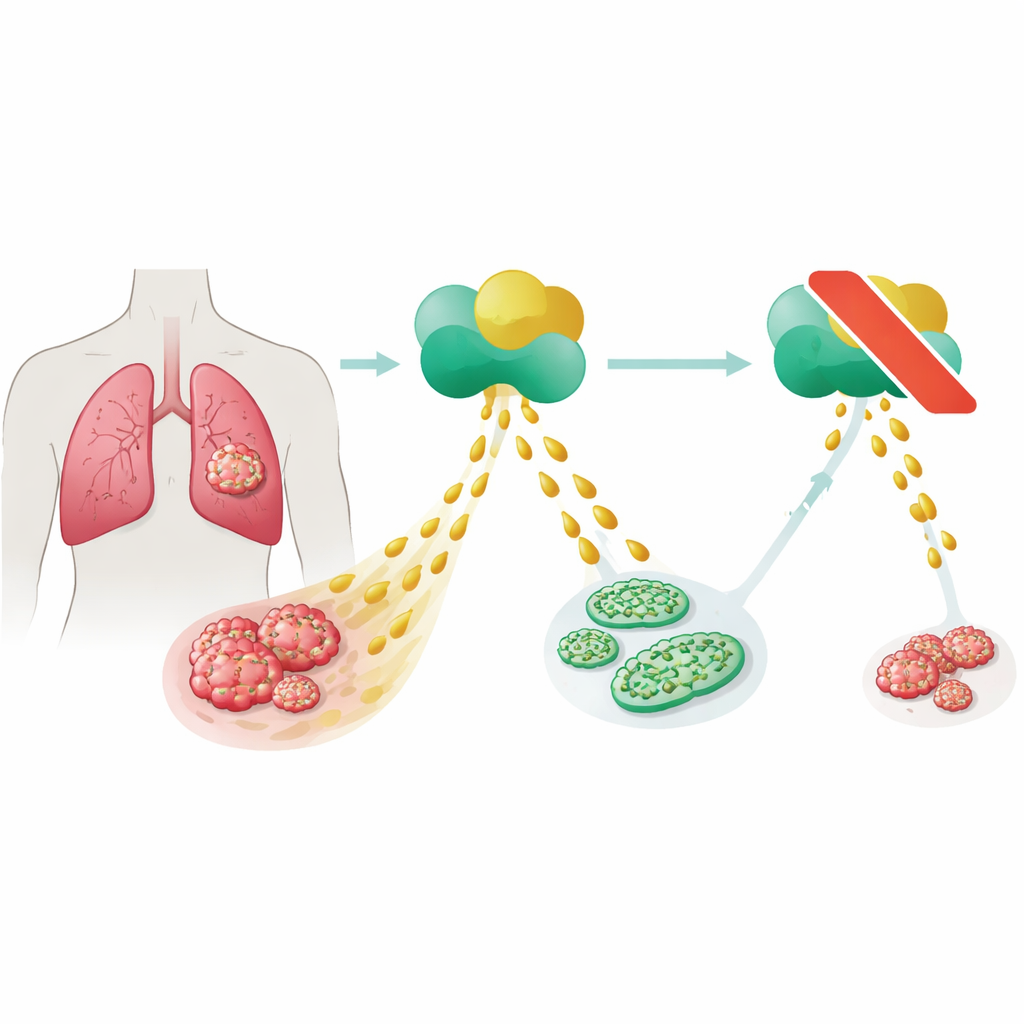
Many cancers ramp up an enzyme called fatty acid synthase, which assembles long-chain fats that cells use to build membranes, store energy and control signaling. The team focused on mesothelioma cells that lack two tumor-protective genes, NF2 and CDKN2A (also known as p16), alterations that are common in this disease. By screening 364 anticancer compounds, they found that one molecule, cerulenin, which blocks fatty acid synthase, was especially powerful at slowing the growth of NF2/p16-deficient mesothelioma cells. In contrast, other drugs, including another fatty acid synthase blocker called C75 and the standard agents cisplatin and pemetrexed, were much less effective at comparable doses.
Linking a fat-making enzyme to patient tumors
To see whether this enzyme really matters in human disease, the researchers examined tissue samples from 45 people with pleural mesothelioma and compared them with normal pleural lining. They found fatty acid synthase protein in every tumor that had lost both NF2 and p16, but in only about one-third of tumors where those genes were intact, and not at all in normal tissue. When they turned to a large public cancer database, patients whose mesothelioma had higher levels of the fatty acid synthase gene had shorter overall survival than those with lower levels. Together, these findings suggest that the enzyme is not just a bystander but is closely tied to aggressive tumor behavior in this cancer type.
Testing a targeted drug in animals
The next step was to see whether blocking fatty acid synthase could shrink tumors in living organisms. The team implanted human NF2/p16-deficient mesothelioma cells under the skin of immune-deficient mice and treated them with either cerulenin or a harmless salt solution. Cerulenin dramatically slowed tumor growth without causing weight loss or visible damage to the heart, liver, or kidneys. Blood tests for liver and kidney function, electrolytes, fats, and sugar also remained within normal ranges. These results indicate that, at least in this experimental setting, cerulenin can curb tumor growth while appearing reasonably safe.
How rewiring tiny powerhouses pushes cancer cells toward death
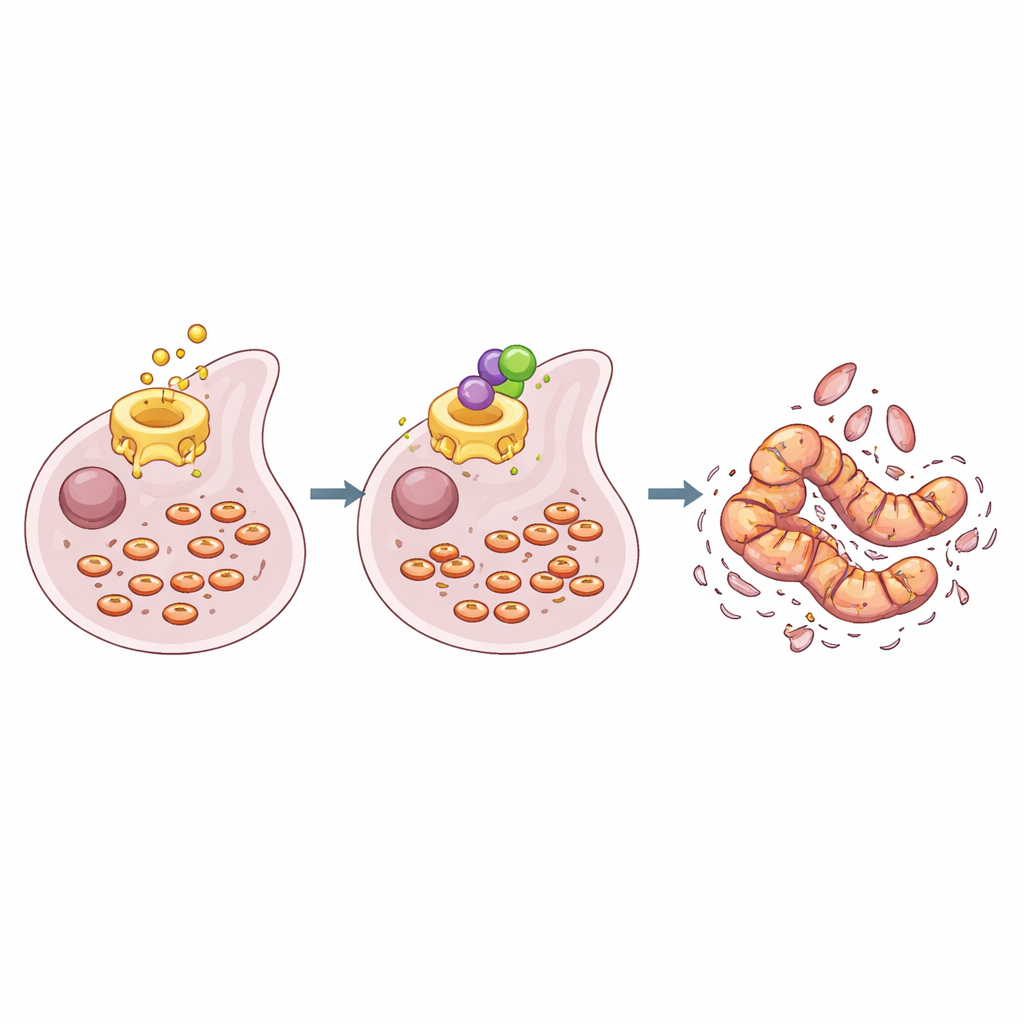
Cancer cells depend heavily on their mitochondria, the small structures that generate most of the cell’s energy. These mitochondria constantly divide and fuse, and this balance shifts in disease. In NF2/p16-deficient mesothelioma cells, fatty acid synthase activity supported a pattern of many small, fragmented mitochondria and active signals that promote cell survival. When the researchers added cerulenin, mitochondria in these cells fused into long, tubular networks and the activity of DRP1, a protein that drives mitochondrial splitting, dropped. Signaling through a major growth pathway (PI3K–AKT–mTOR) and a growth-control system known as Hippo–YAP was also dampened. Flow cytometry and protein analyses showed that more treated cells underwent programmed cell death, marked by increased levels of cleaved PARP and caspase-3.
Genetic proof that fatty acid synthase is a weak spot
To confirm that these effects truly came from blocking fatty acid synthase and not some off-target action of cerulenin, the team used CRISPR gene editing to remove the fatty acid synthase gene itself in NF2/p16-deficient mesothelial cells, creating “triple knockout” cells. These edited cells grew more slowly, had more fused, elongated mitochondria, and showed reduced DRP1 levels but increased levels of proteins that promote mitochondrial fusion. They also generated more reactive oxygen species, a sign of stressed mitochondria, and displayed more markers of apoptosis. Additional experiments suggested that, without fatty acid synthase, DRP1 becomes more heavily tagged with ubiquitin and is degraded, further tipping the balance toward mitochondrial fusion and cell death.
What this could mean for future treatment
Altogether, the study shows that mesothelioma cells missing NF2 and p16 rely on fatty acid synthase to keep their energy factories in a pro-growth state and to sustain powerful survival signals. Blocking this enzyme with cerulenin selectively weakens these tumors in cells, in human tissue samples, and in mice, while sparing normal tissues in the short term. For patients, this work suggests that drugs targeting fatty acid synthase, especially in tumors tested for NF2 and CDKN2A loss, could become part of a precision-medicine strategy that exploits a specific metabolic dependency of their cancer.
Citation: Karnan, S., Ota, A., Hasan, M.N. et al. Targeting fatty acid synthase suppresses tumor development in NF2/CDKN2A-deficient pleural mesothelioma. Cell Death Dis 17, 287 (2026). https://doi.org/10.1038/s41419-026-08481-y
Keywords: pleural mesothelioma, fatty acid synthase, cerulenin, mitochondrial dynamics, precision oncology