Clear Sky Science · en
RIPK1 regulates β-cell fate via actions on gene expression and kinase signaling in a mouse model of β-cell self-reactivity
Why Saving Insulin-Making Cells Matters
Type 1 diabetes develops when the body’s own immune system destroys the insulin-producing beta cells in the pancreas. Once these cells are gone, people must rely on lifelong insulin injections. This study explores a key internal "switch" inside beta cells, called RIPK1, that helps decide whether these cells survive or die during immune attacks. Understanding and controlling this switch could open new ways to protect remaining beta cells and possibly delay or soften the course of type 1 diabetes.
A Stress Switch Inside Beta Cells
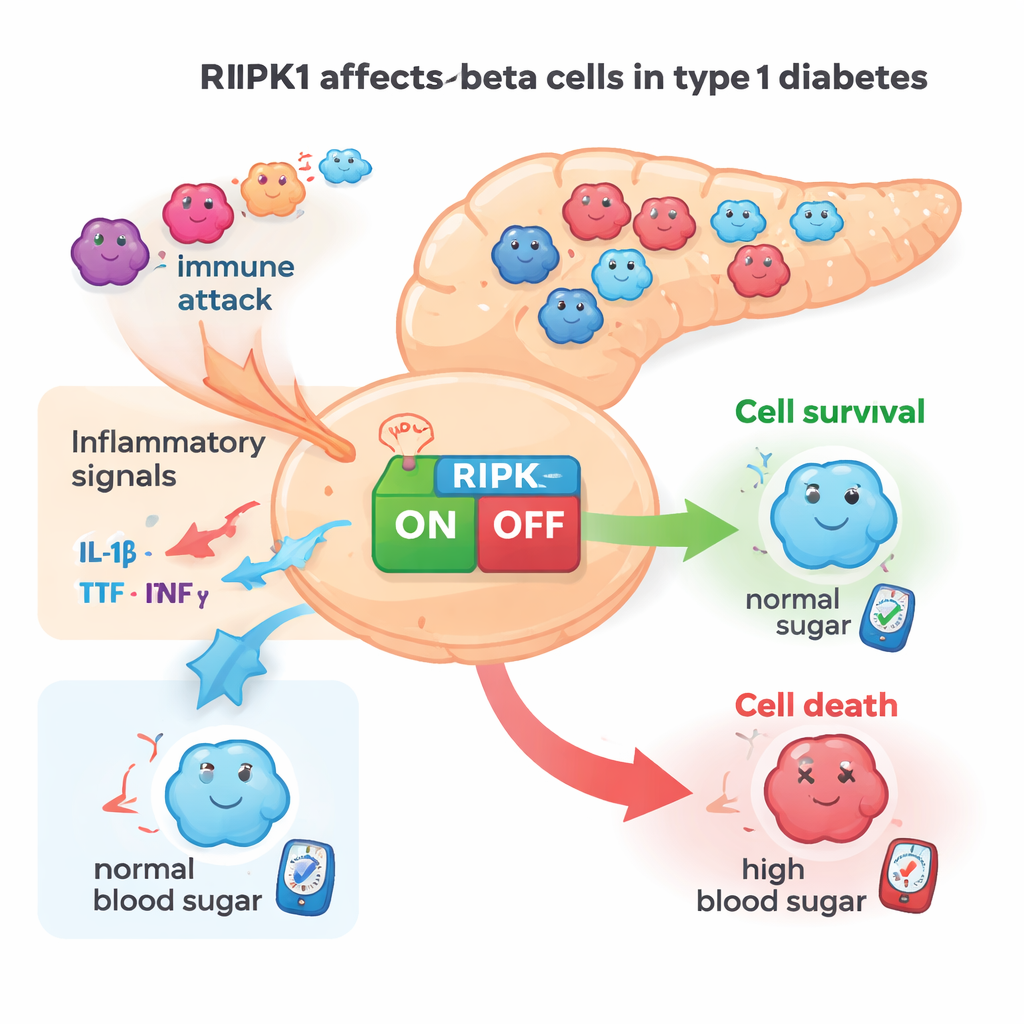
Beta cells live in a hostile neighborhood when type 1 diabetes is developing. Immune cells release inflammatory signals—such as TNFα and IFNγ—that push beta cells toward stress and death. The protein RIPK1 acts as a central decision-maker inside many types of cells, integrating these signals and steering cells either toward survival or toward different kinds of programmed death. In this work, researchers asked whether RIPK1 plays the same kind of role in beta cells that are under immune attack, and whether dialing down RIPK1 activity could help these cells stay alive.
RIPK1 Levels Rise in Diabetes-Prone Cells
The team first looked for signs that RIPK1 is involved in type 1 diabetes at all. They found that inflammatory signals raised RIPK1 activity in beta cell lines from mice and in human beta cells grown in the lab. In pancreas tissue from both mice and humans, RIPK1 was clearly present in insulin-producing cells. Importantly, islets from diabetes-prone NOD mice showed higher Ripk1 gene activity as the animals aged and autoimmunity increased. Single-cell gene data from human donors showed a similar pattern: beta cells from people with type 1 diabetes had more RIPK1 RNA than those from non-diabetic donors. Together, these observations pointed to RIPK1 as a stress-related protein that becomes more active just when beta cells are under autoimmune pressure.
Blocking RIPK1 Helps Beta Cells Survive
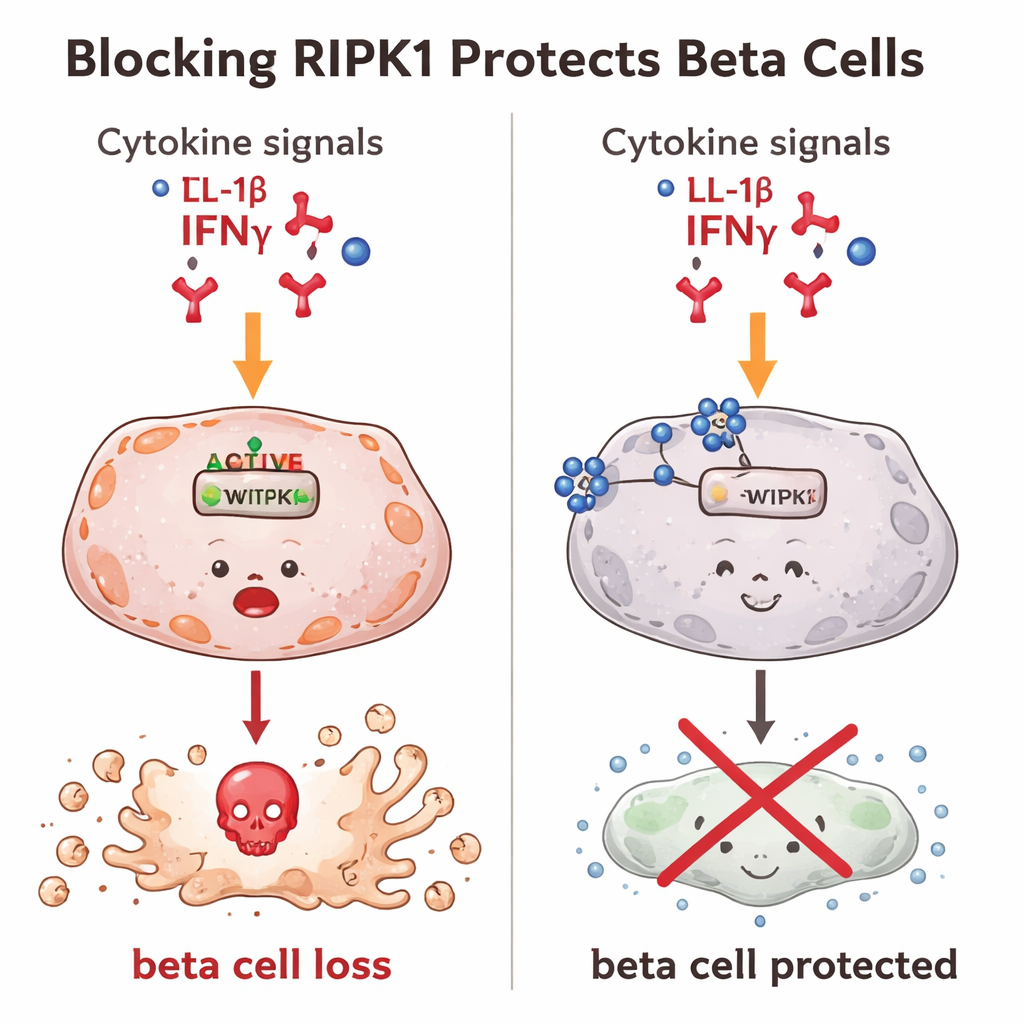
Next, the researchers tested what happens when RIPK1 is blocked. In mouse beta cells exposed to inflammatory signals, RIPK1 normally becomes activated and cell death increases. When the scientists used small drug-like molecules to inhibit RIPK1’s activity or to reduce its amount inside the cell, far fewer beta cells died. They then used gene-editing tools to weaken the Ripk1 gene itself, creating beta cells with much lower RIPK1 levels. These edited cells were strikingly resistant to both classic “programmed” cell death and a more explosive, inflammatory form of death. In other words, turning down RIPK1 kept more beta cells alive, even in the face of strong damaging signals.
Deep Changes in Cell Programs and Signaling
Protecting beta cells was not just a matter of stopping one death pathway. Using large-scale RNA sequencing, the team found that removing RIPK1 reshaped many gene programs inside beta cells. Genes linked to inflammation and innate immune responses were toned down, while several genes tied to beta cell identity and insulin production were increased. At the same time, a broad survey of active enzymes showed that RIPK1 loss rewired multiple signaling pathways, including MAPK and JAK systems that relay stress and immune messages. These changes suggest that RIPK1 influences not only whether a beta cell dies, but also how “inflamed,” recognizable, and functional it is during an autoimmune attack.
Resisting Immune Attack in the Body
To see if these findings matter in a more realistic setting, the researchers mixed diabetes-causing immune cells from NOD mice with normal or RIPK1-deficient beta cells. Both types of beta cells could still switch on the immune cells, but the RIPK1-deficient cells were killed at only about half the rate of normal cells. In a mouse model, the team implanted both normal and RIPK1-deficient beta cells into the same animals and then triggered an autoimmune attack. Over time, the ordinary beta cell grafts nearly vanished, while the RIPK1-deficient grafts remained dozens to more than a hundred times brighter in bioluminescent imaging, indicating that many more cells survived the immune onslaught.
What This Could Mean for People With Type 1 Diabetes
This work shows that RIPK1 acts as a central stress switch that helps decide whether insulin-making cells live or die during autoimmune attacks. When RIPK1 is dialed down, beta cells are less likely to die, less likely to send out inflammatory signals, and more likely to keep their identity and function. Drugs that safely target RIPK1 are already being explored for other diseases, so adapting similar strategies to protect beta cells may offer a new angle for preventing or slowing type 1 diabetes, especially early in the disease when some beta cells are still alive.
Citation: Contreras, C.J., Mukherjee, N., Harris-Kawano, A. et al. RIPK1 regulates β-cell fate via actions on gene expression and kinase signaling in a mouse model of β-cell self-reactivity. Cell Death Dis 17, 220 (2026). https://doi.org/10.1038/s41419-026-08471-0
Keywords: type 1 diabetes, beta cells, RIPK1, autoimmunity, cell death