Clear Sky Science · en
Recovery from apoptosis in photoreceptor cells: A role for mitophagy
When Dying Eye Cells Get a Second Chance
Many blinding diseases start the same way: light-sensing cells in the eye, called photoreceptors, begin to die and never come back. This study reveals a surprising twist to that story. Under the right conditions, photoreceptors that appear to be on the brink of programmed cell death can pull back from the edge, repair key parts of themselves, and survive. Understanding how this “second chance” works could open new avenues to preserve sight in conditions like retinal detachment and age-related macular degeneration.
Eye Cells at Risk in Common Blinding Diseases
Photoreceptors sit at the back of the eye and convert light into electrical signals the brain can understand. Once these cells mature, they no longer divide, so when they die, vision is permanently compromised. In retinal detachment and other retinal diseases, photoreceptors often die through apoptosis, a tidy, self-destruct program that was long thought to be irreversible once fully underway. Yet clinical experience has hinted that prompt reattachment of a detached retina can restore useful vision, suggesting that at least some photoreceptors might be saved even after they begin this death march.
From Death Spiral to Recovery
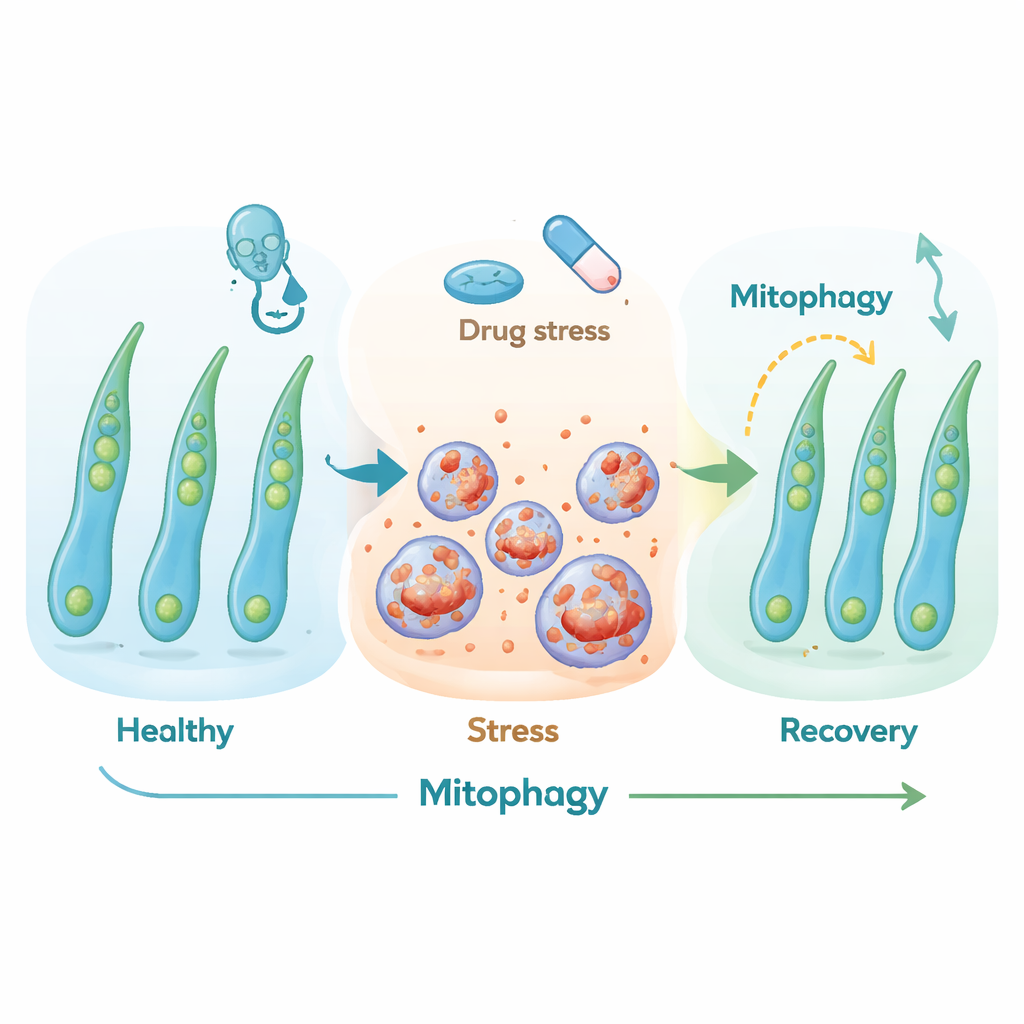
The researchers used a mouse cone photoreceptor cell line to probe whether these cells could recover after serious stress. They exposed the cells to two powerful triggers of apoptosis: a drug that activates internal death pathways and prolonged low-oxygen conditions that mimic what happens during retinal detachment. Under both stresses, the cells showed classic signs of apoptosis: they rounded up, formed membrane blebs, activated key enzymes that chop up proteins, and exposed distress signals on their surfaces. When the stress was removed, however, many cells gradually regained their original elongated shape and shut down the death machinery within about 24 hours, demonstrating that even late-stage changes were not always a one-way road.
Power Plants Under Repair
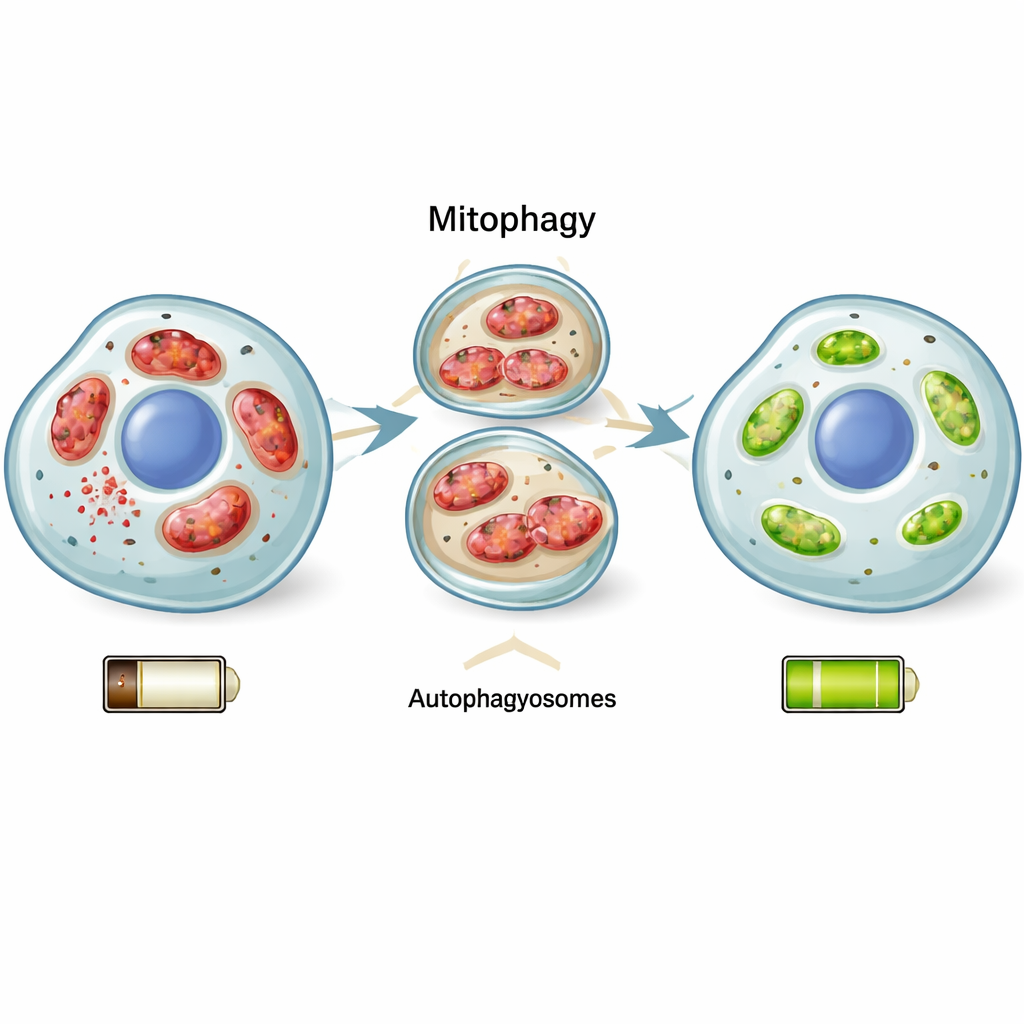
To understand how these cells managed to recover, the team turned to the mitochondria—the tiny power plants that supply cellular energy and help decide whether a cell lives or dies. During stress, mitochondrial function faltered: energy levels dropped in drug-treated cells, and harmful oxygen by-products surged in both stress models. After the stress was lifted, surviving cells restored their energy levels, reduced damaging reactive oxygen species, and showed signals of renewed mitochondrial production. The balance between mitochondrial splitting and fusion also shifted in ways that support cleanup of damaged components and rebuilding of a healthier network.
Mitophagy: Targeted Cleanup that Saves Cells
A central player in this turnaround was mitophagy, a quality-control process that selectively removes defective mitochondria before they can poison the rest of the cell. The researchers found that as photoreceptors recovered from stress, they ramped up genes and proteins that drive mitophagy and general cellular recycling. When they boosted mitophagy with a drug that promotes this cleanup pathway, fewer cells went on to die. When they blocked mitophagy, recovery was essentially shut down, and more cells succumbed. This pointed to mitophagy not just as a bystander but as a key survival strategy.
Proof in a Living Eye
Cell culture experiments can only go so far, so the team developed a mouse model in which part of the retina is detached and then naturally reattaches within a few days. In these animals, photoreceptors in the reattached areas showed far fewer markers of cell death and better preserved structure than in eyes where the detachment was made permanent. This living system closely parallels what happens in patients whose retinas are reattached surgically and supports the idea that real photoreceptors in the eye can recover from severe stress if the insult is removed in time.
What This Could Mean for Saving Sight
Put simply, the study shows that photoreceptors can sometimes halt and reverse a well-advanced self-destruct program, provided their mitochondrial “engines” are repaired through mitophagy. This challenges the old notion that once these light-sensing cells enter apoptosis, they are doomed. If future treatments can safely enhance mitophagy and other mitochondrial repair pathways at the right moment—such as around the time of retinal detachment surgery—doctors may be able to keep more photoreceptors alive and preserve more vision for patients at risk of blindness.
Citation: Kaur, B., Miglioranza Scavuzzi, B., Yao, J. et al. Recovery from apoptosis in photoreceptor cells: A role for mitophagy. Cell Death Dis 17, 167 (2026). https://doi.org/10.1038/s41419-026-08436-3
Keywords: photoreceptors, retinal detachment, apoptosis, mitophagy, mitochondria