Clear Sky Science · en
Real-world use and survival outcomes of sacituzumab govitecan in metastatic triple-negative breast cancer and hormone receptor-positive/HER2-negative metastatic breast cancer
Why this study matters to patients and families
When breast cancer spreads to other parts of the body, treatment options become more limited and patients often face tough odds. Sacituzumab govitecan is a newer targeted drug that showed promising results in clinical trials, especially for hard-to-treat triple-negative breast cancer. But trials usually involve carefully selected patients. This study asks a simple, real-world question: when thousands of people across an entire country receive this drug in everyday practice, how well do they actually do? 
A new weapon for advanced breast cancer
The research focuses on two major forms of advanced breast cancer. The first is triple-negative breast cancer, which lacks common hormone and HER2 targets and is known for its aggressiveness and limited treatment options. The second is hormone receptor–positive, HER2-negative cancer, the most frequent subtype, which usually has more options but can still become life-threatening once it has spread and resisted several prior therapies. Sacituzumab govitecan is an antibody–drug conjugate: a laboratory-made antibody guides a powerful chemotherapy payload directly toward cancer cells, aiming to kill them more precisely while limiting damage to healthy tissues.
Looking at care across an entire country
To understand how this drug performs outside the controlled setting of clinical trials, the authors used France’s nationwide health insurance database, which covers more than 99% of the population. They identified every patient who started sacituzumab govitecan between mid-2021 and the end of 2023, when the drug was available through an early-access program. After carefully checking cancer type and correcting miscoded cases, they followed 3,653 people: 2,527 with metastatic triple-negative disease and 1,126 with hormone receptor–positive, HER2-negative metastatic cancer. For each person, they tracked how long they lived and how long they stayed on the drug, and examined medical history such as other illnesses, prior treatments, and where in the body the cancer had spread.
What happened to patients on this treatment
Overall, survival was similar in both groups. Among people with triple-negative disease, half were still alive 11 months after starting sacituzumab govitecan; in the hormone receptor–positive group, the midpoint was 11.4 months. About 47–48% of patients in both groups were alive at one year. However, most patients stopped the drug much earlier: the typical time on treatment was 4.3 months in triple-negative disease and 3.5 months in hormone receptor–positive disease. Many had multiple sites of spread, including the brain and liver, and a substantial fraction were living with other health problems such as heart disease, diabetes, or chronic lung conditions. 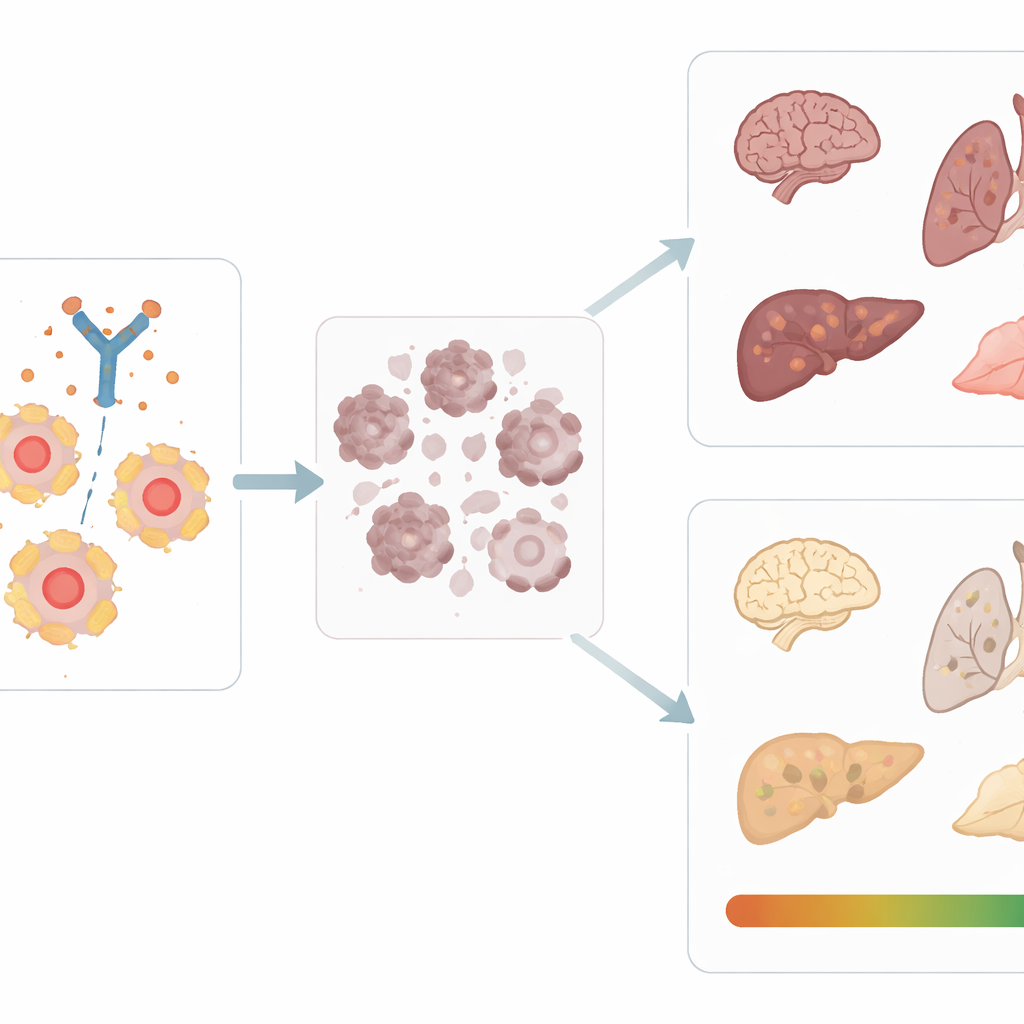
Who fared worse and why
Digging deeper, the study found patterns that help explain who is at higher risk. People whose first dose was given while they were hospitalized did poorly, suggesting that those with frailer overall health benefit less. In both cancer subtypes, the presence of liver or other digestive metastases was a strong warning sign of shorter survival. For triple-negative disease, additional factors—such as cancer in the brain, cancer spread to two or more organs, a history of serious smoking-related hospital stays, chronic lung disease, and having already received several types of anticancer drugs in the previous year—were all linked to worse outcomes. In hormone receptor–positive disease, being older than 65 and having skin or liver involvement were key markers of poorer prognosis.
Bridging the gap between trials and real life
Compared with earlier clinical trials of sacituzumab govitecan, the survival times in this nationwide study were slightly shorter, but still in the same general range. The authors point out that trial participants tend to be younger, fitter, and less likely to have brain metastases than patients seen in routine practice. By contrast, this real-world analysis includes almost everyone who received the drug in France, offering a more realistic picture of what patients and doctors can expect. The take-home message is that sacituzumab govitecan remains an important option for advanced breast cancer, but its benefits are shaped by overall health and where the cancer has spread. Understanding these differences should help doctors better select patients, manage side effects, and design future studies to improve tolerability and outcomes for those with the greatest needs.
Citation: Shaaban, A.E., Jourdain, H., Desplas, D. et al. Real-world use and survival outcomes of sacituzumab govitecan in metastatic triple-negative breast cancer and hormone receptor-positive/HER2-negative metastatic breast cancer. Br J Cancer 134, 1198–1208 (2026). https://doi.org/10.1038/s41416-026-03346-9
Keywords: metastatic breast cancer, triple-negative breast cancer, hormone receptor–positive HER2-negative, sacituzumab govitecan, real-world outcomes