Clear Sky Science · en
Real-world outcomes following adjuvant chemotherapy for resected pancreatic cancer in a centralised oncology service
Why this matters for people facing pancreatic cancer
Pancreatic cancer is one of the deadliest cancers, and even when surgery is possible, many people still see the disease return. This study looks at what happens in everyday practice, outside of tightly controlled clinical trials, when patients receive extra chemotherapy after surgery in a large specialist center in Northwest England. Its findings help patients, families, and doctors understand how important it is not just to offer chemotherapy, but to organize care so that as many people as possible can complete treatment safely.

What the researchers set out to learn
The team examined the records of more than 400 people who had surgery for a common type of pancreatic cancer between 2009 and 2020. They wanted to know how many patients actually received chemotherapy after surgery, how well they tolerated it, and which aspects of treatment made the biggest difference to survival. They also took advantage of a change in their region’s health system: during the study period, pancreatic cancer care was centralized into a single specialist cancer center, allowing them to see how this structural change affected access to treatment.
How treatment was given and who received it
Despite the major surgery and frequent post-operative complications, over four out of five eligible patients (82%) went on to receive chemotherapy. About two-thirds of these patients completed the full planned number of treatment cycles. The chemotherapy regimens evolved over time, moving from single drugs to more intensive combinations as evidence from clinical trials emerged. Importantly, the researchers found that age, type of operation, length of hospital stay, and even serious surgical complications did not strongly determine whether a patient went on to receive chemotherapy. Instead, the main barrier was overall physical fitness after surgery: patients who remained very weak or unwell were much less likely to start treatment.
What made the biggest difference to survival
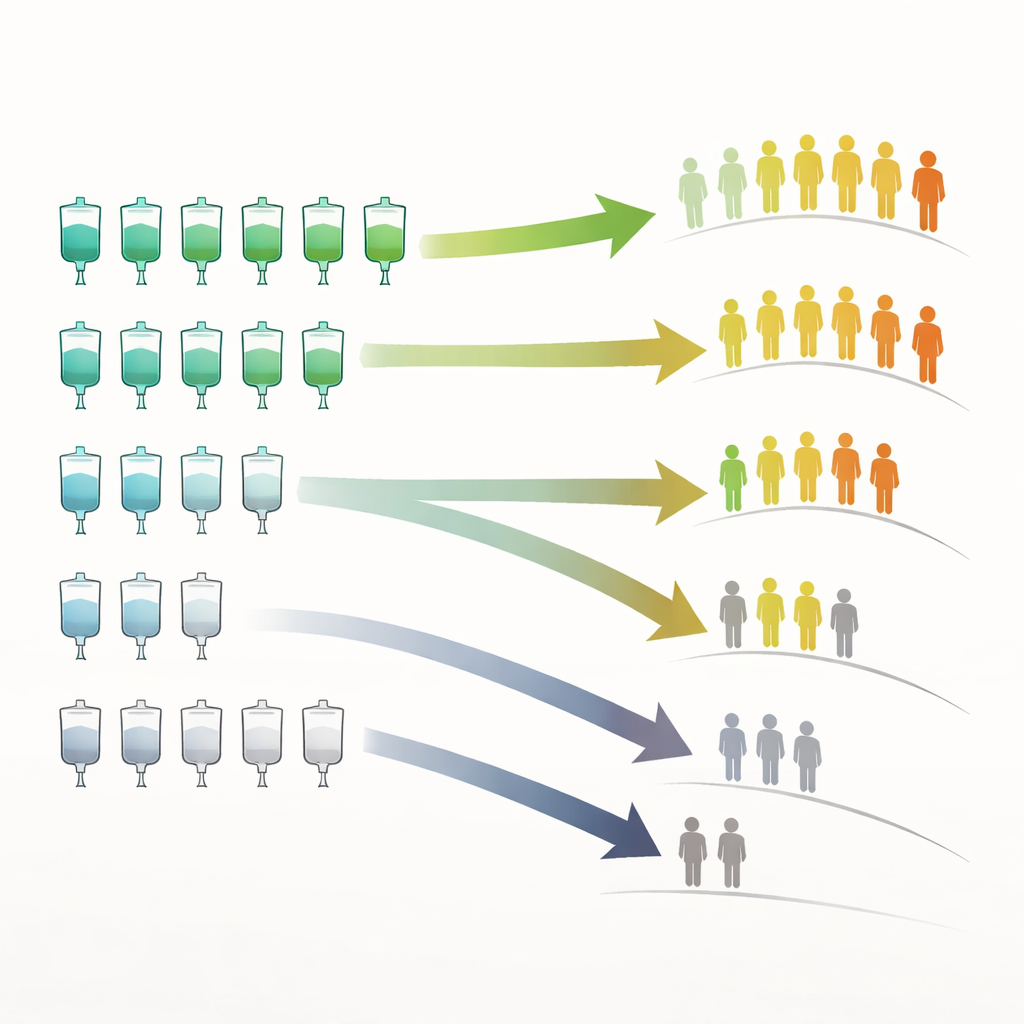
People who received chemotherapy after surgery lived far longer than those who did not—around 25 months versus 9 months on average. But within the chemotherapy group, a key insight emerged: finishing the course mattered more than receiving the highest possible dose. Patients who completed all planned cycles did similarly well whether they needed dose reductions or not. In contrast, those who stopped treatment early had clearly worse survival, regardless of whether their doses had been lowered. The timing of chemotherapy was less critical than often assumed: starting within eight weeks of surgery did not produce better outcomes than starting later, as long as treatment was eventually delivered.
How centralizing care changed access to treatment
When pancreatic cancer chemotherapy was brought together into a single specialist cancer center in 2013, a larger share of patients were able to start post-surgery chemotherapy (rising from 69% to 86%). This centralized model bundled surgery follow-up, oncology expertise, and support services such as dietitians, physiotherapists, and specialist nurses under one roof. These teams could quickly identify who was fit enough for treatment, help borderline patients recover strength, and manage side effects more effectively. Although overall survival did not increase dramatically during the study period—likely because many factors beyond chemotherapy influence outcomes—the higher treatment delivery in a more diverse patient population was achieved without harming survival.
What this means for patients and health systems
For patients, the study’s message is hopeful but realistic. Chemotherapy after surgery for pancreatic cancer can meaningfully extend life in real-world practice, not just in clinical trials. The most important goal is to help patients start and complete the full course, even if that means reducing doses along the way to manage side effects. For health systems, the findings argue for organizing pancreatic cancer care in specialist centers that bring together surgery, oncology, and supportive care. Such a coordinated approach appears to give more people a genuine chance to benefit from treatment and may help narrow regional gaps in outcomes.
Citation: Hale, J., Gilbert, T., Stott, M. et al. Real-world outcomes following adjuvant chemotherapy for resected pancreatic cancer in a centralised oncology service. Br J Cancer 134, 1183–1189 (2026). https://doi.org/10.1038/s41416-026-03341-0
Keywords: pancreatic cancer, adjuvant chemotherapy, centralised oncology care, treatment completion, real-world outcomes