Clear Sky Science · en
Effects of personalized vitamin D3 on inflammation in colorectal cancer patients: a randomized trial
Why this matters for people living with colon cancer
For many people treated for colorectal (colon) cancer, finishing surgery or chemotherapy does not end the worry. Ongoing inflammation in the body can fuel tumor growth and worsen long‑term outlook. At the same time, low vitamin D levels are very common after cancer treatment. This study asked a practical question with direct relevance to patients and clinicians: if we carefully tailor vitamin D3 doses to each person with colorectal cancer and low vitamin D, can we cool down harmful inflammation inside the body?
Setting the stage: colon cancer, vitamin D, and inflammation
Colorectal cancer is one of the most common and deadly cancers worldwide. Many patients have low blood levels of vitamin D, a hormone‑like nutrient best known for keeping bones strong but also deeply involved in immune control. Observational studies suggest that patients with higher vitamin D levels tend to live longer and respond better to treatment. At the same time, high levels of inflammatory messengers in the blood, such as the molecule IL‑6, are linked to faster tumor growth, more spread to other organs, and higher risk of death. This has led researchers to wonder whether raising vitamin D in a targeted way might help dial down inflammation and improve outcomes.
How the trial was designed and who took part
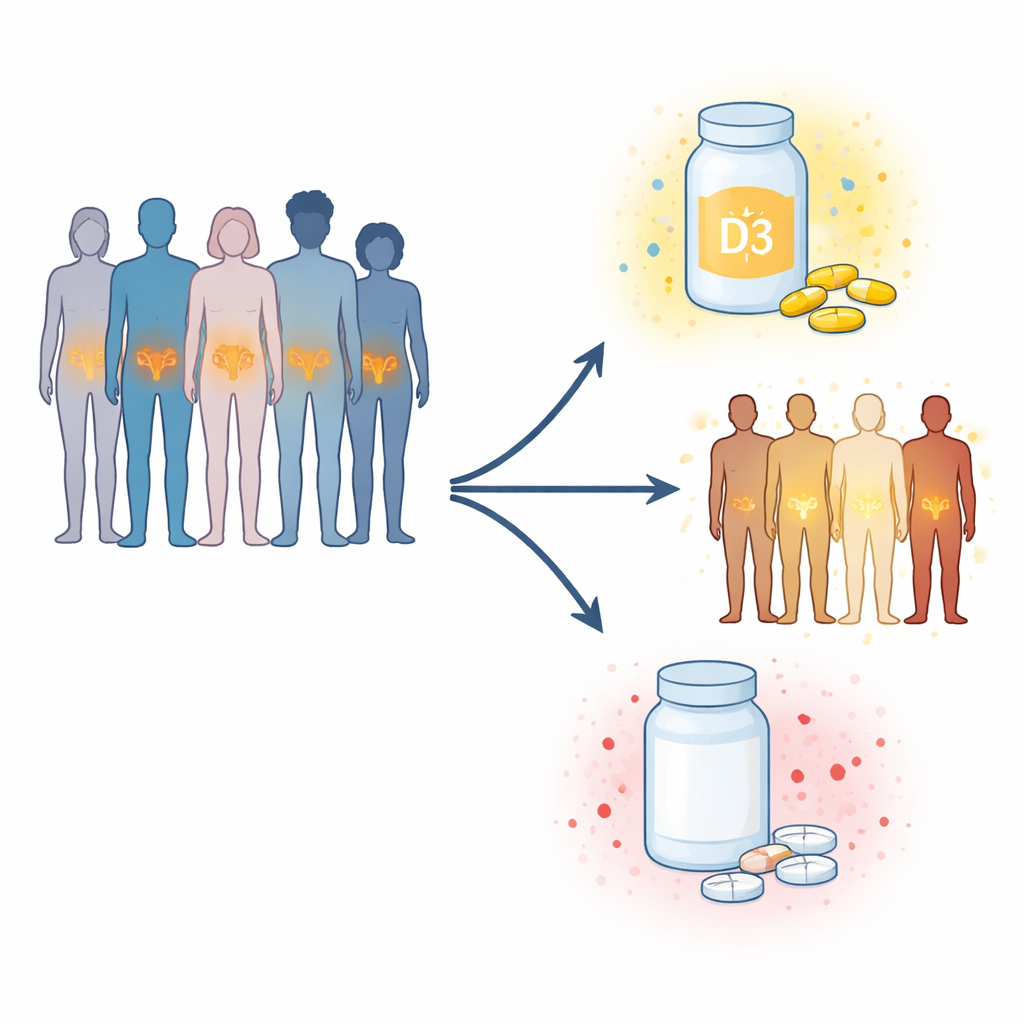
The researchers conducted a randomized, double‑blind, placebo‑controlled trial in Germany, meaning neither patients nor staff knew who received real vitamin D3 or an inactive look‑alike. They enrolled 126 adults who had undergone surgery for colorectal cancer within the previous year and had clearly low vitamin D levels in their blood. Participants were randomly assigned to two groups: one received personalized vitamin D3 supplements, and the other received placebo. The personalized plan used each person’s starting vitamin D level and body weight to calculate a short “loading phase” of higher daily doses for 11 days, followed by a steady daily dose of 2000 units for about 12 weeks in total. Blood was taken before treatment, after the loading phase, and at the end of the trial to measure vitamin D and multiple signals of inflammation.
What the researchers measured inside the blood
The main focus was on three inflammatory markers that have been tied to colorectal cancer behavior: IL‑6, interferon‑gamma, and MMP‑1. These are small proteins released by immune and other cells that can either promote or reflect inflammation in and around tumors. The team used a modern laboratory platform to track relative changes in these markers from the start of the study to the end, and also measured absolute IL‑6 levels with a second method to confirm the results. At the same time, they checked that vitamin D levels actually rose in the supplement group and stayed low in the placebo group, ensuring the comparison was meaningful.
Key findings: vitamin D sharply reduced one harmful signal
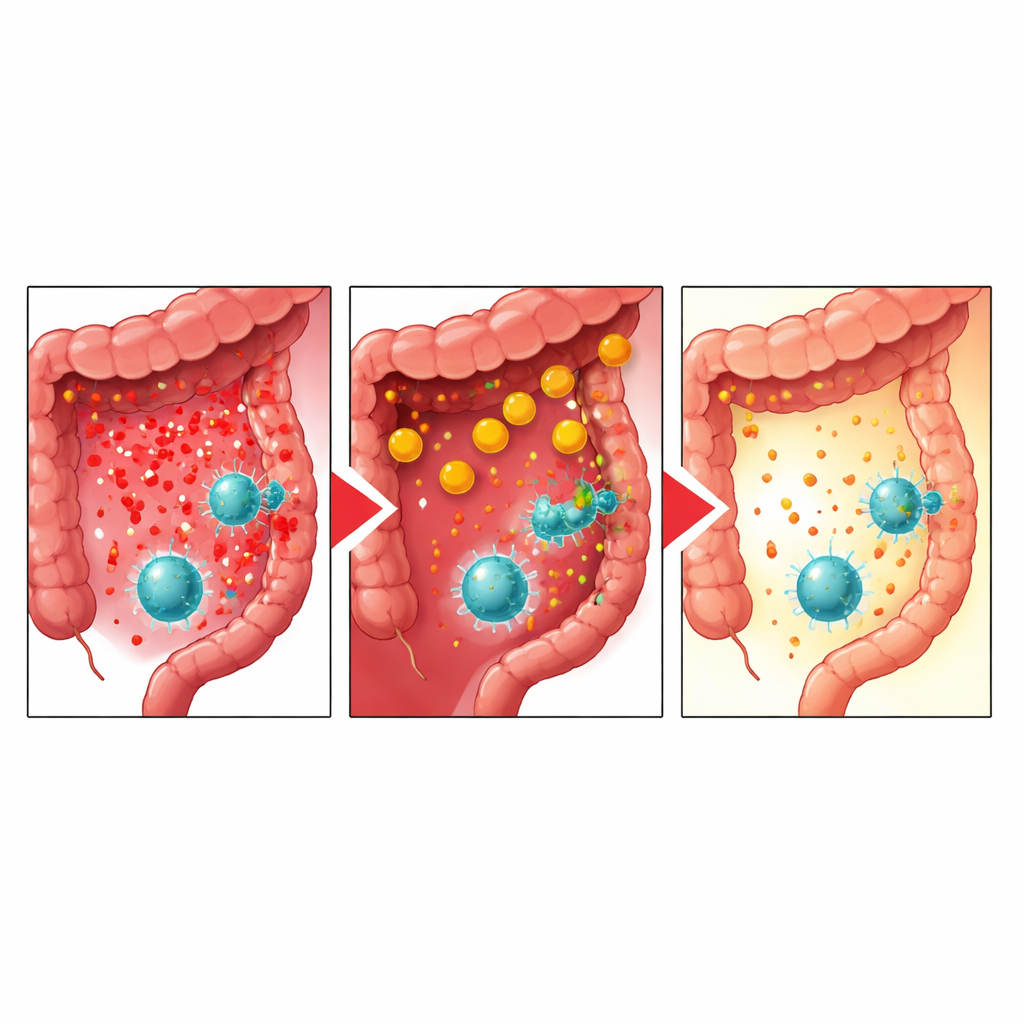
As expected, blood vitamin D levels rose strongly in the supplemented group but hardly changed in those taking placebo, and far fewer people on supplements remained vitamin D‑deficient by the end of the trial. Most importantly, people receiving personalized vitamin D3 showed a large drop in IL‑6 compared with the placebo group. After accounting for other factors, IL‑6 levels were about 39 percent lower in the vitamin D group at the end of the study, and this result was statistically robust. When IL‑6 was measured in absolute terms, the reduction was even more pronounced, and fewer patients in the vitamin D group had IL‑6 levels in a range associated with worse prognosis. In contrast, the other two markers, interferon‑gamma and MMP‑1, fell slightly in both groups but did not show meaningful extra reductions with vitamin D.
What this could mean for patients and future care
The study supports the idea that correcting low vitamin D with a tailored dosing strategy can meaningfully dampen at least one key inflammatory signal in people recovering from colorectal cancer. Because high IL‑6 has been linked to more aggressive disease and poorer survival, lowering it with a safe, inexpensive, and widely available supplement is an attractive possibility. However, this trial was not designed to prove that vitamin D actually lengthens life or prevents cancer from coming back. Larger and longer studies are needed to test whether this fall in IL‑6 translates into better survival, fewer complications, and improved quality of life. For now, the findings strengthen the case for routinely checking vitamin D levels in colorectal cancer patients and considering targeted supplementation as a supportive measure under medical supervision.
Citation: Gwenzi, T., Weber, A.N.R., Trares, K. et al. Effects of personalized vitamin D3 on inflammation in colorectal cancer patients: a randomized trial. Br J Cancer 134, 874–880 (2026). https://doi.org/10.1038/s41416-025-03333-6
Keywords: colorectal cancer, vitamin D3, inflammation, IL-6, clinical trial