Clear Sky Science · en
Diagnostic accuracy of combinatorial mRNA biomarkers for non-invasive detection and therapy monitoring of oral and oropharyngeal SCC
A Gentle Test for a Serious Cancer
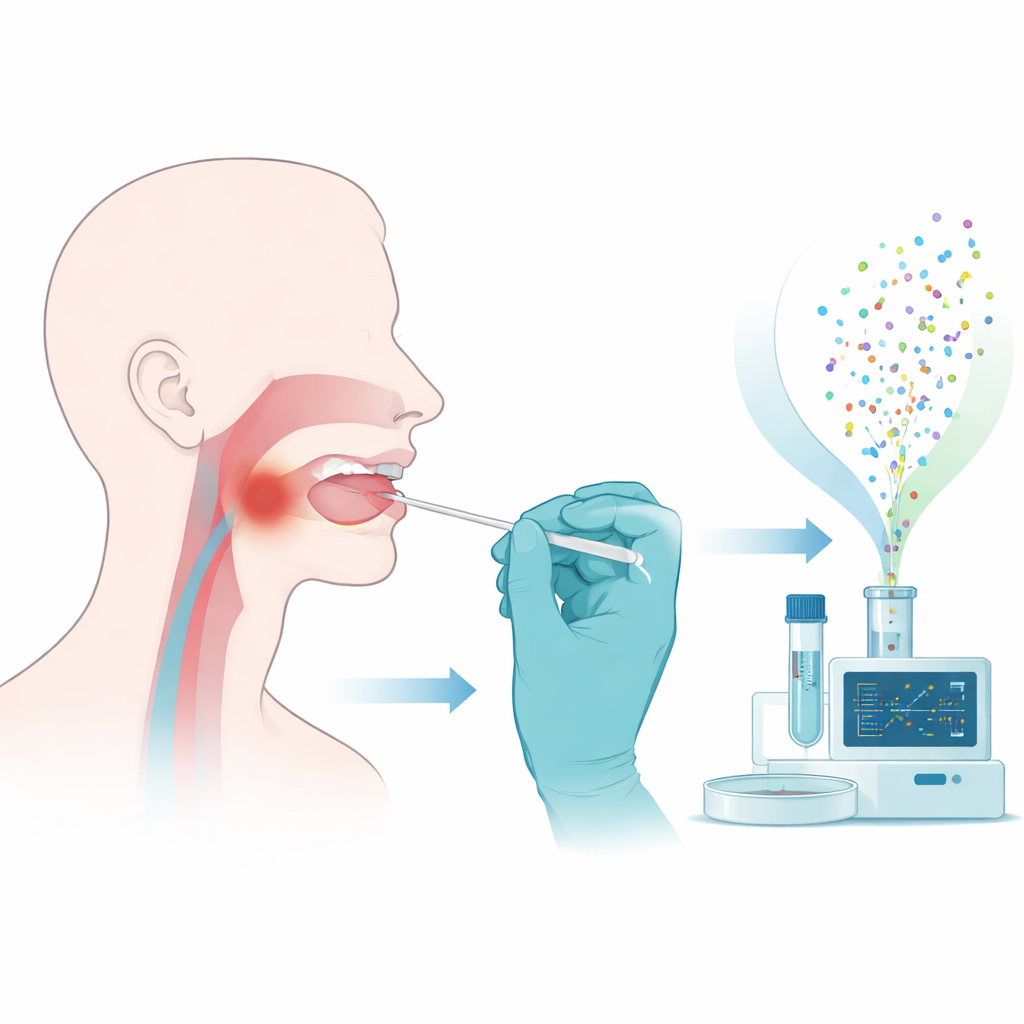
Oral and throat cancers are often discovered late, when treatment is harder and life-changing surgery may be needed. Today’s gold-standard diagnosis still relies on taking a piece of tissue from suspicious areas, an uncomfortable and invasive procedure. This study explores a simpler idea: could a quick swab of the mouth, combined with a molecular test, reliably reveal these cancers early and even help monitor therapy—without a scalpel?
Why Cancers in the Mouth Are So Hard to Catch
Oral and oropharyngeal squamous cell carcinoma are among the most common head and neck cancers, with hundreds of thousands of new cases worldwide each year. Tobacco, alcohol, and certain human papillomaviruses are major risk factors. Because early tumors can be small and painless, many patients are diagnosed only when the disease has advanced, often requiring extensive surgery in delicate regions vital for speaking, swallowing, and breathing. Standard diagnosis depends on biopsy and microscopic inspection of tissue, which are accurate but invasive, time-consuming, and costly. Simpler brush-based cell sampling exists, but looking at cells alone can miss subtle early disease.
Hunting for Molecular Clues in a Mouth Swab
The researchers set out to find messenger RNA (mRNA) signatures—molecular messages inside cells—that reliably distinguish cancer cells from healthy ones in material collected by a swab. They first performed RNA sequencing on swabs from a small, carefully selected group of men: patients with confirmed tumors, healthy smokers, and healthy non-smokers. This high-throughput method measured the activity of thousands of genes at once and identified more than a hundred that behaved differently in tumor samples. Using strict filtering to keep only genes with consistently large differences between tumor and non-tumor samples, they narrowed this list to eighteen promising candidates for further testing.
From Many Markers to a Powerful Trio
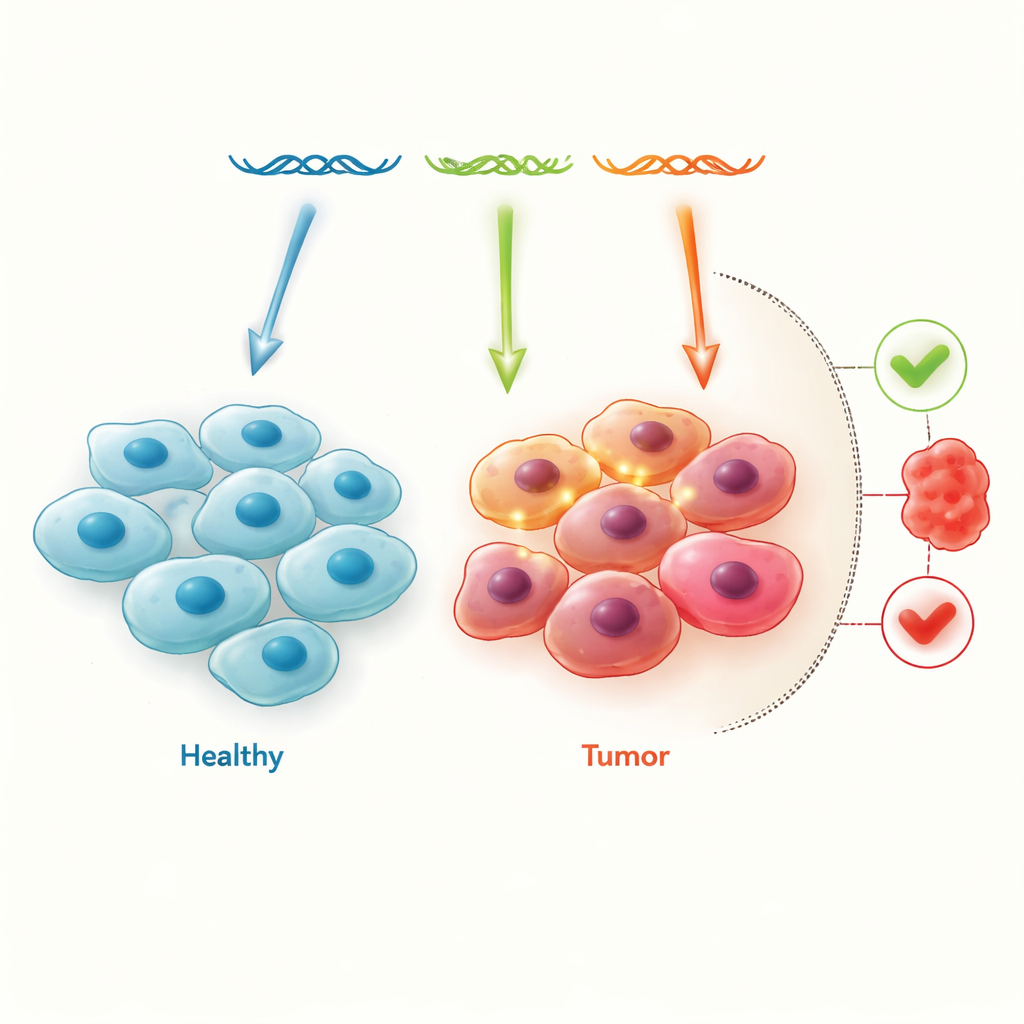
Next, the team used a widely available laboratory method called RT-qPCR to measure these candidate mRNAs in a larger set of 79 swab samples from four groups: healthy volunteers, patients with newly diagnosed tumors, patients already treated for tumors, and people with worrying symptoms but no confirmed cancer. Most of the original candidates did not hold up, but four did: c-JUN, SFN, HSP90AB1, and STARD7. Three of them—c-JUN, SFN, and HSP90AB1—were clearly higher in tumor samples than in healthy or high-risk groups, and stayed low in people whose symptoms were due to non-cancer causes. When the researchers mathematically combined these three markers into a panel, the test correctly identified tumor cases and non-cases in more than 9 out of 10 men, a level of accuracy that rivals some blood tests already used for other cancers.
Seeing the Same Signal Inside the Tumor
To check that the swab results truly reflected what was happening in the tumors themselves, the team examined tumor and healthy tissue under the microscope using fluorescent antibodies that glow when they bind to each of the three proteins. In healthy mouth lining, these proteins appeared only faintly; in tumor tissue, they lit up strongly, especially within cancer cell clusters. Additional measurements of mRNA directly from fresh tumor samples confirmed that the genes for c-JUN, SFN, and HSP90AB1 were much more active than in normal tissue. Interestingly, when the same markers were tested in women, the separation between tumor and healthy samples was weaker, hinting that biological sex may influence how useful this panel is and that women may need differently tuned markers.
What This Could Mean for Patients
This pilot study suggests that a simple mouth swab, analyzed for a small set of mRNA signals, could one day help doctors detect or rule out oral and oropharyngeal cancer without resorting immediately to a biopsy. The three-marker panel showed high accuracy in the male patients studied, tracked with protein changes in the tumors themselves, and may also prove useful for monitoring whether treatment has removed or suppressed disease. Larger, more diverse studies are still needed, and open questions remain about performance in women, in early precancerous lesions, and in HPV-associated tumors. But the work points toward a future in which a brief, non-invasive test at a dentist’s or ear–nose–throat clinic could catch dangerous cancers earlier and guide therapy with far less burden on patients.
Citation: Hose, L., Tekin, A.C., Verwaaijen, B. et al. Diagnostic accuracy of combinatorial mRNA biomarkers for non-invasive detection and therapy monitoring of oral and oropharyngeal SCC. Br J Cancer 134, 961–974 (2026). https://doi.org/10.1038/s41416-025-03313-w
Keywords: oral cancer, non-invasive diagnostics, mRNA biomarkers, mouth swab test, head and neck cancer