Clear Sky Science · en
Long-term atmospheric exposure to particulate matter and breast cancer risk: findings from a nested case-control study in France
Why tiny air particles matter for women’s health
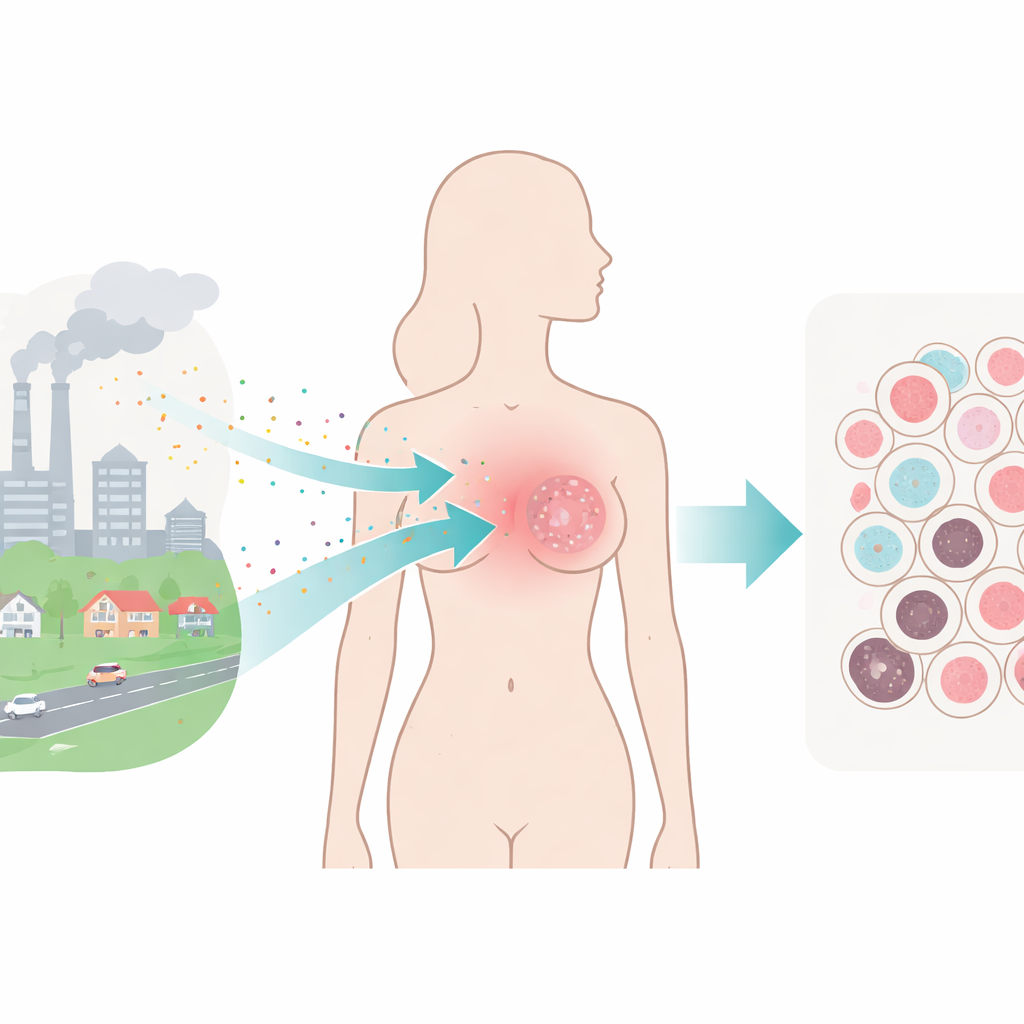
Most people know that air pollution can harm the lungs and heart, but far fewer realize it may also affect the risk of breast cancer, the most common cancer in women worldwide. This study from France followed tens of thousands of women for more than two decades to ask a simple but pressing question: does long-term exposure to everyday air pollution, specifically tiny particles in the air, relate to a higher chance of developing breast cancer? The answer could reshape how we think about “clean air” as not just a comfort, but a form of cancer prevention.
What was being tested
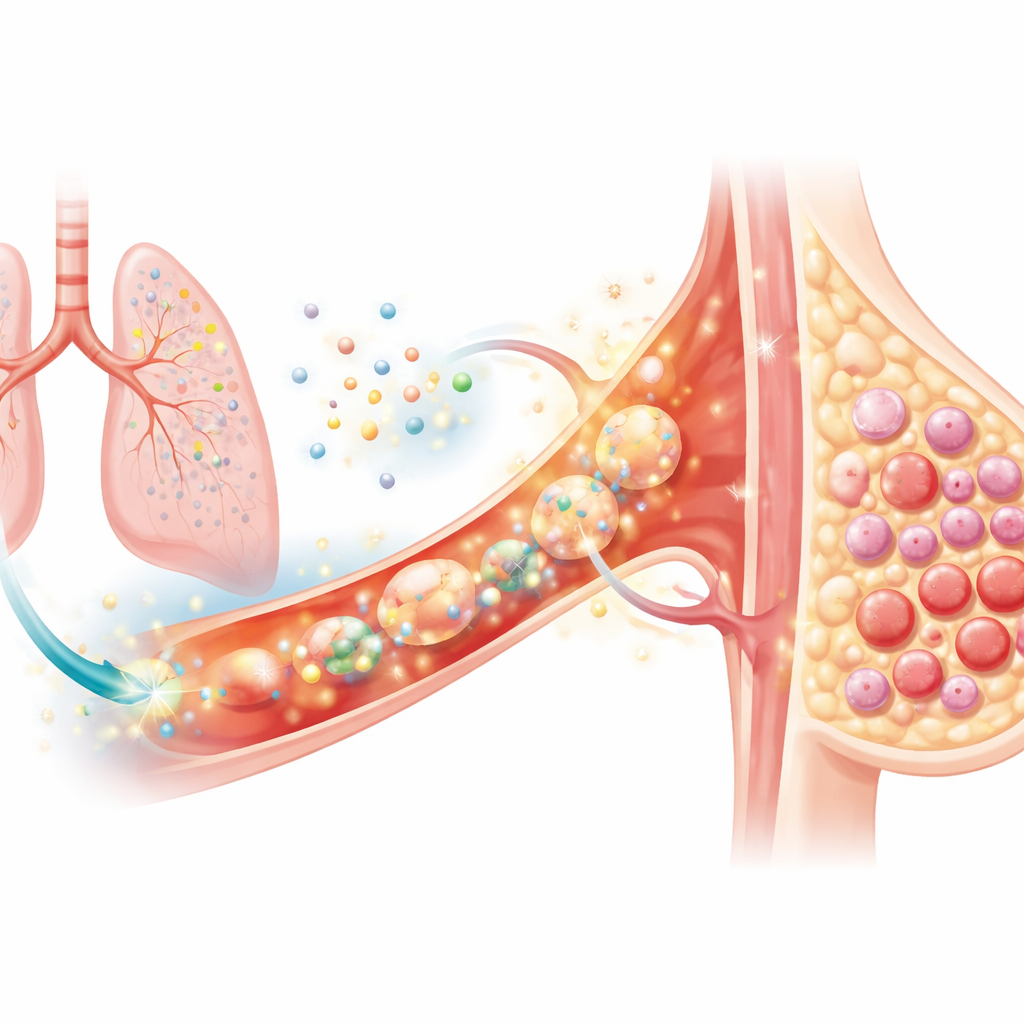
The researchers focused on two kinds of particulate matter—microscopic specks floating in outdoor air. One group, called PM2.5, is made of very fine particles small enough to reach deep into the lungs and even pass into the bloodstream. The other group, PM10, includes slightly larger particles that can still be inhaled. These particles can carry a mix of substances, including metals and chemicals that interfere with hormones or damage DNA. Because about 80% of breast cancers are driven by hormones, there is a biological reason to suspect that long-term exposure to such pollution might influence breast cancer risk.
Who was studied and how exposure was measured
The study drew on the large French E3N-Generation cohort, which has followed nearly 100,000 women since the early 1990s. From this cohort, the team identified 5222 women who developed invasive breast cancer between 1990 and 2011 and matched each of them to a similar woman without breast cancer, based on age, place of residence and other factors. This “nested case-control” design allows detailed comparison of women who did and did not develop cancer while using the rich information collected over time on lifestyle, medical history and family background.
To estimate air pollution, the researchers reconstructed yearly levels of PM2.5 and PM10 at each woman’s home address from 1990 to 2011. They used two sophisticated modeling approaches. One, called land use regression, captures fine differences in pollution across small areas, such as near major roads or industrial sites. The other, a chemistry-transport model known as CHIMERE, simulates how pollutants move and transform in the atmosphere over wider regions. By linking these modeled pollution levels to each woman’s residential history, the team calculated her average long-term exposure over the years leading up to the cancer diagnosis or the matched date for controls.
What the study found
When the researchers compared women with higher versus lower long-term exposure, they saw a pattern suggesting increased breast cancer risk with rising particulate levels. For each 10 micrograms per cubic meter increase in average PM2.5, the estimated odds of breast cancer were about 14% higher, and for PM10 about 8% higher, after accounting for education, place of residence and many known risk factors such as body weight, physical activity, smoking, alcohol use, number of children, hormone use and family history. These estimates were slightly stronger when exposure was assessed using the wider-scale CHIMERE model, giving additional confidence that the signal was not just a statistical fluke.
The link appeared particularly pronounced for a specific type of tumor that combines two common forms of breast cancer—ductal and lobular carcinomas. In this mixed group, higher average particulate exposure was associated with notably higher odds of cancer. There were also signs that pollution might be more closely related to early-stage (stage I) breast cancers, hinting that tiny particles could be more important in triggering the disease than in driving it to more advanced stages. However, when tumors were grouped by hormone receptor status, the trends suggested, but did not clearly prove, stronger effects for hormone-sensitive cancers compared with hormone-insensitive ones.
Strengths, limits and what it means
This work stands out because it combines long follow-up, detailed information on many breast cancer risk factors and high-resolution pollution modeling that follows women as they move homes over time. That reduces some of the uncertainty that has complicated earlier research and helps address the long delay between exposure and cancer development. Still, the study cannot capture all exposures—such as pollution at workplaces, time spent commuting or during earlier life stages like childhood and pregnancy, which may be especially sensitive periods. It also treats particulate matter as a single entity, even though its chemical makeup varies across places and years, and it cannot completely rule out the influence of other co-occurring pollutants or urban factors.
What this means for everyday life
For a lay reader, the takeaway is not that air pollution “causes” breast cancer in every exposed woman, but that breathing air with higher levels of fine particles seems to nudge risk upward over many years, on top of well-known influences like lifestyle and genetics. In this French population, average particulate levels were often higher than current World Health Organization guidelines, meaning that many women were chronically exposed above recommended limits. The findings add to a growing body of evidence that cleaner air may help prevent not only heart and lung disease but also some breast cancers. They support public policies that reduce emissions from traffic, industry and heating, and they underscore that protecting air quality is also an investment in women’s long-term cancer risk.
Citation: Praud, D., Amadou, A., Mercoeur, B. et al. Long-term atmospheric exposure to particulate matter and breast cancer risk: findings from a nested case-control study in France. Br J Cancer 134, 1092–1100 (2026). https://doi.org/10.1038/s41416-025-03311-y
Keywords: air pollution, particulate matter, breast cancer risk, environmental epidemiology, women’s health