Clear Sky Science · en
Diagnostic whole transcriptome sequencing in a series of 1233 FFPE solid tumor samples
Why this matters for cancer patients
Cancer care increasingly depends on finding the tiny genetic glitches that drive each person’s tumor. Some of the most powerful drug targets are so‑called “gene fusions,” where pieces of two different genes become abnormally joined. This study explores whether a broad, RNA‑based test called whole transcriptome sequencing (WTS) can reliably pick up these fusions in routine hospital samples, and whether it can reveal extra clues—like hidden viruses or overactive pathways—that might guide treatment. 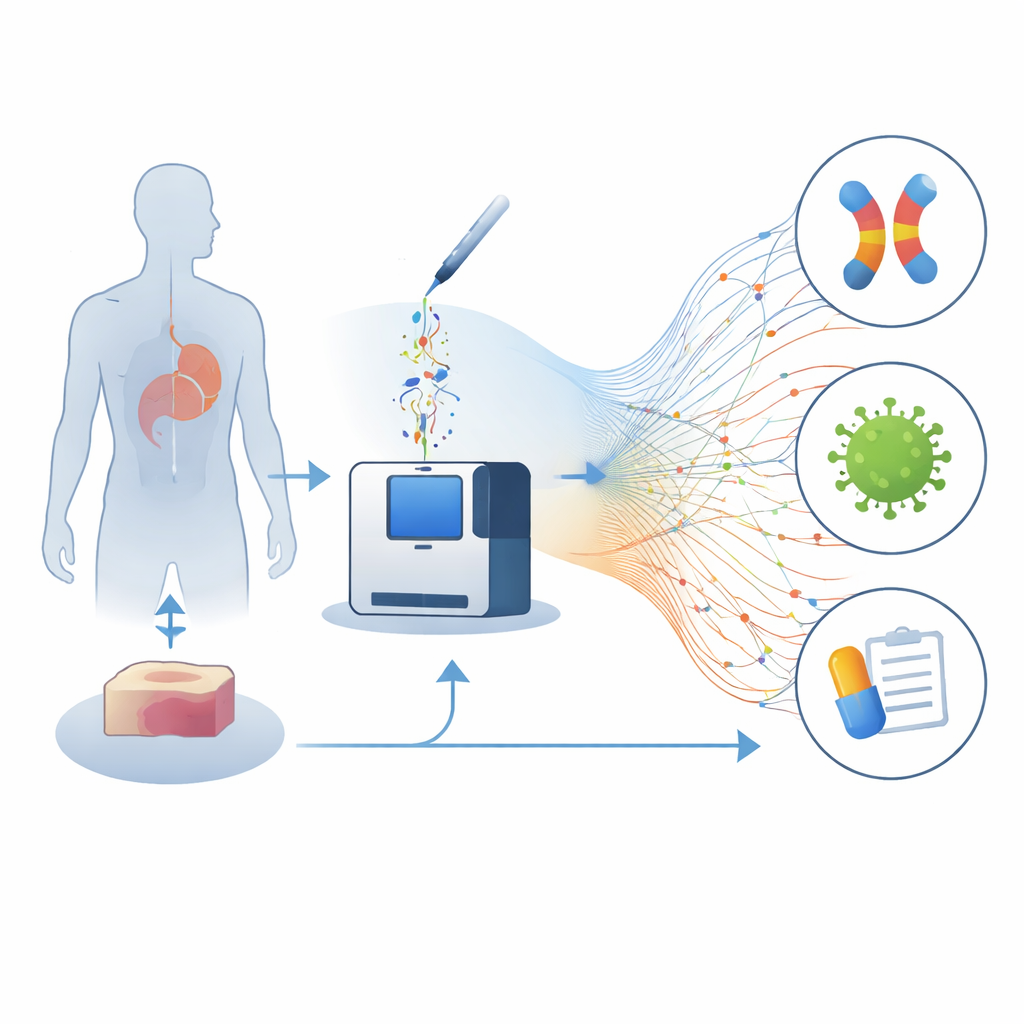
A broader microphone for tumor signals
Traditional tests for gene fusions work like a spotlight: they search only for a fixed list of well‑known targets. WTS is more like switching on all the microphones in a concert hall. Instead of focusing on a handful of genes, it listens to the activity of nearly every gene being switched on in the tumor. The team applied WTS to over 1,200 solid tumor samples preserved in standard paraffin blocks, the same kind of material used in everyday pathology. They compared WTS to two established targeted tests to see if this broader approach could still deliver the accuracy doctors need when choosing therapies.
Putting the new test to the test
The researchers first tried WTS on 64 tumors whose fusion status was already known from targeted panels. In this trial run, WTS correctly found 44 out of 48 known fusions and did not generate any false alarms in fusion‑negative cases. The misses did not stem from poor sequencing depth or RNA quantity, but mainly from how many cancer cells were actually in the sample. This led the team to define strict quality rules: at least 40% of the cells in a section should be tumor, the RNA input should meet a minimum amount, and the sequencing run should reach specific coverage and fragment size thresholds.
Fine‑tuning for clinical reliability
Armed with these rules, the group then examined 357 routine diagnostic cases in parallel with both WTS and targeted fusion tests. When samples passed all of the quality cut‑offs, WTS and the targeted methods agreed 100% of the time on which fusions were present. Even when the rules were ignored, nearly all samples were still classified correctly; the few failures clustered in tumors with low cancer cell content. To catch tricky cases where standard fusion‑finding software might miss a rearrangement, the researchers added an “imbalance assay” that looks for a tell‑tale surge of RNA activity on one side of a gene breakpoint. This helped flag important fusions, such as those involving the ALK gene, that would otherwise be overlooked.
Beyond fusions: extra clues in the data
Once WTS was rolled out in the clinic, 812 tumors that met the quality criteria were analyzed, uncovering 121 fusions across a wide range of cancer types, especially lung cancers and tumors of unknown origin. 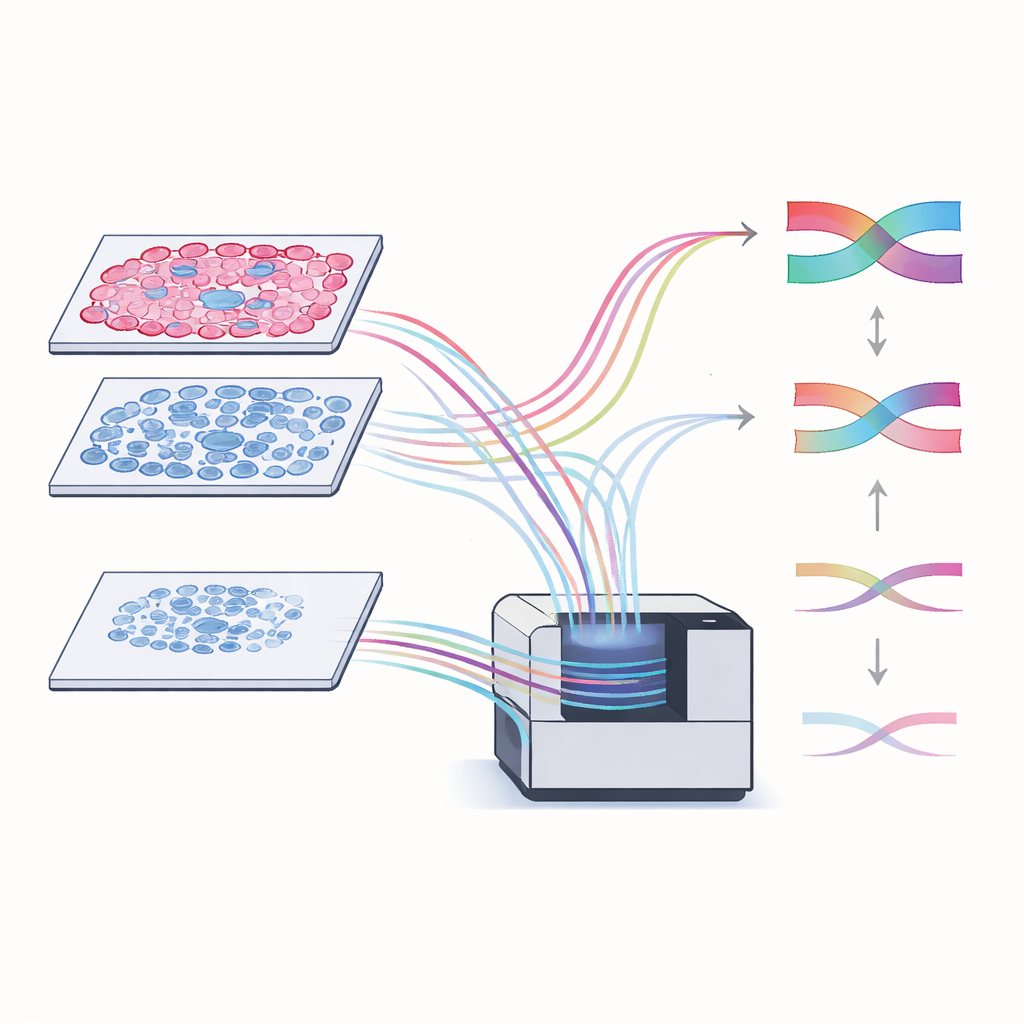
What this means for future cancer care
The study shows that, if laboratories apply firm quality thresholds and use smart downstream analyses, whole transcriptome sequencing can serve as a dependable workhorse for detecting gene fusions in everyday solid tumor samples. While targeted panels remain faster and more sensitive when tumor content is low, WTS offers a richer, more flexible picture: it can find known and novel fusions, reveal loss of key protective genes, uncover hidden pathogens, and map the wiring of cancer‑driving pathways in one go. For patients, this could translate into more precise diagnoses and a better match between their tumor’s molecular fingerprint and the treatments they receive.
Citation: Ball, M., Beck, S., Wlochowitz, D. et al. Diagnostic whole transcriptome sequencing in a series of 1233 FFPE solid tumor samples. Br J Cancer 134, 1101–1110 (2026). https://doi.org/10.1038/s41416-025-03307-8
Keywords: whole transcriptome sequencing, gene fusions, cancer diagnostics, RNA sequencing, precision oncology