Clear Sky Science · en
Genetic study identifies novel genes in developmental dysplasia of the hip
Why hip development and genes matter
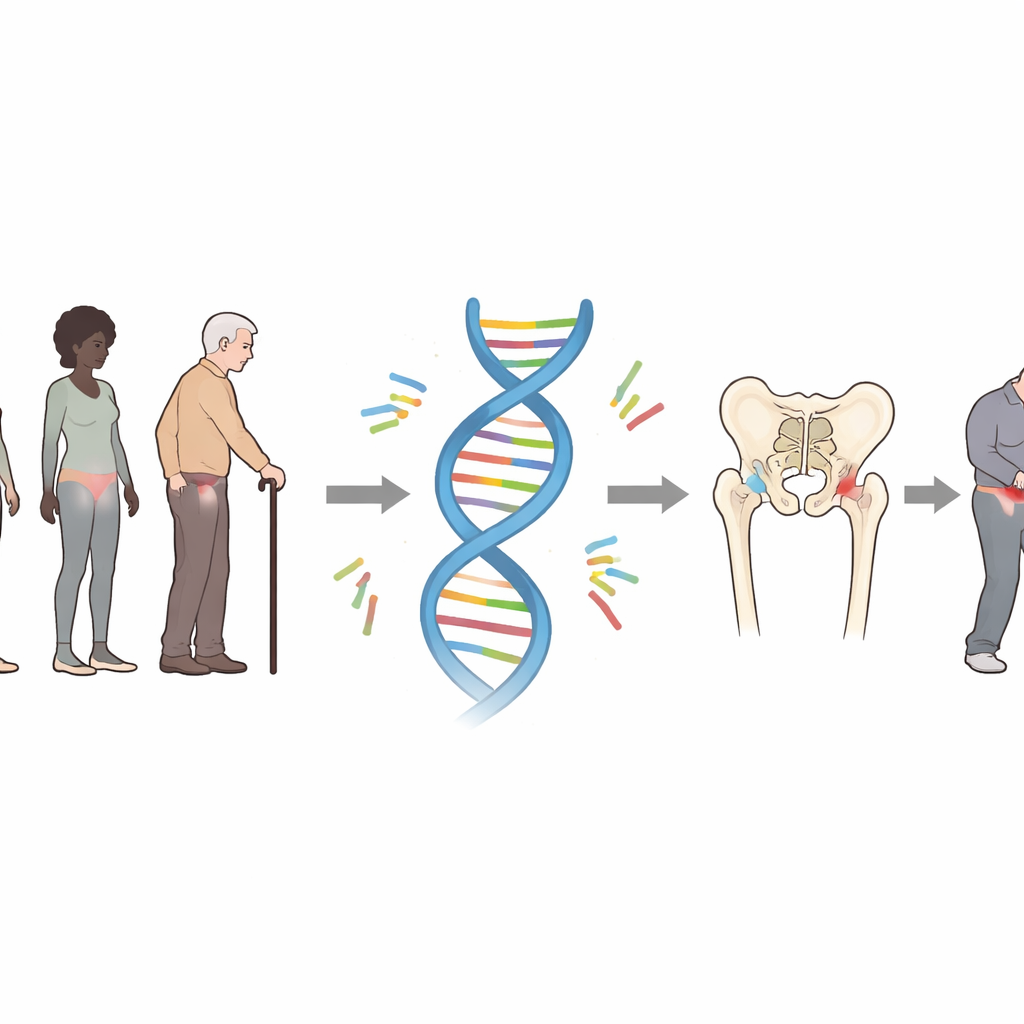
Many people develop painful hip arthritis as they age, sometimes needing joint replacement. One major hidden cause is developmental dysplasia of the hip (DDH), in which the hip socket is too shallow or poorly shaped from early life. This study asks a simple but important question: which genes make some people’s hips vulnerable from the start, and how does that risk connect to later hip osteoarthritis (OA)? By combining large genetic datasets from Japan and the United Kingdom, the researchers map out specific DNA regions that shape how the hip joint forms and wears over time.
A common hip problem with a family footprint
DDH covers a spectrum from mildly shallow sockets (hip dysplasia) to fully dislocated hips in infancy. Even after public health campaigns in Japan drastically reduced severe dislocations through better swaddling and infant positioning, hip dysplasia still causes more than 70% of hip osteoarthritis cases there. Family studies show DDH runs strongly in families, suggesting genes are important. Earlier genetic work hinted at a few candidate genes, but sample sizes were small and only one region, near a gene called GDF5, had been convincingly linked to DDH across studies.
Scanning genomes to find hip-shaping genes
The team performed large genome-wide association studies (GWAS) in 1,085 Japanese people with DDH and 24,000 controls, and then combined these data with results from 770 UK patients and a very large international hip arthritis study. They analyzed hip dysplasia without dislocation and dislocated hips separately, then together. In Japanese patients with hip dysplasia, they identified three new strong genetic signals near or within genes called COL11A2, CALN1 and TRPM7. Intriguingly, these same regions were not significant in patients with dislocated hips, and some showed opposite effects, implying that milder and more severe forms of DDH do not share exactly the same genetic recipe.
From collagen and cartilage to worn-out joints
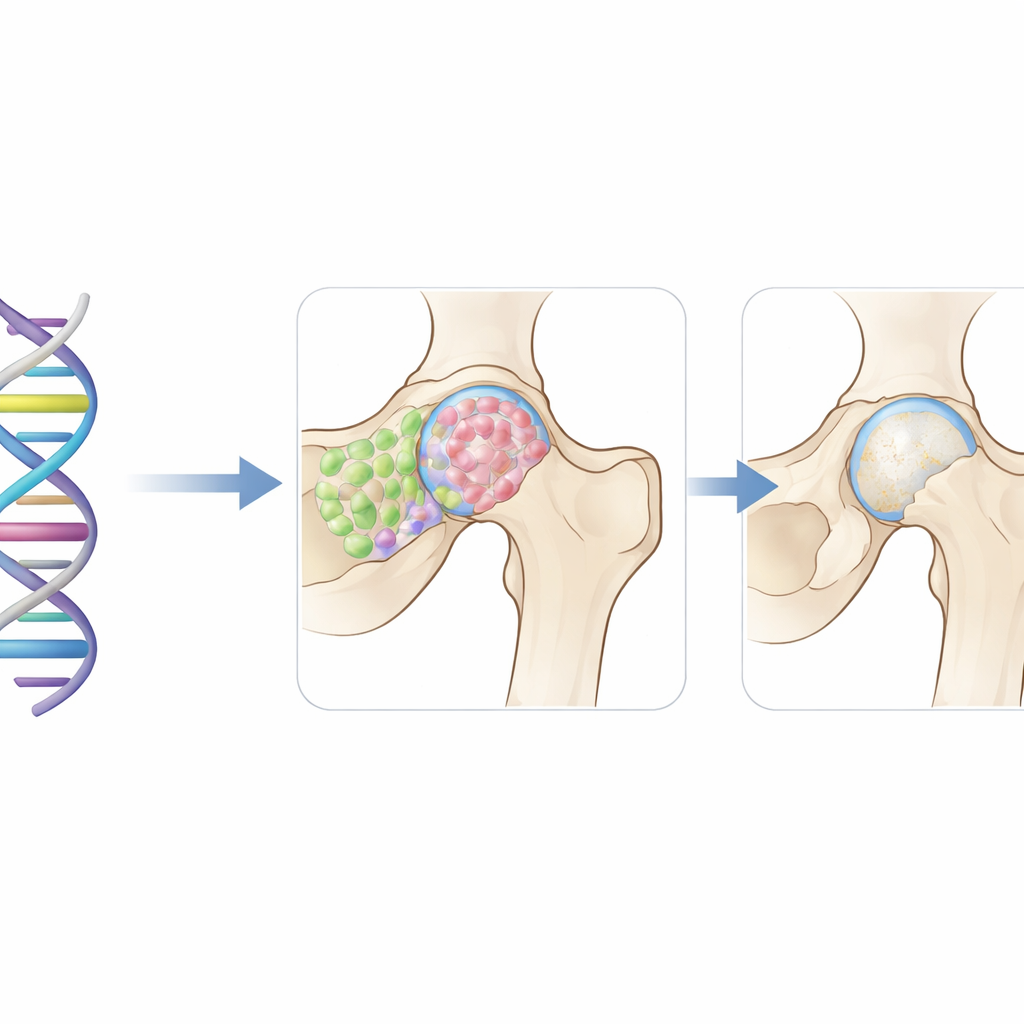
Across all their analyses, the researchers ultimately identified nine regions associated with DDH and its subtypes, and five additional regions linked to hip osteoarthritis when DDH data were combined with a massive OA dataset. Many of the key genes sit at the heart of bone and cartilage biology. COL11A1 and COL11A2 encode parts of type XI collagen, a structural component crucial for shaping cartilage and bone; rare changes in these genes cause severe skeletal disorders and early arthritis. GDF5, a growth factor, controls joint formation. Other newly implicated genes, including FOXC1, FOXF2, SLC38A4, TRPM7, VEGF-C, and ITGA2, influence processes such as cartilage cell maturation, bone growth, blood and lymph vessel function in joints, and how joint tissues respond to mechanical stress and inflammation.
Linking hip dysplasia and arthritis through shared biology
The authors also examined where in the body these genetic signals are most active. Using public datasets, they found that DDH-related variants are enriched in regulatory regions of cartilage cells (chondrocytes) and other bone-related cells, reinforcing the idea that subtle changes in how these cells behave during growth help determine whether the hip socket forms deeply and smoothly, or remains shallow and unstable. Statistical comparisons showed that many risk variants for hip dysplasia and hip osteoarthritis push risk in the same direction, supporting a shared genetic foundation: the same genes that slightly mis-shape the joint early in life may also make it more prone to wear and tear decades later.
What this means for future care
For non-specialists, the key takeaway is that hip arthritis is often the end result of a developmental story written partly in our DNA. This study pinpoints specific genes and cell types that guide how the hip socket is sculpted and maintained, and shows that milder dysplasia and frank dislocation are not genetically identical. While the work does not yet translate into routine genetic testing or new treatments, it provides a roadmap: by focusing on collagen structure, cartilage development, and joint blood and lymph flow, future research may be able to predict who is at risk earlier in life and design therapies that protect the hip long before pain and arthritis set in.
Citation: Yoshino, S., Chen, S., Yamaguchi, R. et al. Genetic study identifies novel genes in developmental dysplasia of the hip. Bone Res 14, 34 (2026). https://doi.org/10.1038/s41413-026-00514-8
Keywords: developmental dysplasia of the hip, hip osteoarthritis, genetic risk, cartilage and bone development, collagen genes