Clear Sky Science · en
The spinal lymphatic system: an emerging pathway bridging fluid homeostasis, immunity, and disease
A hidden cleanup network in your backbone
The spaces around your spinal cord and backbone were long thought to be simple cushions and structural supports. This review article reveals that they also contain a delicate drainage and defense network of lymphatic vessels—tiny tubes that move fluid and immune cells. Understanding this newly mapped “spinal lymphatic system” could change how we think about back pain, spinal injuries, multiple sclerosis, dementia, and even how drugs reach the nervous system.
More than just plumbing for the body
Most people learn that lymphatic vessels help clear excess fluid, carry immune cells, and filter germs through lymph nodes. For decades, scientists believed this system stopped at the edge of the brain and spine. New imaging and genetic tools have overturned that view. Researchers now see lymphatic vessels running along the coverings of the spinal cord, threading through the backbone itself, and even entering the tough outer ring of the spinal discs. These channels appear to link the brain, spinal cord, vertebrae, and surrounding tissues into one fluid‑handling and immune network that constantly communicates with lymph nodes throughout the body. 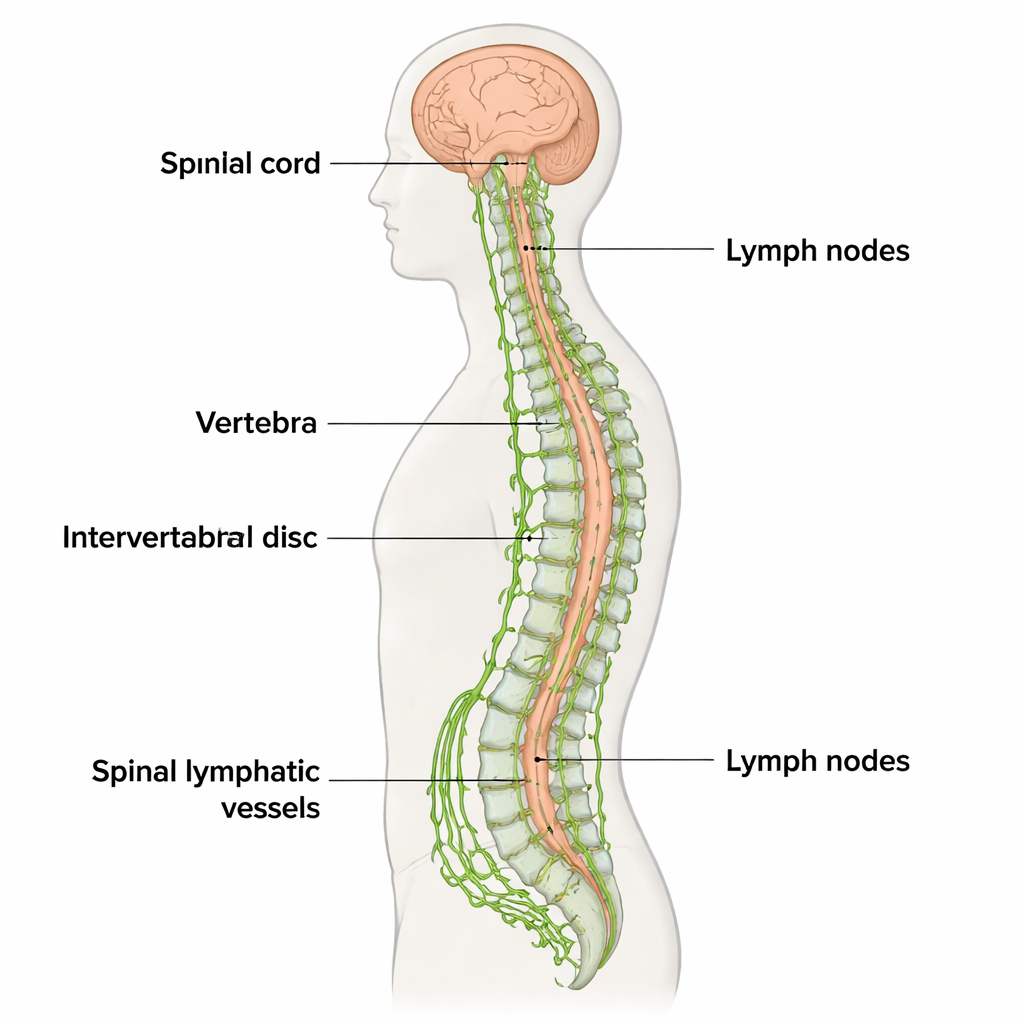
How spinal lymph vessels move brain and spine fluid
Fluid that bathes the brain and spinal cord, called cerebrospinal fluid, must be constantly refreshed to carry away waste and distribute signaling molecules. The article summarizes work showing that a portion of this fluid exits the spine through lymphatic vessels in the spinal coverings, especially in the lower back and tail regions. Tracers injected into the fluid spaces or spinal tissue in animals rapidly appear in lymph vessels and lymph nodes near the vertebral column. The drainage power of these spinal channels varies by region, changes with body posture and daily sleep–wake cycles, and is boosted or weakened by factors such as pressure inside the skull, aging, and chemical signals that stimulate vessel growth.
Gatekeepers of spinal immunity and repair
These same lymph vessels also act as information highways for the immune system. Immune cells and molecular “danger signals” from the spinal cord can travel through them to nearby lymph nodes, where they help trigger or fine‑tune immune responses. In spinal cord injury models, damage rapidly sparks new lymphatic growth around the lesion. This burst of vessels helps clear swelling and inflammatory chemicals, improving recovery—yet it may also contribute to chronic pain by altering nerve signaling. In multiple sclerosis and related diseases, spinal lymph vessels may play a double role: helping present nerve‑derived material that fuels autoimmunity, but also supporting later clean‑up and remyelination. 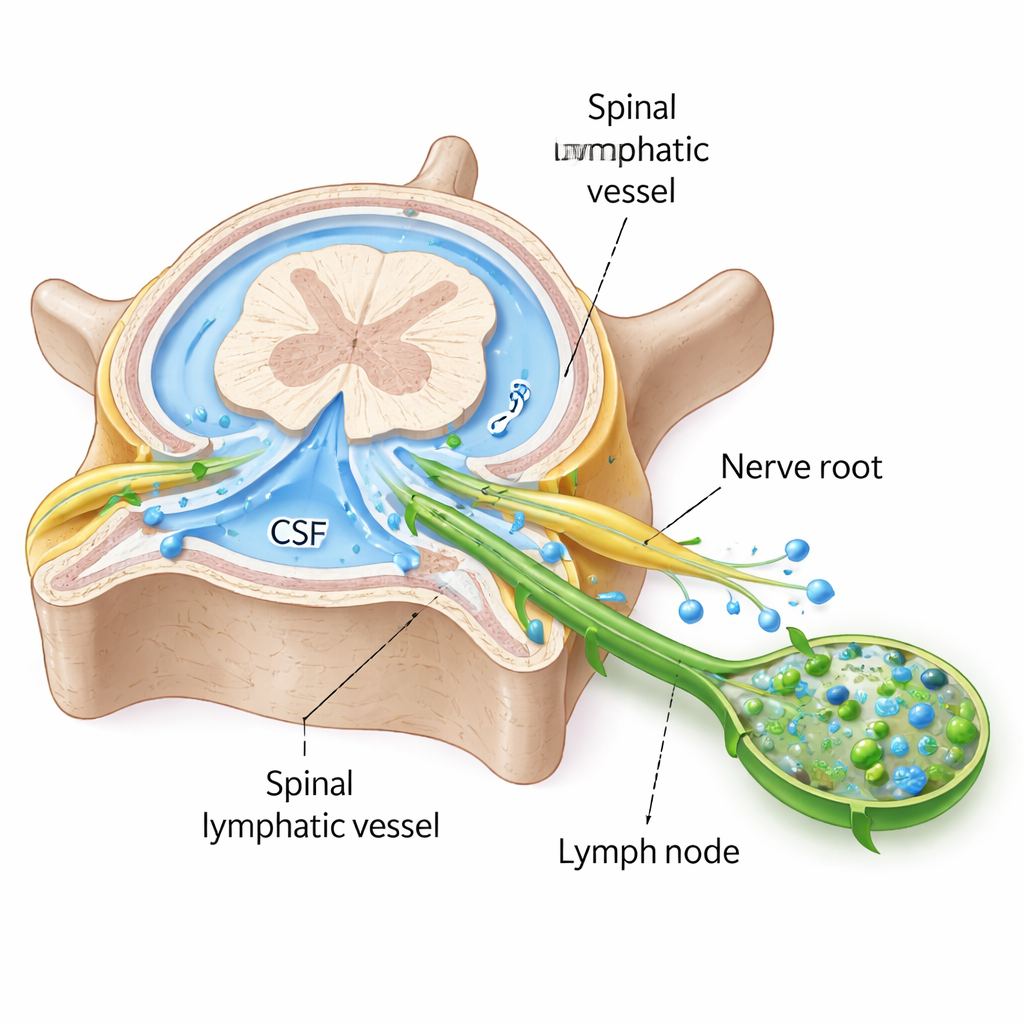
Lymph vessels inside bones and discs
The review also challenges the textbook claim that bones and spinal discs lack lymphatic vessels. Using refined staining and 3D imaging, scientists have found lymph channels in vertebral bone and in the outer ring of healthy intervertebral discs. In disc disease, lymph vessels in the ring may shrink, while new vessels can sprout into herniated disc material, helping it to be resorbed and calming inflammation. In bones, lymph vessels appear to aid fracture healing, regulate bone‑marrow blood‑cell production, and potentially offer routes for cancer spread. Because vertebrae sit next to the spinal cord and its coverings, these bone and disc lymphatics likely form part of a continuous pathway for both fluid and immune cells.
Why this matters for brain and spine diseases
The emerging picture is that breakdowns in spinal lymphatic flow may worsen a wide range of conditions. Narrowing of the spinal canal could disturb fluid clearance and contribute to multiple sclerosis lesions or raise dementia risk by slowing the removal of toxic proteins. After stroke or brain bleeding, when head‑draining lymphatics are damaged, spinal routes may partly take over to clear blood and waste products. In tumors of the brain and spine, these vessels may either help the immune system recognize cancer or, in some settings, open escape routes for malignant cells. Carefully targeting lymphatic growth or function—using drugs, biologic factors, or local delivery systems—could one day support bone repair, slow disc degeneration, and enhance recovery after spinal or brain injury.
A new target for future treatments
For non‑specialists, the key message is that the spine is not just a stack of bones and nerves but also a living drainage and defense organ. The newly charted spinal lymphatic system helps move fluid, clear waste, and coordinate immune activity along the entire backbone. By learning how to visualize, measure, and gently tune this network, researchers hope to design therapies that improve outcomes in spinal cord injury, back and neck degeneration, autoimmune disease, and neurodegenerative disorders.
Citation: Hou, Y., Wu, J., Yang, S. et al. The spinal lymphatic system: an emerging pathway bridging fluid homeostasis, immunity, and disease. Bone Res 14, 28 (2026). https://doi.org/10.1038/s41413-026-00508-6
Keywords: spinal lymphatic system, cerebrospinal fluid drainage, spinal cord immunity, intervertebral disc degeneration, vertebral lymphatic vessels