Clear Sky Science · en
Development and multinational validation of a multiple myeloma–specific comorbidity index using real-world cohorts: CAREMM-2108
Why other health problems matter in blood cancer
Multiple myeloma is a blood cancer that mostly affects older adults, many of whom already live with heart disease, strokes, liver problems, or past cancers. These additional health issues can strongly influence how well patients tolerate treatment and how long they live, yet doctors have lacked a simple, myeloma-focused way to factor them into care decisions. This study introduces and tests a new scoring system designed specifically to capture the impact of other illnesses in people with multiple myeloma, using real-world data from thousands of patients in Korea and Japan.
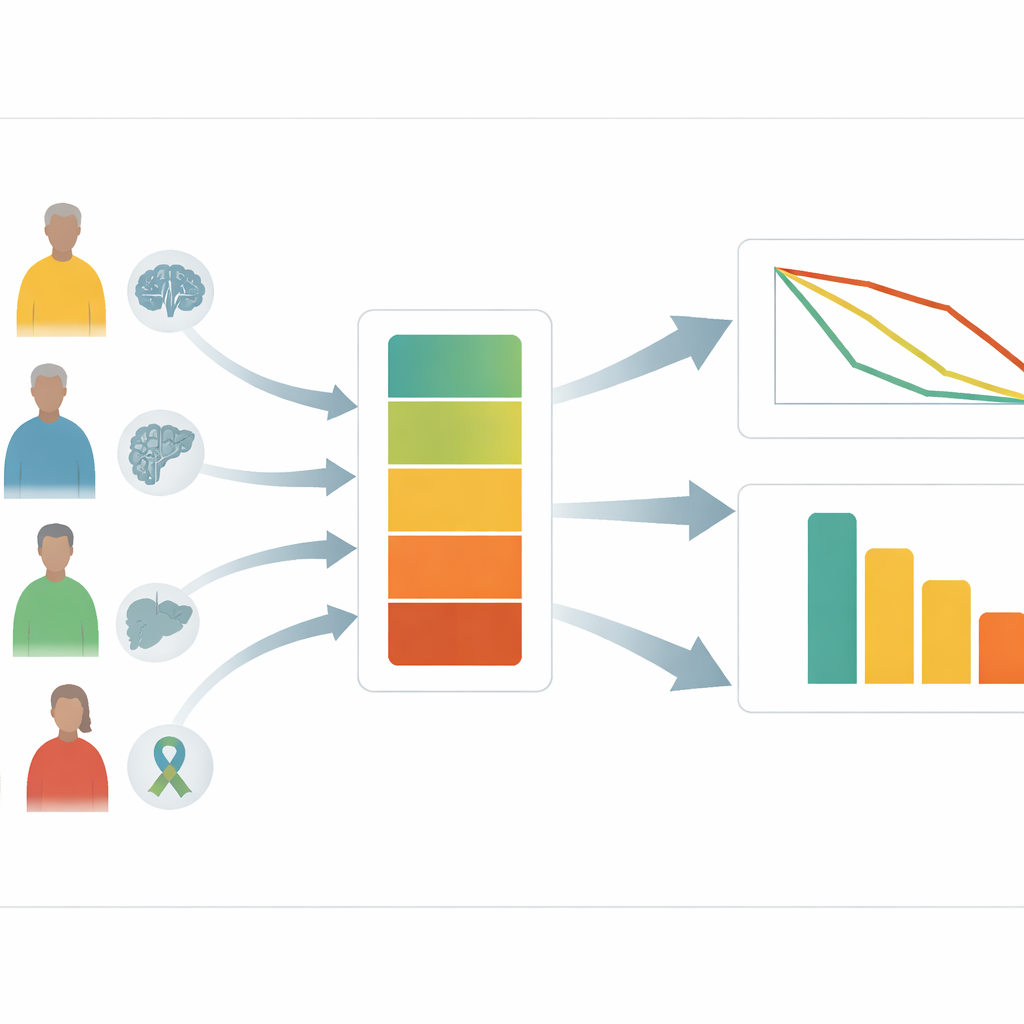
Limits of older checklists
Doctors commonly use general tools such as the Charlson Comorbidity Index and the International Myeloma Working Group frailty score to describe a patient’s overall health. However, these tools were not built with myeloma in mind. They assign fixed importance to many conditions, do not fully reflect which problems matter most for this cancer, and often compress complex health histories into a few blunt categories. Some rely on detailed questionnaires about daily activities that can be distorted by temporary symptoms at diagnosis, making patients seem more fragile than they are once treatment controls the disease. As a result, these scores can misjudge risk and sometimes push clinicians toward gentler therapies than a patient could actually handle.
Building a myeloma-focused health score
To tackle this gap, the researchers used nationwide insurance data from South Korea covering more than 17,000 people treated for multiple myeloma between 2007 and 2022. They examined which health conditions recorded before treatment were most closely tied to survival, testing age, sex, and a wide set of medical problems. Statistical models allowed them to weigh each factor and strip away those that added little extra information. The final multiple myeloma–specific comorbidity index, or MM-CI, relied on just eight pieces of information: sex; age groups; and whether a patient had congestive heart failure, prior strokes, liver disease, or another cancer. Each item contributes a small number of points, with higher totals reflecting a heavier burden of serious illness.
Sorting patients into clear risk groups
When the team applied the MM-CI in the Korean national cohort, it neatly separated patients into four groups with very different life expectancies after treatment began. Those with the lowest scores lived a median of about six years, while those with the highest scores lived a little under two years. The index also predicted how soon patients would need their next line of therapy. To test whether the score worked beyond claims data, the researchers then applied it to two independent hospital-based registries: one from several Korean centers and another from a Japanese university hospital. In both settings, the MM-CI again ranked patients into groups with stepwise declines in survival as scores rose, despite differences in healthcare systems, treatment patterns, and follow-up.
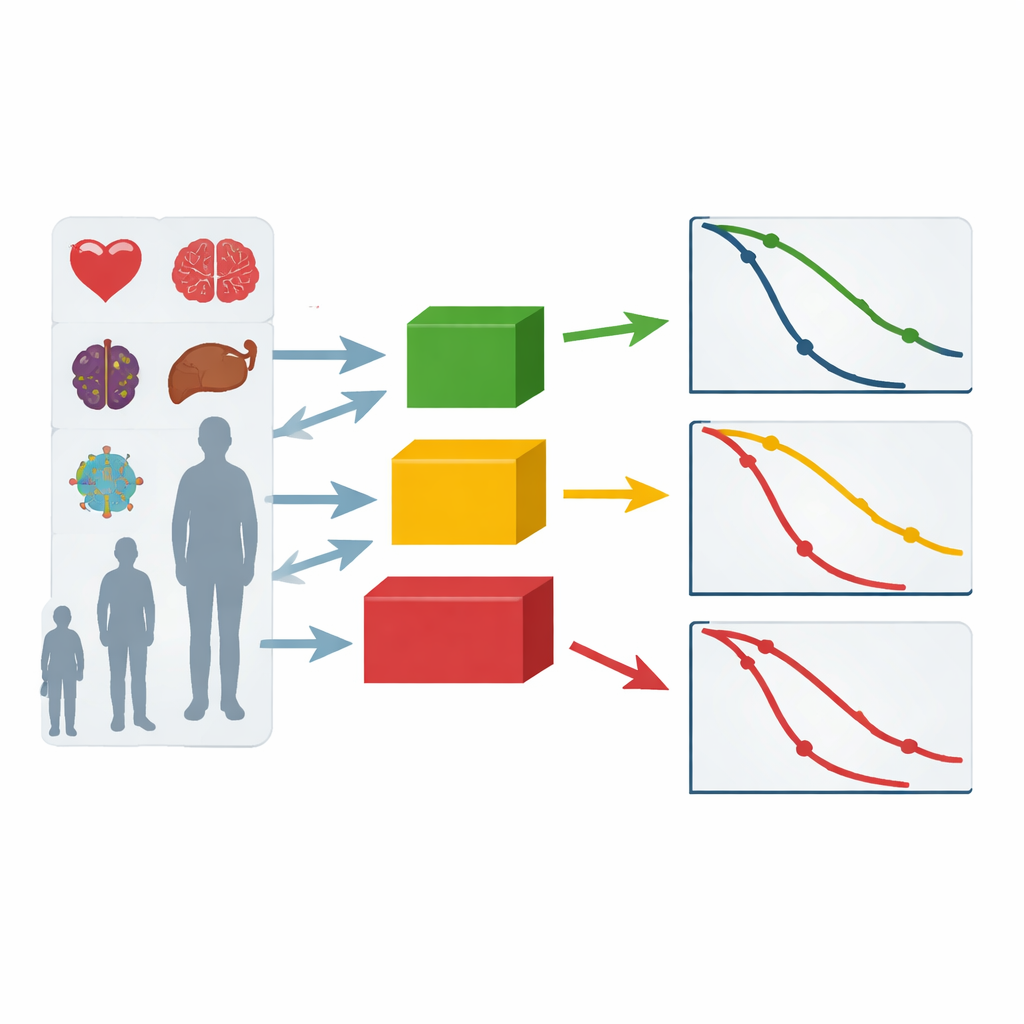
Outperforming older tools in the real world
The authors compared their new index with two commonly used approaches: an age-adjusted Charlson score and the shortened Charlson score embedded in the IMWG frailty model. Using time-based measures of prediction accuracy, the MM-CI consistently did a better job of distinguishing who was more or less likely to die over the coming years. Importantly, the MM-CI remained a strong predictor even after accounting for how advanced the myeloma was at diagnosis, how physically limited patients appeared, and how intensive their first treatment regimen was. This suggests that the background burden of other serious diseases adds its own, independent layer of risk that doctors should consider when planning care.
What this means for patients and care decisions
For patients and families, the main takeaway is that a handful of easily known facts—age, sex, and a few major medical conditions—can give doctors a clearer picture of long-term outlook in multiple myeloma. The MM-CI offers a simple, point-based tool that can be applied quickly in everyday practice, including outside major research centers. It will not replace standard staging of the cancer itself, but it can complement those systems and help tailor choices such as whether to pursue stem cell transplantation or use more intensive drug combinations. As newer immunotherapies become more common, the authors argue that this score should be tested and refined in those settings, with the aim of guiding safer, more personalized treatment for people living with this complex blood cancer.
Citation: Choi, S., Byun, J.M., Oh, S.E. et al. Development and multinational validation of a multiple myeloma–specific comorbidity index using real-world cohorts: CAREMM-2108. Blood Cancer J. 16, 52 (2026). https://doi.org/10.1038/s41408-026-01475-1
Keywords: multiple myeloma, comorbidity index, frailty, survival prediction, real-world data