Clear Sky Science · en
Anti-PD-1 antibody combined with P-GEMOX chemotherapy versus P-GEMOX chemotherapy with or without autologous stem-cell transplantation for previously untreated advanced natural killer/T cell lymphoma: a retrospective cohort study
Why this new cancer treatment mix matters
For people facing an aggressive blood cancer called natural killer/T-cell lymphoma, especially common in East Asia and Latin America, current drugs often work only for a while before the disease returns. This study looks at whether combining modern immune-boosting medicine with a standard chemotherapy mix can help patients live longer and stay cancer-free, without adding intolerable side effects.
A hard-to-treat cancer in need of better options
Natural killer/T-cell lymphoma is a fast-growing form of non-Hodgkin lymphoma that frequently spreads beyond the nose and throat to many parts of the body. Over the last decade, a drug called pegaspargase, used with other chemotherapy medicines, has improved survival, but more than half of patients with advanced disease still relapse, and typical survival is only about two years. Because many of these tumors display a surface signal that can shut down the body’s defenses, scientists have been testing “checkpoint” drugs that release this brake on the immune system. Early, small studies suggested that adding such drugs to chemotherapy might be especially promising in this cancer.
What the researchers compared in real-world patients
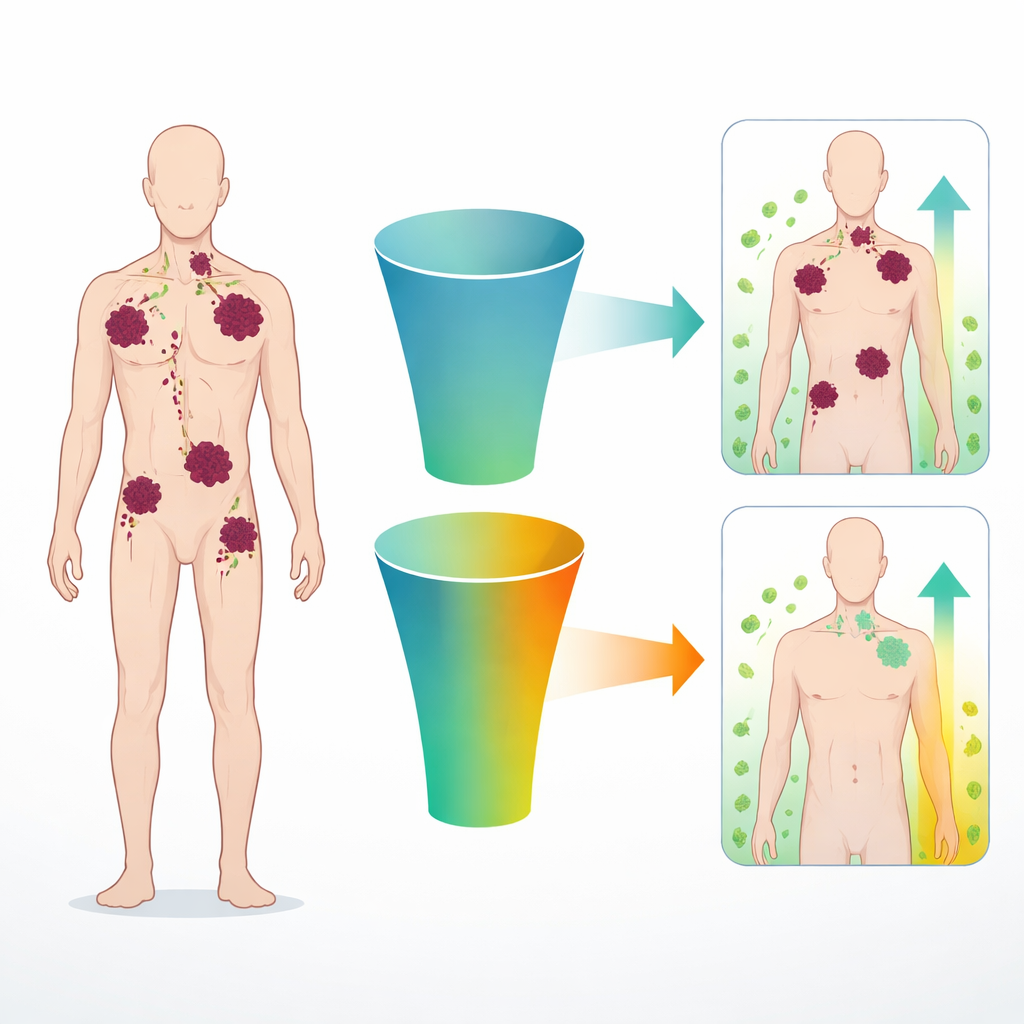
Doctors from 15 hospitals in China analyzed records from 418 adults newly diagnosed with advanced-stage disease between 2014 and 2023. Everyone received a chemotherapy backbone called P-GEMOX, which combines pegaspargase, gemcitabine, and oxaliplatin. One group also received an anti–PD-1 antibody, a type of immunotherapy that helps immune cells recognize and attack cancer, and then continued on this antibody alone as maintenance if their disease shrank or disappeared. The other group received P-GEMOX alone; some of these patients later underwent autologous stem-cell transplantation, a demanding procedure that uses very high-dose chemotherapy followed by rescue with the patient’s own blood-forming cells.
Stronger tumor control and longer survival
Patients who received the immunotherapy plus P-GEMOX combination had tumors shrink or disappear more often than those who received chemotherapy alone. Nearly 90% of people in the combined group responded to treatment, and about three quarters eventually had no detectable disease on scans, compared with about half in the chemotherapy-only group. After three years, about 64% of patients in the combined group were alive without their cancer worsening, versus 41% in the chemotherapy group. Overall survival told a similar story: nearly 80% of patients in the combined group were still alive at three years, compared with about 61% in the chemotherapy group. These advantages remained even after carefully matching patients in both groups by age, stage, and other risk factors.
How it stacked up against stem-cell transplantation
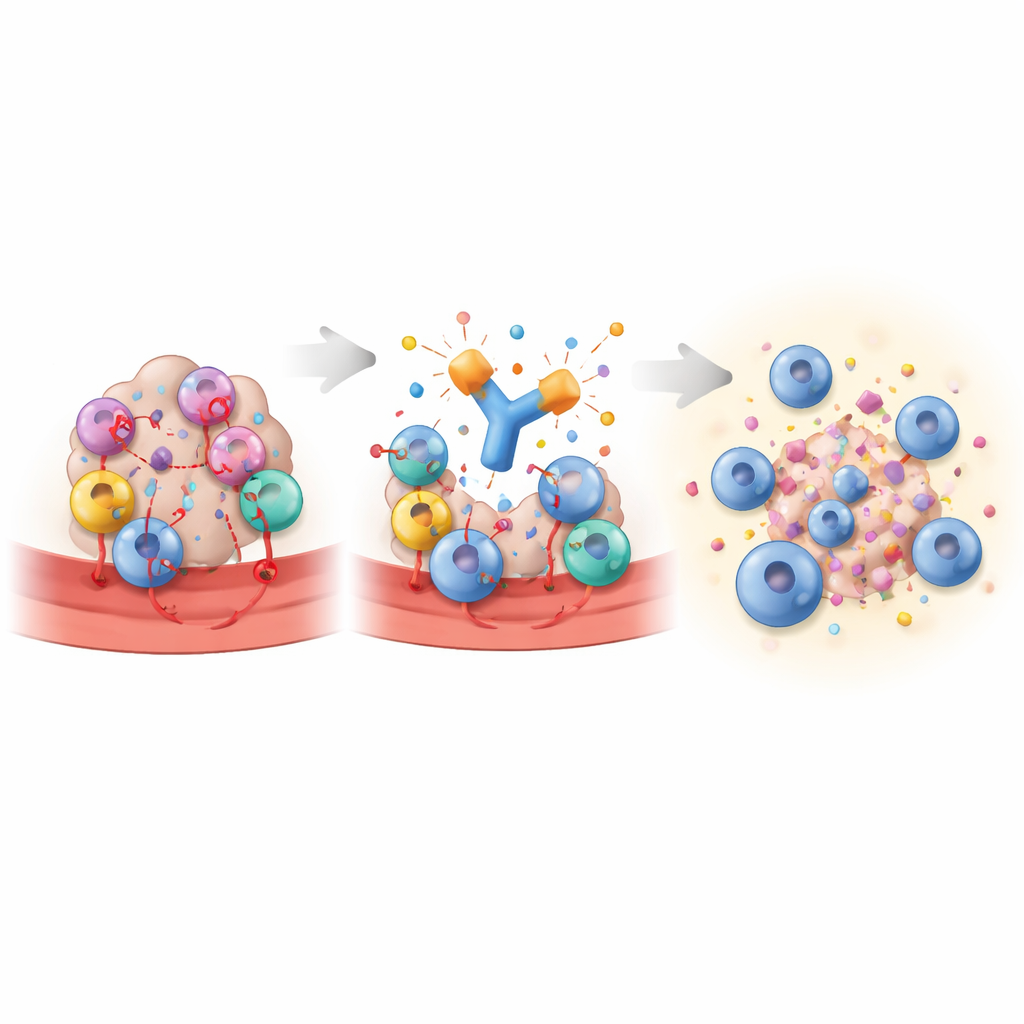
Stem-cell transplantation has often been used as a follow-up step for patients whose disease disappears after initial chemotherapy, but its true benefit has been uncertain, and the treatment can be harsh. In this study, the researchers directly compared two groups of patients whose cancer had fully responded: those who had chemotherapy followed by a transplant, and those who had the combined regimen followed by ongoing anti–PD-1 therapy. After matching these groups for key features, the maintenance immunotherapy group had better three-year freedom from relapse and better overall survival than the transplant group. This suggests that continuing the checkpoint drug after combination treatment may produce more durable remissions than relying on a transplant after standard chemotherapy.
Side effects and safety trade-offs
The stronger regimen came with trade-offs. During the initial cycles, patients receiving immunotherapy with P-GEMOX had higher rates of low white blood cell counts and other blood-related side effects than those on chemotherapy alone. However, these problems were generally short-lived and manageable, and severe non-blood side effects were uncommon. Long-term anti–PD-1 maintenance was usually well tolerated, with serious immune-related issues being rare. In contrast, patients who underwent stem-cell transplantation frequently experienced severe drops in blood counts due to the intense pre-transplant chemotherapy, highlighting the toughness of this approach.
What this could mean for patients
Overall, this large, real-world study suggests that starting treatment with an anti–PD-1 antibody plus P-GEMOX, followed by continued anti–PD-1 therapy, helps patients with advanced natural killer/T-cell lymphoma live longer and stay in remission more often than standard P-GEMOX, even when that standard therapy is backed up by a stem-cell transplant. While the analysis is retrospective and not a randomized trial, and longer follow-up is still needed, the results support moving immunotherapy-based combinations toward the front line for this hard-to-treat cancer and may eventually lessen the need for high-risk transplants in many patients.
Citation: Zou, Q., Cao, Y., Wang, L. et al. Anti-PD-1 antibody combined with P-GEMOX chemotherapy versus P-GEMOX chemotherapy with or without autologous stem-cell transplantation for previously untreated advanced natural killer/T cell lymphoma: a retrospective cohort study. Blood Cancer J. 16, 35 (2026). https://doi.org/10.1038/s41408-026-01459-1
Keywords: natural killer T-cell lymphoma, immunotherapy, PD-1 antibody, P-GEMOX chemotherapy, stem cell transplantation