Clear Sky Science · en
Phase 2 multicenter maintenance study of golidocitinib, A JAK1 selective inhibitor, in patients with peripheral T cell lymphomas after first-line systemic therapy (JACKPOT26)
Why this study matters
For many people diagnosed with peripheral T cell lymphoma, a rare but aggressive blood cancer, finishing initial chemotherapy is only half the battle. Even when scans show the disease has shrunk or disappeared, it often comes back. This study tested whether a daily pill called golidocitinib, taken after standard treatment, could help patients stay in remission longer and, for some, deepen a partial response into a complete one.
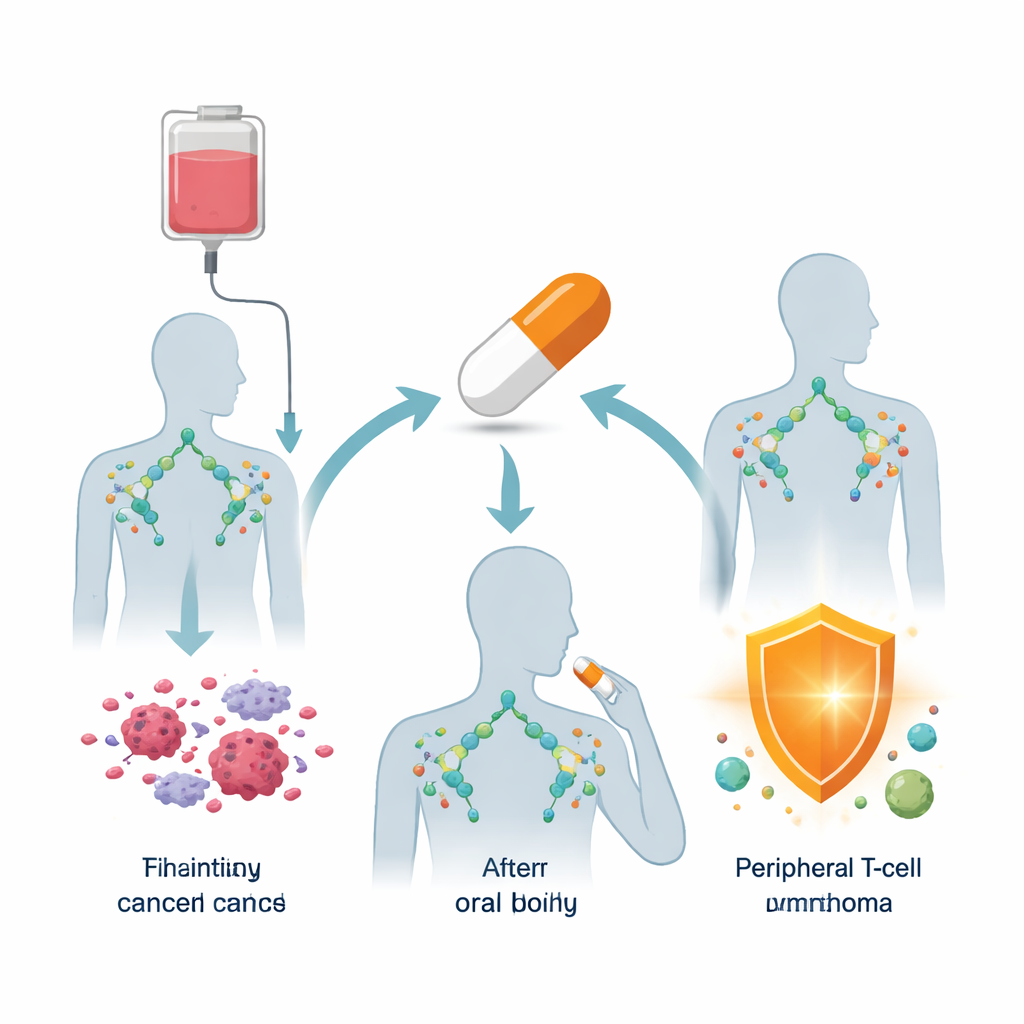
A high risk of cancer returning
Peripheral T cell lymphoma (PTCL) makes up a small share of lymphomas but behaves more aggressively than many better-known forms. Standard first treatments combine several chemotherapy drugs, tailored somewhat to the exact subtype of PTCL. These regimens can bring tumors under control, leading either to a complete response (no cancer detectable) or a partial response (cancer greatly reduced but still seen). Yet historical data show that more than a third of patients in complete response and about four in five in partial response relapse within two years, and options after relapse are limited. Many patients are also not candidates for stem cell transplantation, leaving a gap where maintenance therapy could make a difference.
A targeted pill designed for ongoing control
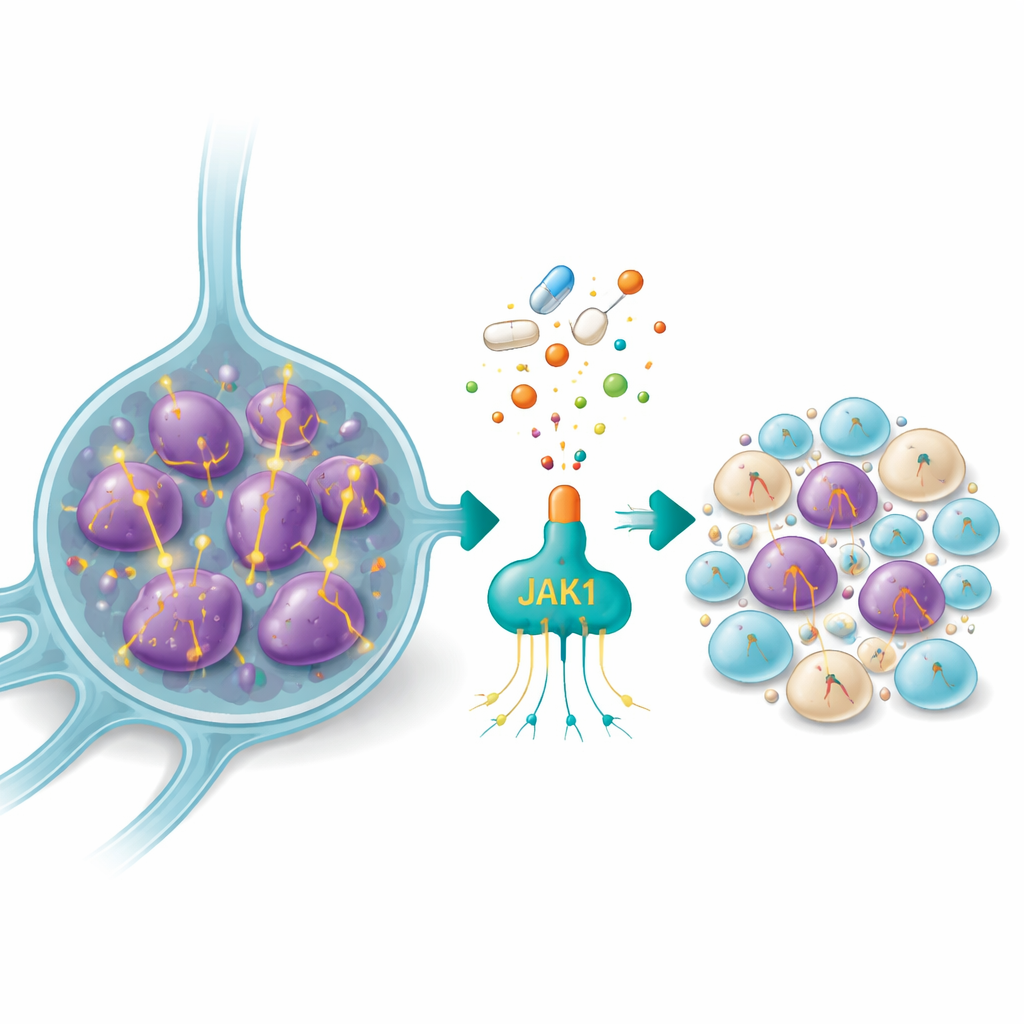
The cancer cells in many PTCL cases depend on an overactive signaling route inside the cell called the JAK–STAT pathway, which helps drive growth and survival. Golidocitinib is an oral drug that selectively blocks one key component, JAK1, with the goal of shutting down this cancer-fueling signal while sparing related proteins whose inhibition can cause severe side effects such as profound anemia. Earlier work in patients whose PTCL had already relapsed or resisted treatment suggested that golidocitinib could shrink tumors for a substantial period with a manageable safety profile. The JACKPOT26 study asked whether the same drug could be used earlier, as a maintenance treatment after first-line chemotherapy, to keep the disease from flaring back up.
How the study was run
Researchers in 22 hospitals in China enrolled 48 adults with various PTCL subtypes who had responded to standard first-line therapy and either could not undergo stem cell transplantation or had no transplant planned. They were split into two groups: 30 patients whose scans showed a complete response and 18 with a partial response. All received golidocitinib as a once-daily pill at a fixed dose of 150 mg. Patients in complete response took the drug for up to one year; those in partial response could continue for up to two years if their disease remained under control. Doctors tracked how long patients stayed free of relapse or disease worsening, how many partial responses converted to complete responses, overall survival, and all side effects over more than two years of follow-up.
What the researchers found
In the complete-response group, roughly three-quarters of patients were still free of disease relapse two years after starting golidocitinib, suggesting that many maintained their remission through and beyond the maintenance period. Among patients who began in partial response, the typical time without disease progression was about a year and a half, and nearly half remained progression-free at two years. Strikingly, half of these initially partial responders went on to achieve a complete response while on the pill, and for those responders the benefit tended to last close to two years. Starting maintenance sooner—within about six weeks of finishing chemotherapy—was linked with generally better long-term outcomes across several measures, hinting that timing may be important. Overall survival at two years was high in both groups, and in many patients, had not yet reached a median value, meaning more than half were still alive at that point.
Side effects and safety
The most frequent serious side effects were decreases in different types of blood cells—especially infection-fighting white cells—as well as pneumonia and other infections, patterns consistent with dampening of the immune system by JAK–STAT pathway blockade. About three-quarters of patients experienced at least one severe treatment-related problem, and many needed temporary treatment pauses or dose reductions. However, these issues were usually reversible and manageable with standard medical care, and only one in ten patients stopped the drug because of side effects. No treatment-related deaths were reported, and liver-related lab test changes were generally mild.
What this could mean for patients
This phase 2 trial suggests that golidocitinib, taken as a daily pill after successful first-line chemotherapy, can help many PTCL patients keep their cancer in check longer and, for some whose disease was only partly controlled, achieve a deeper remission. Although the study was relatively small and lacked a comparison group receiving no maintenance, the results offer encouraging early evidence that targeting a key signaling pathway with a selective drug may extend the hard-won gains of initial treatment. Larger, controlled studies will be needed to confirm these findings, refine who benefits most, and balance long-term protection against the risks of lowered blood counts and infections.
Citation: Wei, J., Cai, Q., Zhang, L. et al. Phase 2 multicenter maintenance study of golidocitinib, A JAK1 selective inhibitor, in patients with peripheral T cell lymphomas after first-line systemic therapy (JACKPOT26). Blood Cancer J. 16, 36 (2026). https://doi.org/10.1038/s41408-026-01452-8
Keywords: peripheral T cell lymphoma, maintenance therapy, golidocitinib, JAK1 inhibitor, blood cancer