Clear Sky Science · en
Immunoglobulin supplementation and longer dosing intervals reduce risk of infections in patients with RRMM treated with teclistamab
Why this matters for people living with cancer
Many people with advanced multiple myeloma now benefit from powerful new immune-based drugs, but these treatments can leave the body dangerously open to infections. This study asked a practical question with real-world consequences: can topping up patients’ antibodies and spacing out doses of one such drug, teclistamab, make them safer from infections without sacrificing benefit? The answer offers hope for making cutting-edge therapy both effective and gentler on the immune system.
A new hope that comes with a cost
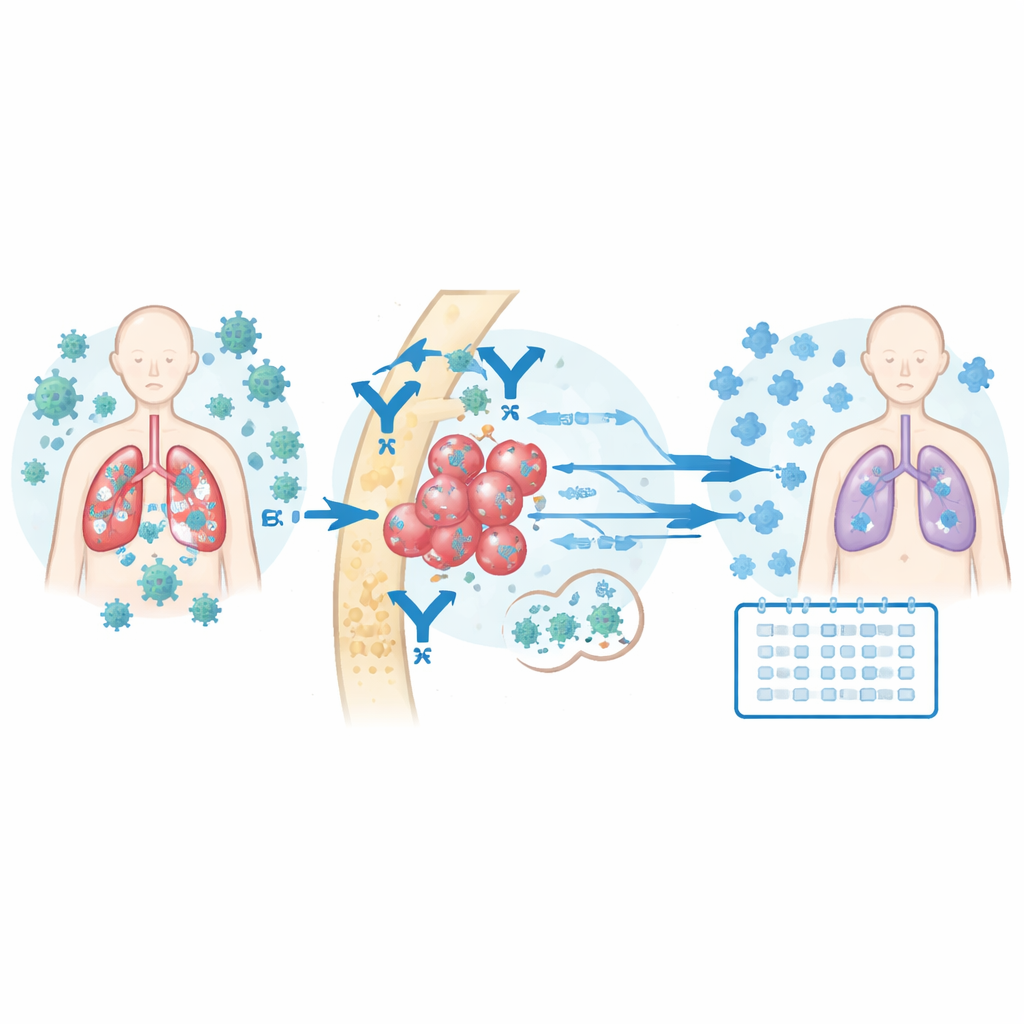
Teclistamab is part of a new class of “bispecific” medicines that harness a patient’s own immune cells to attack myeloma, a cancer of antibody-producing plasma cells in the bone marrow. By bringing T cells and myeloma cells together, these drugs can shrink tumors even after many other treatments have failed. But because myeloma cells and healthy antibody-producing cells are closely related, the therapy can also wipe out normal antibody production. Patients then develop very low levels of protective antibodies in their blood, making them prone to repeated lung, gut, and other infections.
Taking a closer look at infections
The researchers followed 80 people with relapsed or refractory multiple myeloma treated with teclistamab at a single Dutch hospital over nearly two years on average. Instead of counting only the first or worst infection in each person, they recorded every infection episode, from mild colds to life-threatening pneumonias, and adjusted for how long each person was on treatment. In total, they documented 390 infections, about four per patient per year, and almost one in eight was severe. Most infections involved the lungs, and a few patients died from overwhelming pneumonia, usually when they had not yet received extra antibody support.
Adding back protection with antibody infusions
To counter the loss of natural antibodies, most patients received regular infusions of pooled antibodies from healthy donors, known as intravenous immunoglobulin, or IVIG. These infusions were started when blood antibody levels dropped below a set threshold, or after a first serious infection, and then given roughly every four weeks. When the team compared periods without IVIG to time on IVIG, they found clear benefits. Overall infection rates dropped from about 4.4 to 3.2 infections per patient per year, and severe infections fell almost threefold, from 0.93 to 0.34 per patient per year. In simple terms, treating fewer than two patients with IVIG prevented one serious infection. Mild infections also became less frequent, though this trend was less certain, likely because of the limited number of patients.

Making strong medicine gentler by spacing doses
Another insight came from how teclistamab was given over time. Many patients began on weekly dosing and later moved to every two weeks, monthly, or even every two months once their disease was well controlled. As these intervals lengthened, infection rates steadily decreased. All-grade infections dropped from about six per year on weekly dosing to just over two per year on every-two-month dosing, and severe infections showed a similar decline. Importantly, even among patients already receiving IVIG, moving to less frequent teclistamab dosing still lowered the rate of serious infections. This suggests that easing the constant pressure on the immune system—allowing T cells to recover between doses—adds protection beyond what antibody infusions alone can provide.
Who remains at risk and what comes next
Despite the benefits of IVIG and dose spacing, some people continued to suffer notable infections, including recurring viral colds and bacterial lung infections. The study found that older age, signs of heavier tumor burden, and more heavily pretreated disease were linked to higher infection risk, even while on IVIG. In many of these “breakthrough” infections, blood antibody levels were still below the target range, especially early after starting IVIG, hinting that some patients may need higher or faster-loading doses. Others developed infections despite apparently adequate antibody levels, underscoring that damage to other parts of the immune system—such as T cells and mucus-surface defenses—is also important.
What this means for patients and clinicians
For people receiving teclistamab and similar drugs, this study offers a practical roadmap. Regular antibody infusions meaningfully cut both everyday and serious infections, and shifting to longer intervals between teclistamab doses, once the cancer is in deep remission, further lowers the threat—without stopping treatment outright. Together, these strategies turn a powerful but immunosuppressive therapy into a safer long-term option. The authors argue that future clinical trials should formally test planned dose spacing and fixed-duration treatment, so that patients can reap the full benefit of modern immunotherapy while better preserving their ability to fight off everyday germs.
Citation: Smits, F., Groen, K., Korst, C.L.B.M. et al. Immunoglobulin supplementation and longer dosing intervals reduce risk of infections in patients with RRMM treated with teclistamab. Blood Cancer J. 16, 26 (2026). https://doi.org/10.1038/s41408-026-01451-9
Keywords: multiple myeloma, bispecific antibodies, intravenous immunoglobulin, infection risk, teclistamab