Clear Sky Science · en
Exploring the shared genetic architecture between periodontitis and cardiovascular disease
Why your gums and heart might be connected
Gum disease and heart disease are two of the most common long-term illnesses worldwide. For years, doctors have noticed that people with serious gum infections often also have heart problems such as clogged arteries or heart attacks. This article explores whether that link is simply due to shared lifestyle factors like smoking and diet, or whether our genes also help connect the health of our mouth with the health of our heart.
Looking beyond everyday risk factors
Both severe gum disease (periodontitis) and cardiovascular disease are major contributors to global death and disability. They are driven by overlapping habits and conditions, including smoking, obesity, and diabetes. Previous studies suggested that bacteria from infected gums could enter the bloodstream, fuel body-wide inflammation, and encourage fatty build-up in blood vessels. But those studies could not easily separate cause and effect, or rule out the role of confounding lifestyle factors. The researchers behind this paper turned to human genetics to ask whether there is a deeper, inherited link between diseased gums and diseased arteries.
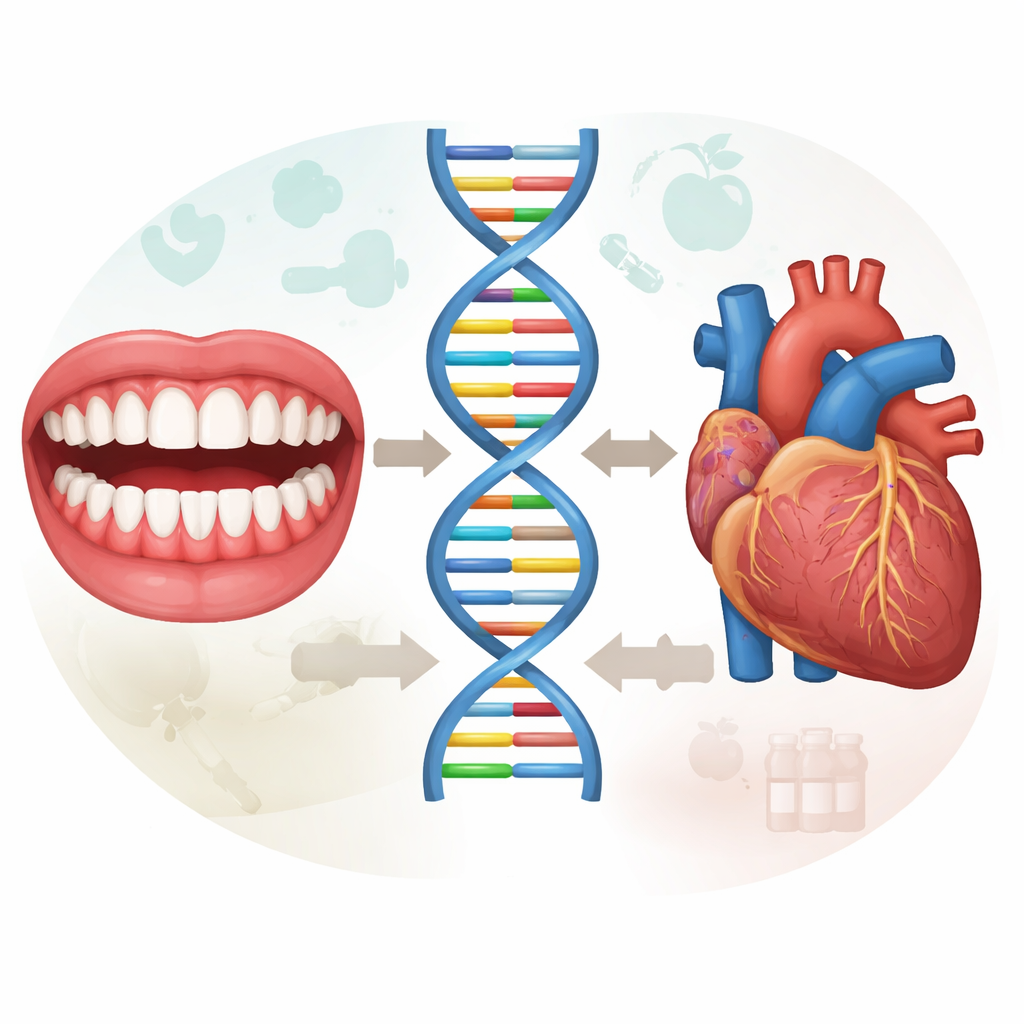
Using genes as a natural experiment
The team used large genetic datasets from tens of thousands of people of European ancestry who had been studied for both gum disease and several forms of cardiovascular disease, including high blood pressure, coronary heart disease, heart attack, and atherosclerosis (fatty deposits in arteries). They applied a method called Mendelian randomization, which uses naturally occurring genetic differences as a kind of lottery. Because these genetic variants are assigned before birth and are not changed by lifestyle, they can help test whether one condition is likely to cause another, or whether they just tend to occur together. The authors combined this approach with other cross-trait genetic analyses to look for DNA regions that influence both gum disease and heart problems.
Shared genes without a direct cause
When they asked whether genetic susceptibility to gum disease directly causes heart disease, or vice versa, the overall answer was no. Most of the Mendelian randomization tests did not support a straightforward cause-and-effect relationship in either direction once statistical safeguards and multiple methods were applied. Instead, the data showed clear genetic correlation: people who inherited variants that raise the risk of gum disease also tended to inherit variants that raise the risk of several cardiovascular conditions. This pattern implies that the two diseases share parts of their genetic blueprint, even if one does not simply trigger the other.
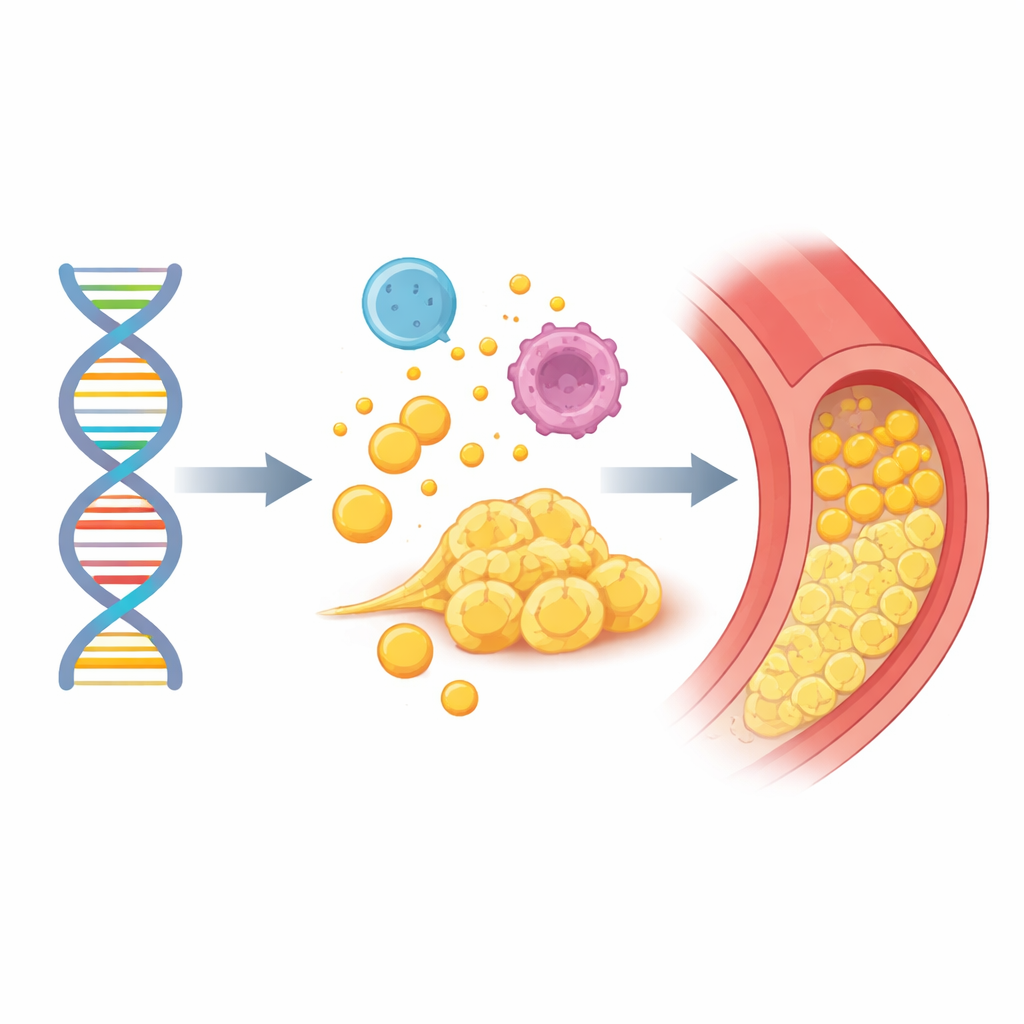
Genes that shape inflammation and cholesterol
Digging deeper, the researchers identified specific stretches of DNA that seem to influence both gum and heart disease. Some regions were already known to be involved in smoking behavior or body weight, suggesting that certain genetic variants increase vulnerability to both illnesses partly by shaping lifestyle or metabolism. Others highlighted genes active in immune cells, blood, and heart tissue. When the team examined biological pathways, two themes emerged again and again: inflammatory responses and cholesterol handling. The results suggest that inherited differences in how strongly the body mounts inflammation, and how efficiently it manages blood fats like cholesterol, may help explain why some people are prone to both periodontal breakdown and clogged arteries.
What this means for patients and prevention
For a layperson, the key takeaway is that gum disease and heart disease appear to be biological cousins: they share parts of the same genetic and immune machinery rather than standing in a simple cause-and-effect line. That does not weaken the case for good oral hygiene or heart-healthy habits—if anything, it underscores that the same body-wide inflammatory and metabolic processes influence both the mouth and the heart. Keeping gums healthy, avoiding smoking, controlling weight and blood sugar, and managing cholesterol remain essential. This study adds that, in the future, genetic insights and pathways such as inflammation control and cholesterol metabolism may help doctors identify people at especially high combined risk and develop targeted treatments that protect both oral and cardiovascular health.
Citation: Jin, T., Lin, J., Zhang, P. et al. Exploring the shared genetic architecture between periodontitis and cardiovascular disease. BDJ Open 12, 28 (2026). https://doi.org/10.1038/s41405-026-00421-4
Keywords: periodontitis, cardiovascular disease, genetics, inflammation, cholesterol metabolism