Clear Sky Science · en
In vitro study on the neutralization potential of particulate hydroxyapatite in erosive acids
Why Acid and Teeth Matter in Everyday Life
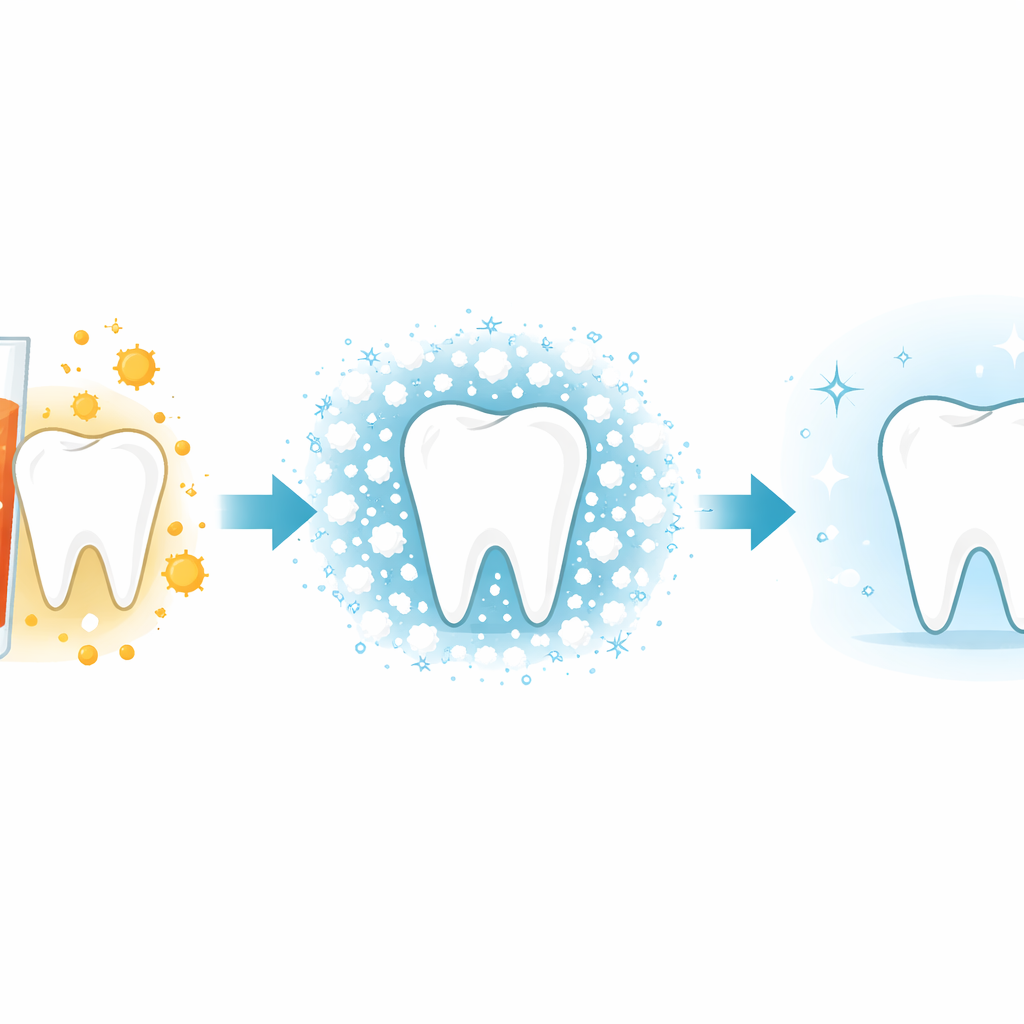
Many of the things we enjoy—soda, fruit juice, sports drinks, and even stomach acid during reflux—are acidic enough to slowly dissolve tooth enamel. Around the world, billions of people suffer from tooth decay and erosion linked to such acids. This study explores whether tiny mineral particles, already used in some toothpastes and mouthwashes, can help neutralize these acids quickly and safely, adding an extra layer of protection for our teeth.
A Mineral That Mimics Tooth Enamel
The research centers on hydroxyapatite, a calcium‑phosphate mineral that makes up most of our enamel and dentin. In nature, when teeth are exposed to acid, hydroxyapatite dissolves and releases calcium and phosphate, which can, under the right conditions, help rebuild weakened areas. Manufacturers have learned to make synthetic hydroxyapatite particles that closely resemble the mineral in teeth and have already used them in toothpastes that help prevent cavities. The big question here is whether these particles can also actively neutralize erosive acids from drinks and other sources before they damage enamel.
Testing Hydroxyapatite Against Strong and Everyday Acids
To answer this, the scientists added a measured amount of hydroxyapatite powder to several acidic liquids: strong laboratory acids (hydrochloric, phosphoric, citric, and lactic acid) and two common soft drinks (Coca‑Cola and Sprite). They warmed these liquids to body temperature, stirred them, and then tracked how the acidity changed over time. In separate tests with the beverages, they followed the first 30 seconds in detail—similar to how long a mouthwash swirls in the mouth—to see how rapidly the mineral could act. They also examined the particles under an electron microscope and used X‑ray techniques to check whether their crystal structure survived the acid exposure.
How the Particles Neutralize Acid and Release Calcium
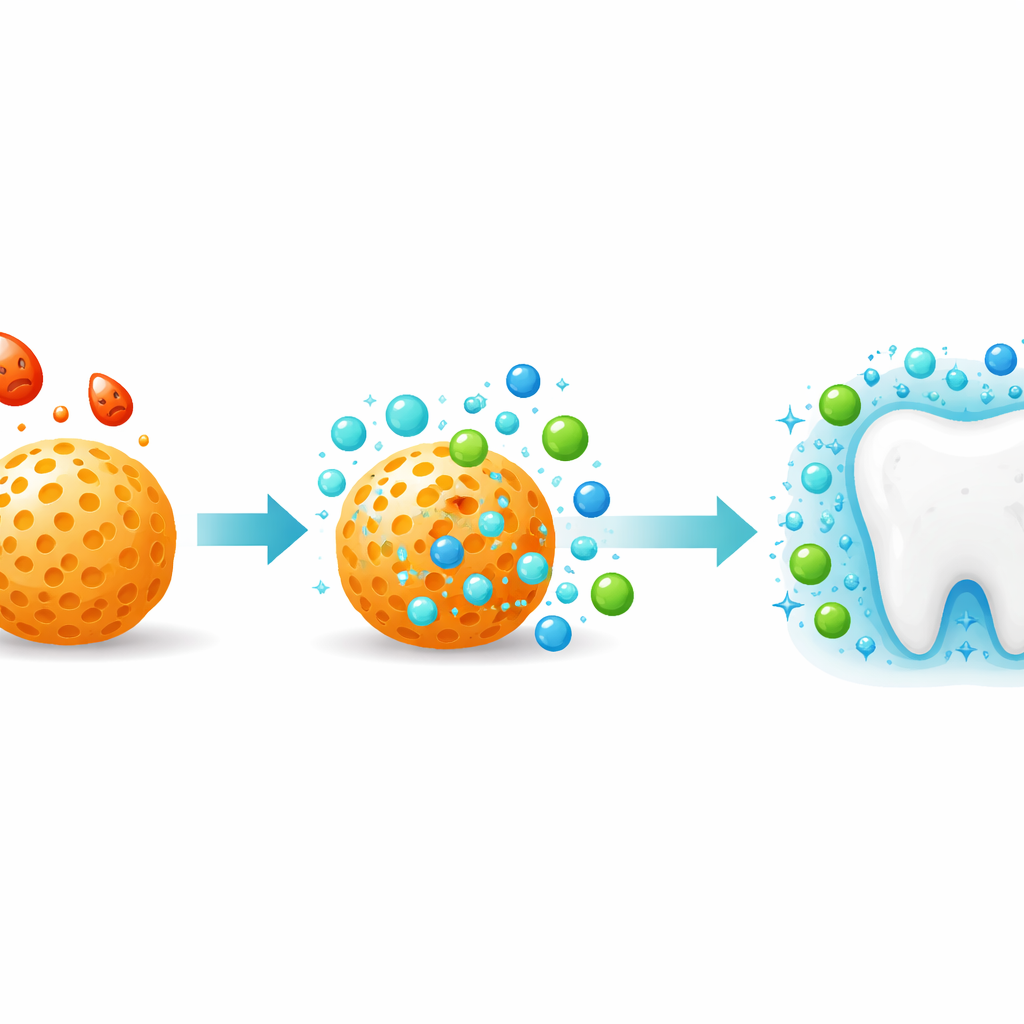
Across all liquids, hydroxyapatite raised the pH—that is, it made the solutions much less acidic. In strong hydrochloric acid, the particles neutralized about 99.9% of the free acid, pushing the pH toward a range where enamel dissolves much more slowly. Measurements of calcium in the liquid showed that, as the acid was neutralized, large amounts of calcium were released from the particles, in close agreement with what basic chemistry predicts for dissolving hydroxyapatite. In everyday terms, the particles sacrifice some of their own mineral to soak up excess acid and at the same time flood the surroundings with calcium and phosphate, ingredients needed to repair enamel.
Fast Action in Soft Drinks Without Losing Structure
In Coke and Sprite, the neutralizing effect was not only strong but also fast. Even at a relatively low hydroxyapatite level, most of the free acid in Coke (nearly 99%) and a large share in Sprite (around 84%) was neutralized within 20 seconds. Higher particle concentrations pushed the effect even further. Despite this chemical activity, microscope images showed that the particles kept their porous, sponge‑like architecture, and X‑ray patterns confirmed that their basic crystal identity remained the same. This porous structure is important because it offers a large surface area where neutralization and mineral exchange can happen, making the particles both effective and durable as a “sacrificial” shield.
What This Means for Everyday Oral Care
For non‑specialists, the key takeaway is that these enamel‑like particles are doing triple duty: they mop up harmful acid, release calcium that can slow further enamel loss, and help maintain conditions that favor natural repair of tooth surfaces. In carefully controlled lab tests, they neutralized more than 98% of the acid in both strong solutions and common drinks, all while keeping their useful structure. Although the real mouth is more complex—with saliva, bacteria, and tiny crevices—the findings suggest that hydroxyapatite in toothpastes, mouthwashes, or lozenges could provide rapid, local protection against everyday acid attacks and may become a central ingredient in future erosion‑protective products.
Citation: Fandrich, P., Stammler, F.J., Enax, J. et al. In vitro study on the neutralization potential of particulate hydroxyapatite in erosive acids. BDJ Open 12, 25 (2026). https://doi.org/10.1038/s41405-026-00414-3
Keywords: tooth erosion, hydroxyapatite, acidic beverages, oral care, enamel protection