Clear Sky Science · en
Dental students’ perception of objective structured clinical examination (OSCE): a cross-sectional study
How Do We Really Test Future Dentists?
When you sit in a dental chair, you trust that your dentist can both think clearly and work calmly under pressure. But how do dental schools check that students are ready for real patients, not just good at written tests? This study from a Tunisian dental school looks at a modern, hands-on exam called the Objective Structured Clinical Examination (OSCE) and asks a simple but crucial question: what do final-year dental students actually think about it?

A New Kind of Dental Exam Room
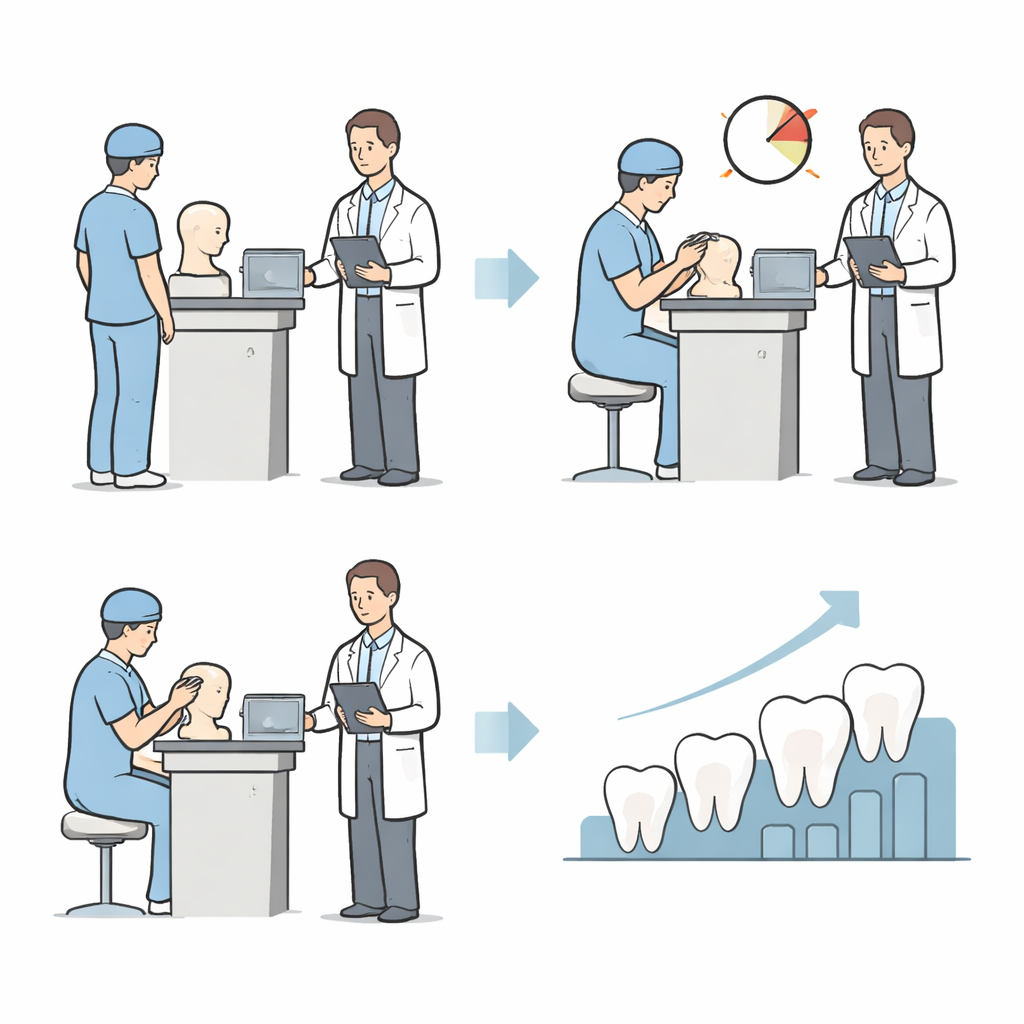
Instead of a single long exam, an OSCE breaks assessment into a circuit of short stations. At each stop, a student might plan treatment for a damaged tooth, discuss options with a “patient,” or demonstrate a technical step in making a fixed prosthesis, such as a crown or bridge. Professors move from observer to scorekeeper, using checklists to judge how well each task is performed. This format aims to mirror real clinical encounters more closely than traditional written or oral tests, which mainly check book knowledge.
What This Study Set Out to Discover
The researchers focused on final-year students training in fixed prosthodontics—the branch of dentistry that restores damaged or missing teeth with fixed solutions. All 144 students who completed their end-of-year OSCE were invited to fill out an anonymous online questionnaire. They rated various aspects of the exam, including how clearly it was organized and explained, whether timing felt fair, how stressful it was, and whether it matched what they had been taught in the clinic. Because every eligible student responded, the authors could capture a full snapshot of the class’s experience.
Clarity, Fairness, and the Right Skills
Students gave strong marks for clarity and organization. Nearly nine out of ten said that what would be tested and how it would be run were clearly explained, and a similar share felt the examiners put them at ease before starting. Most students believed the OSCE tested the same abilities they were expected to develop in their clinical training: more than nine out of ten felt the skills on display at the stations matched the goals of the fixed prosthodontics course. Overall, more than 90% reported being satisfied with how the exam was organized, suggesting that students viewed the OSCE as a fair and well-structured way to judge their readiness for practice.
Stress, Time Pressure, and Tough Moments
Even a well-run exam can be nerve-racking. About two-thirds of students described the OSCE as moderately stressful, while only a small minority found it very stressful. Time limits at each station emerged as one of the main pressure points: over a tenth of students clearly felt they did not have enough time, and more than a third were unsure. When asked which parts were hardest, students most often pointed to the thinking-heavy “cognitive” tasks, such as interpreting information and planning treatment, followed by stations focused on communication and behavior. Practical, hands-on tasks were considered challenging too, but slightly less so. Together, these findings suggest that the exam is stretching not just hand skills but also clinical reasoning and interpersonal abilities.
What This Means for Future Dentists
The study concludes that dental students largely accept the OSCE as a suitable way to test the real-world skills needed in fixed prosthodontics. They appreciate its clear structure and close alignment with what they learn in the clinic. At the same time, the results highlight areas where schools can do better—especially by fine-tuning station timing and offering more support for managing exam-related stress. By refining this kind of practical exam, dental educators can help ensure that new dentists step into the clinic not only knowledgeable, but confident and well prepared to care for their patients.
Citation: Daouahi, N., Nasri, S., Gassara, Y. et al. Dental students’ perception of objective structured clinical examination (OSCE): a cross-sectional study. BDJ Open 12, 22 (2026). https://doi.org/10.1038/s41405-026-00413-4
Keywords: dental education, clinical skills assessment, OSCE, fixed prosthodontics, student perceptions