Clear Sky Science · en
Association between subclinical coronary artery atherosclerosis and oral health—a study on a Swedish population
Why Your Teeth Might Matter to Your Heart
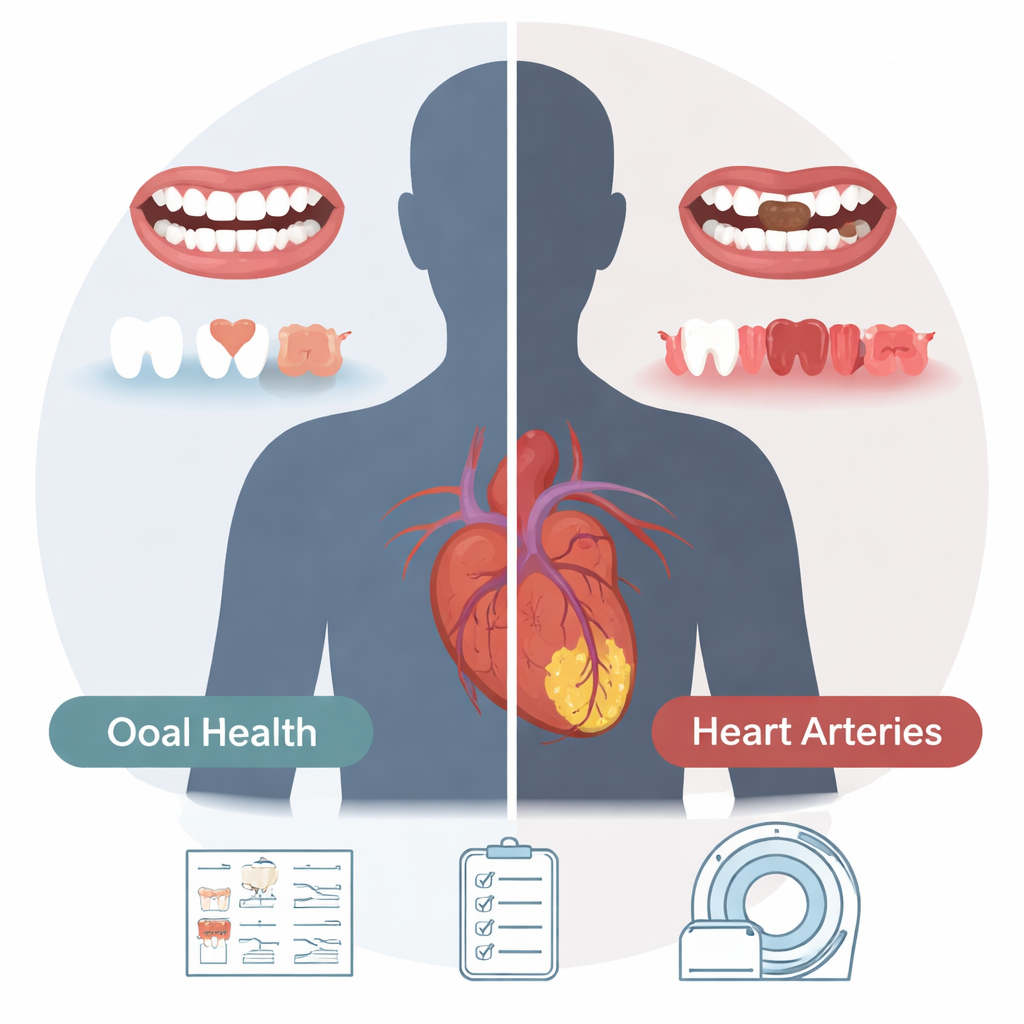
Most people think of brushing and flossing as a way to avoid cavities and keep their smile bright. But this Swedish study suggests that what is happening in your mouth could also be linked to what is happening in your heart’s arteries—long before any chest pain or heart attack occurs. By carefully examining both dental health and hidden heart artery changes in hundreds of symptom-free adults, the researchers asked a simple but important question: can the condition of your teeth and gums hint at early, silent heart disease?
Looking for Hidden Heart Trouble
Heart disease is the leading cause of death worldwide, and heart attacks usually stem from fatty, inflamed deposits—called plaque—building up in the coronary arteries. These changes can start years before any symptoms appear. In this study, 410 non‑smokers in their mid‑60s, drawn from a large Swedish health project, had already undergone advanced heart imaging called coronary computed tomography angiography. This scan can detect “subclinical” coronary artery atherosclerosis—plaque and narrowing in the arteries that supply the heart, even in people who feel perfectly well. About half of the participants had these hidden artery changes, and half did not.
Checking Mouths as Carefully as Hearts
The researchers then brought all participants in for detailed dental checks on a single day. Dentists counted missing teeth, noted cavities and filled teeth, and measured how much supporting bone around the teeth had been lost. They also took panoramic X‑rays to look for deep infections at the tooth roots and to precisely measure bone levels. On top of this, everyone answered a short questionnaire about oral symptoms such as swollen gums, sore gums, loose teeth, bad breath, and toothache. This allowed the team to capture both the “hard” clinical findings and the way people experienced their own oral health.
What Linked Teeth and Arteries
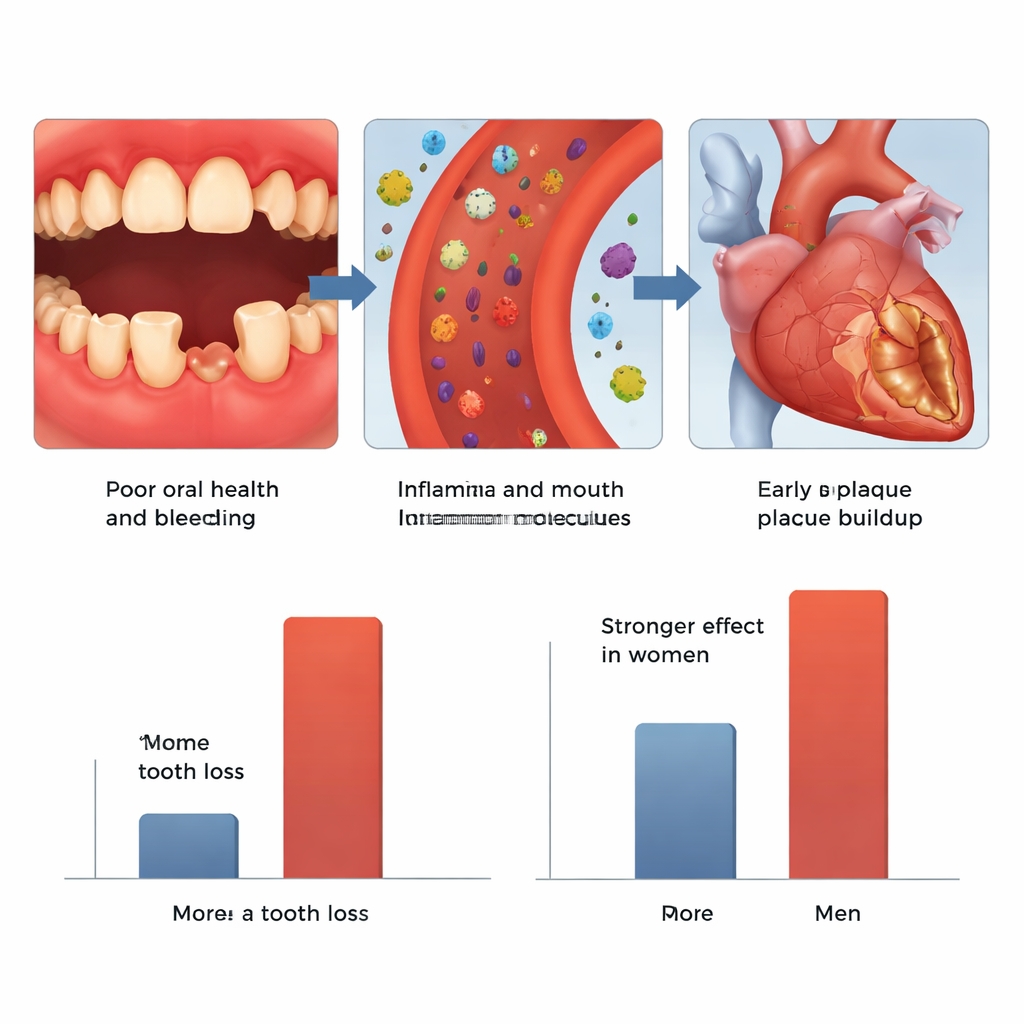
People with silent coronary artery disease tended to have poorer oral health. On average, they had more missing teeth, higher scores of decayed and filled teeth, more teeth with severe bone loss, and more teeth with deep infections at the roots. When the researchers used statistical models to account for age and past smoking, the number of missing teeth still stood out as an independent marker: each additional missing tooth was associated with higher odds of hidden coronary plaque. Interestingly, self‑reported symptoms told a more complex story. Many participants without artery disease reported symptoms like sore or receding gums, suggesting that what people feel does not always match how diseased their mouth actually is.
Stronger Clues in Women
When the team looked at men and women separately, the patterns were not the same. In men, adding dental information to a simple heart‑risk model based on age and smoking history did not clearly improve the ability to identify who had silent artery disease. In women, however, oral health data made a substantial difference. Women with hidden coronary plaque had particularly high levels of tooth loss, decay, and severe bone loss around the teeth. Including these oral measures in the prediction model raised its accuracy quite a bit, and a type of analysis called decision curve analysis suggested that using dental data could offer a net benefit when deciding whom to send for heart imaging.
What This Means for Everyday Health
For lay readers, the message is not that a bad tooth will automatically cause a heart attack, or that good teeth guarantee a healthy heart. Instead, this study adds to growing evidence that the mouth and heart are connected, likely through chronic inflammation and infection that affect the whole body over time. The findings suggest that counting missing teeth and assessing gum and bone health might help doctors and dentists flag people—especially women—who could be at higher risk for hidden heart artery disease. In practical terms, taking care of your oral health may be one more way to look after your heart, and regular dental visits could provide early warning signs that go beyond your smile.
Citation: Berglundh Gottlieb, J., Bergström, G., Tomasi, C. et al. Association between subclinical coronary artery atherosclerosis and oral health—a study on a Swedish population. BDJ Open 12, 18 (2026). https://doi.org/10.1038/s41405-026-00406-3
Keywords: oral health, heart disease, atherosclerosis, tooth loss, periodontitis