Clear Sky Science · en
Therapeutic pulpotomy for permanent teeth with irreversible pulpitis: comparative results from a practice-based quick poll in the USA and UK
Why this matters for painful teeth
Many people know the dread of a toothache that throbs for hours and makes it hard to sleep or eat. For decades, dentists facing this kind of deep tooth pain—often diagnosed as “irreversible pulpitis”—have mostly had two options: remove the tooth or perform a complex root canal. This study looks at a gentler alternative called therapeutic pulpotomy and asks a simple, practical question: how many dentists in the United States and United Kingdom are actually using it today, and how ready are they to change?
A new middle ground between filling and root canal
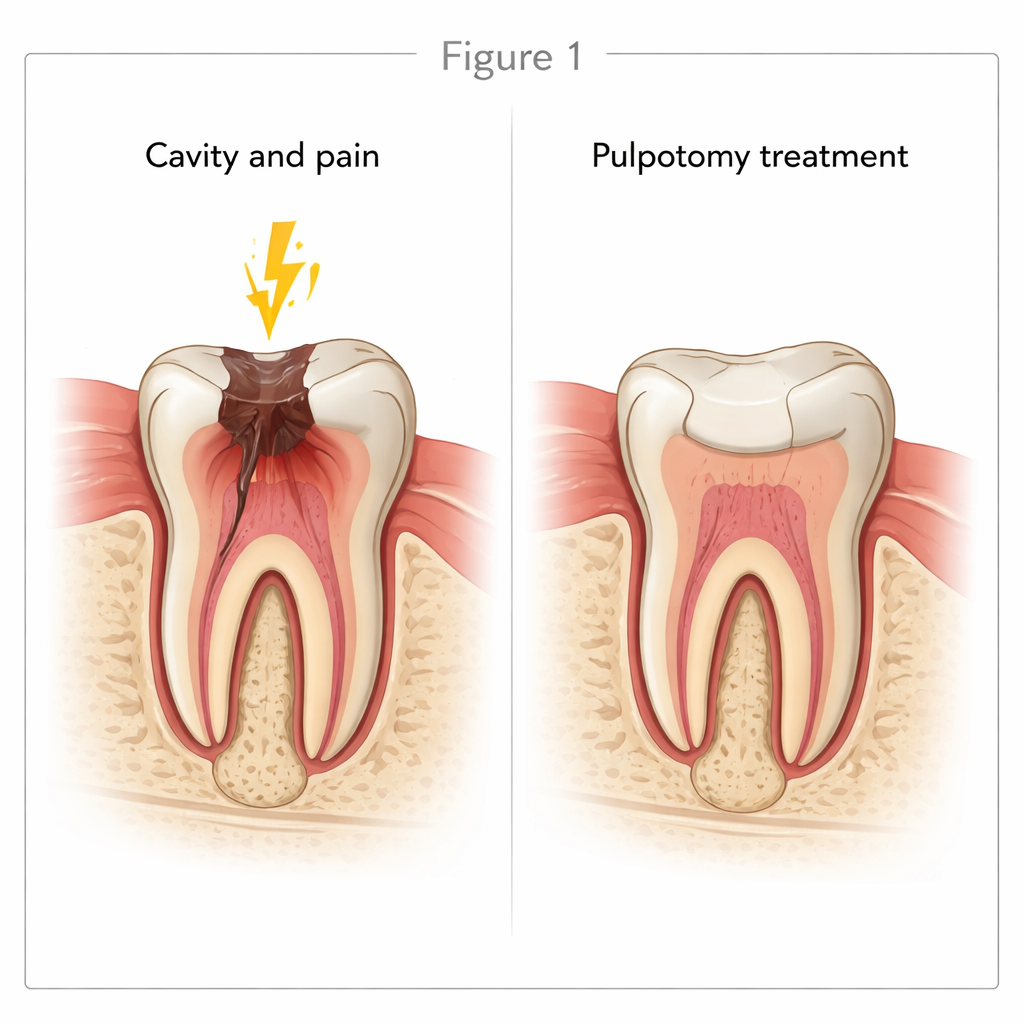
When tooth decay bores deep enough to reach the soft core of the tooth (the pulp), it can trigger long-lasting pain. Traditionally, dentists either pulled the tooth or removed all the pulp from root to crown in a root canal treatment. Pulpotomy offers a middle ground. The dentist removes only the inflamed tissue from the top chamber of the tooth, places a special biocompatible cement over the remaining living pulp, and restores the tooth. Modern materials based on calcium silicate have made this procedure more reliable, and recent research suggests that in many painful cases the remaining pulp can heal and stay healthy.
What the researchers asked dentists to imagine
The team presented dentists with a typical emergency: a 20-year-old woman with strong, lingering pain from a lower molar. X‑rays show deep decay reaching the pulp but no signs of infection at the root tip, a situation many dentists would label irreversible pulpitis. Dentists in a large U.S. practice-based research network and a wide range of U.K. primary care settings were asked how they diagnose and manage such cases, which treatments they use in day-to-day practice, and how they feel about pulpotomy as a final, not just temporary, solution.
How dentists currently treat these painful teeth
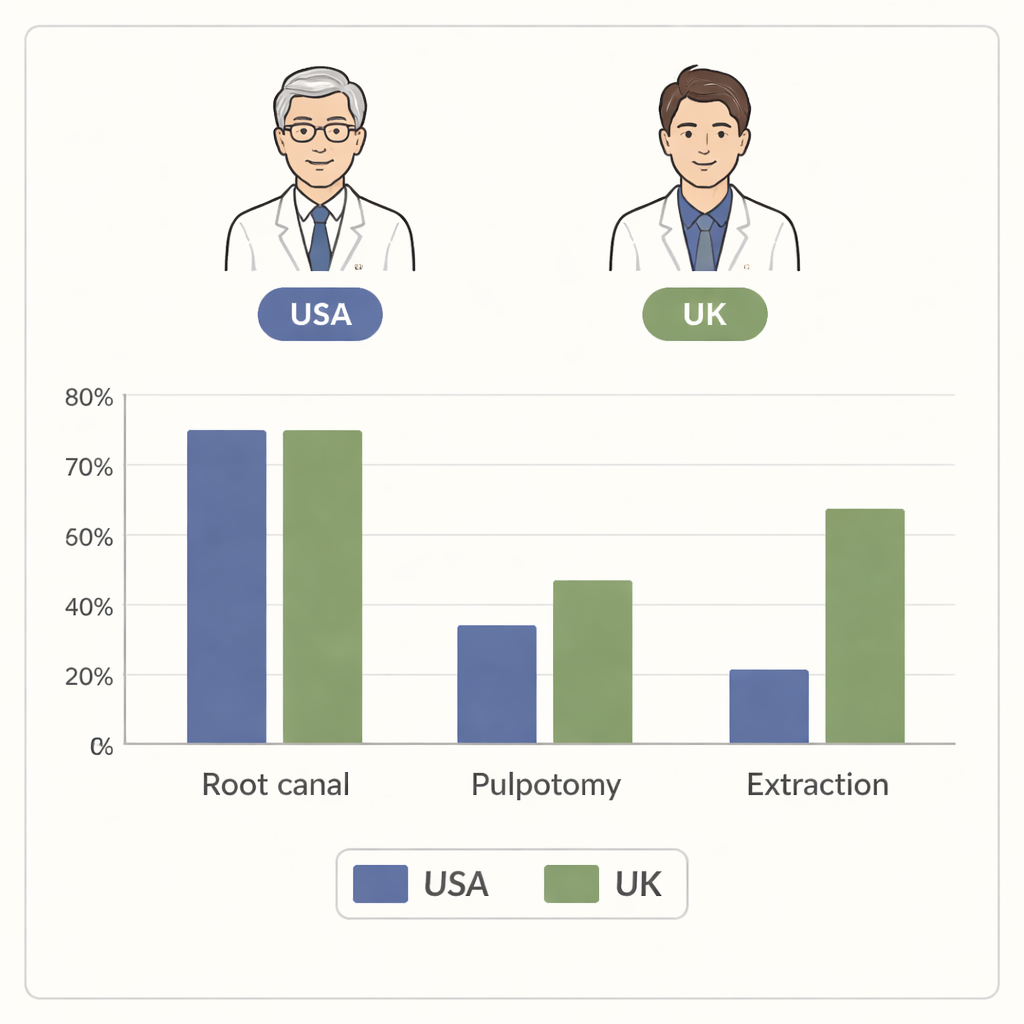
Seven hundred fifty practitioners replied (416 in the U.S., 334 in the U.K.), most of them experienced general dentists. Both groups reported seeing irreversible pulpitis in several patients each month, confirming how common this problem is. Root canal therapy was the dominant treatment: 77% of U.S. respondents and 90% of U.K. respondents said they typically used it for definitive care. In the U.K., tooth extraction was also common, chosen by half of respondents. Pulpotomy, by contrast, was used far less often—reported as a management strategy by only 20% of U.S. dentists and 16% of U.K. dentists, and just 9% of U.K. dentists said they usually used it as the final treatment.
Growing interest, but slow change
Despite these cautious practice patterns, attitudes toward pulpotomy were notably more positive. Nearly half of U.S. respondents (47%) and a striking 87% of U.K. respondents said they would be in favor of pulpotomy as a definitive option under the right conditions, and many believed their patients would also support it. Younger dentists, especially in the U.K., were more likely to have been taught about vital pulp therapies and to use modern materials such as mineral trioxide aggregate and Biodentine. Yet practical barriers remain: limited hands-on training in dental schools, uncertainty about long-term results, cost and availability of materials, and payment systems that were designed around traditional root canal treatment.
What this could mean for future dental visits
The authors conclude that while root canal therapy still dominates, there is strong and growing interest in conservative treatments that keep more of the tooth alive. High-quality clinical trials already suggest that carefully selected cases of severe toothache can be treated successfully with pulpotomy, and more large studies in everyday dental practice are under way. If future research confirms that pulpotomy works as well—or even close to as well—as root canal treatment in many situations, it could offer patients a simpler, potentially quicker and cheaper way to save painful teeth. For patients, that could mean more options than just “root canal or extraction” when they walk into the dental office with a tooth that hurts.
Citation: Colloc, T.N., Ricketts, D.N., Clarkson, J.E. et al. Therapeutic pulpotomy for permanent teeth with irreversible pulpitis: comparative results from a practice-based quick poll in the USA and UK. BDJ Open 12, 13 (2026). https://doi.org/10.1038/s41405-026-00404-5
Keywords: toothache treatment, root canal, pulpotomy, dental survey, vital pulp therapy