Clear Sky Science · en
Drug-associated tongue discoloration: a comprehensive assessment of USFDA adverse event reporting system using disproportionality analysis
When Medicines Change the Color of Your Tongue
Most people expect side effects like drowsiness or stomach upset when they start a new medicine—not a tongue that turns black, bright red, or oddly discolored. Yet these surprising changes, while often harmless, can be alarming and affect how we taste food, feel about our appearance, and trust our treatments. This study digs into millions of safety reports submitted to the U.S. Food and Drug Administration to uncover which medicines are most often linked to unusual tongue colors, and what patterns might help doctors and patients spot and manage the problem earlier.
What Tongue Color Can Tell Us
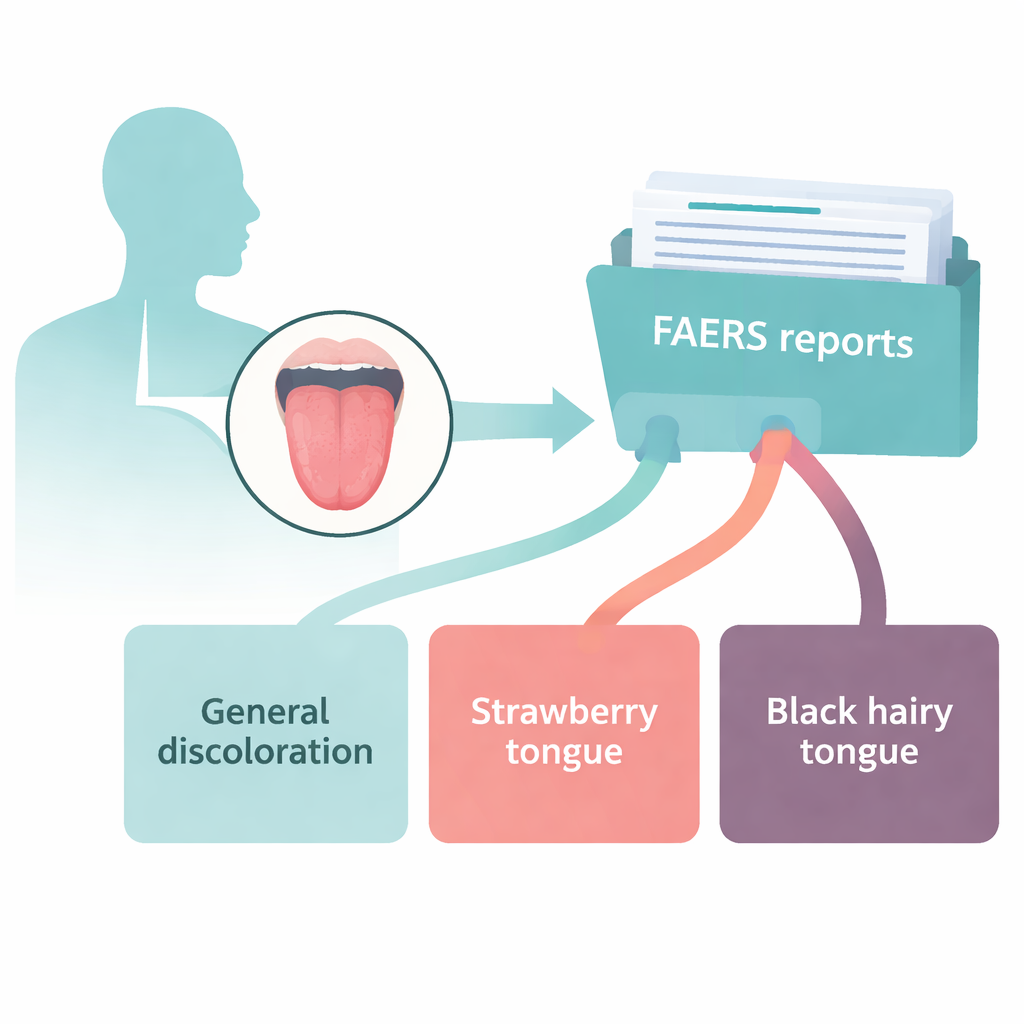
The tongue is more than a simple muscle; its surface can reflect what is happening inside the body and what we put into our mouths. Doctors distinguish between discoloration that comes from within the tissue (for example, pigments carried through the bloodstream) and stains that sit on the surface and can sometimes be brushed away. Some patterns have striking names: “strawberry tongue” looks bright red and bumpy, while “black hairy tongue” appears dark and shaggy because the tiny projections on the tongue grow longer instead of shedding normally. These conditions can cause bad taste, bad breath, embarrassment, and worry—especially when they appear suddenly during a course of medication.
Mining Millions of Safety Reports
To understand which drugs are most strongly tied to tongue changes, the researchers turned to the FDA’s Adverse Event Reporting System (FAERS), a huge database of side effects reported by health professionals and patients from 2004 to mid‑2024. Out of more than 29 million reports, they identified 2,352 unique cases mentioning tongue discoloration, strawberry tongue, or black hairy tongue, focusing only on drugs listed as the primary suspected cause. Using several complementary statistical methods—some based on simple counting, others using advanced Bayesian techniques—they looked for medicines that appeared with these tongue problems much more often than expected compared with all other reported side effects.
Which Medicines Raised Red Flags?
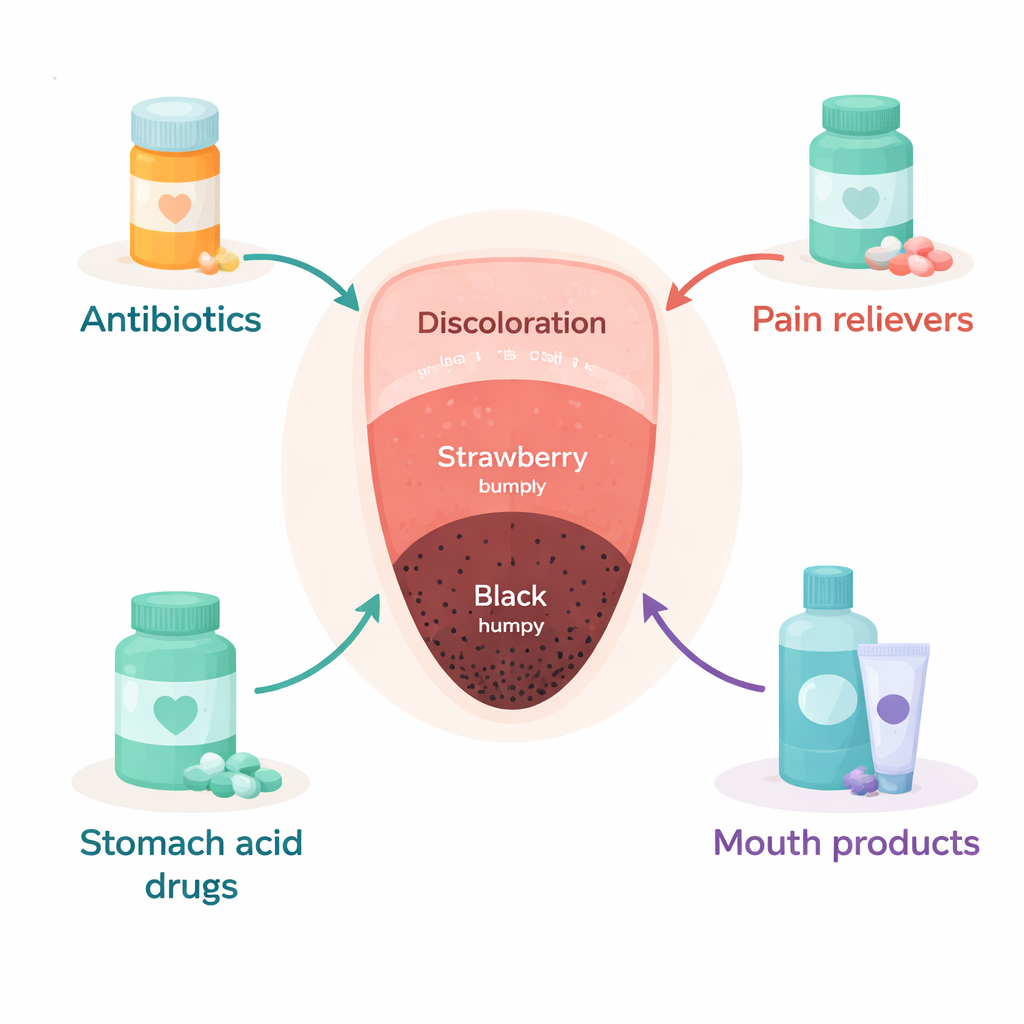
The clearest signals pointed to antibiotics and other infection‑fighting drugs. Common agents such as clarithromycin, metronidazole, linezolid, and amoxicillin repeatedly showed up in reports of tongue discoloration, supported by both traditional and Bayesian analyses. Other drug groups also stood out, including inhaled and nasal medicines for asthma and allergies (like fluticasone and budesonide), treatments for stomach acid (such as lansoprazole and esomeprazole), certain heart and blood pressure drugs, and oral care products like chlorhexidine mouthwash. Strawberry tongue showed a different pattern: it was most strongly linked to widely used pain relievers and fever reducers (acetaminophen, ibuprofen, aspirin), the antibiotic flucloxacillin, and immune‑related treatments such as human immunoglobulin G and the seizure drug lamotrigine. Black hairy tongue was associated not only with some antibiotics, but also with medicines for heart disease, high cholesterol, stomach acid, mood disorders, and motion sickness, as well as nicotine products.
Who Is Affected and Why It Matters
The reports revealed that middle‑aged and older adults were more likely to experience general tongue discoloration and black hairy tongue, while strawberry tongue appeared more often in children and teenagers. Across all tongue conditions, women were reported more often than men, which might reflect greater use of health services, differences in drug handling by the body, or a greater likelihood of reporting side effects. While tongue discoloration is rarely dangerous by itself, it can signal major shifts in the mouth’s microbial community, especially when strong antibiotics or dry‑mouth‑causing drugs are involved. The authors emphasize that doctors and dentists should ask about recent medications when patients present with sudden tongue changes, encourage simple steps like tongue cleaning and good hydration, and consider switching to alternative drugs when feasible.
What This Means for Patients and Clinicians
This study cannot prove that any one drug directly causes tongue discoloration, because the database relies on voluntary reports and often lacks details like dose and duration. Still, consistent signals across several statistical approaches, and across many reports, suggest that certain medicines deserve closer attention. For patients, the message is reassuring but practical: unusual tongue colors are usually reversible and often improve with better oral hygiene or changing medications, but they should not be ignored. For clinicians, the work highlights a list of higher‑risk drugs and the value of asking about the tongue during routine checks. By recognizing medicine‑related tongue changes early, healthcare providers can fine‑tune treatments to balance benefit and risk—while helping patients keep both their health and their smiles.
Citation: Sridharan, K., Sivaramakrishnan, G. Drug-associated tongue discoloration: a comprehensive assessment of USFDA adverse event reporting system using disproportionality analysis. BDJ Open 12, 12 (2026). https://doi.org/10.1038/s41405-026-00402-7
Keywords: tongue discoloration, drug side effects, pharmacovigilance, black hairy tongue, antibiotics