Clear Sky Science · en
Environmental impact of dental amalgam and alternative restorative materials: a systematic review
Why your fillings matter for the planet
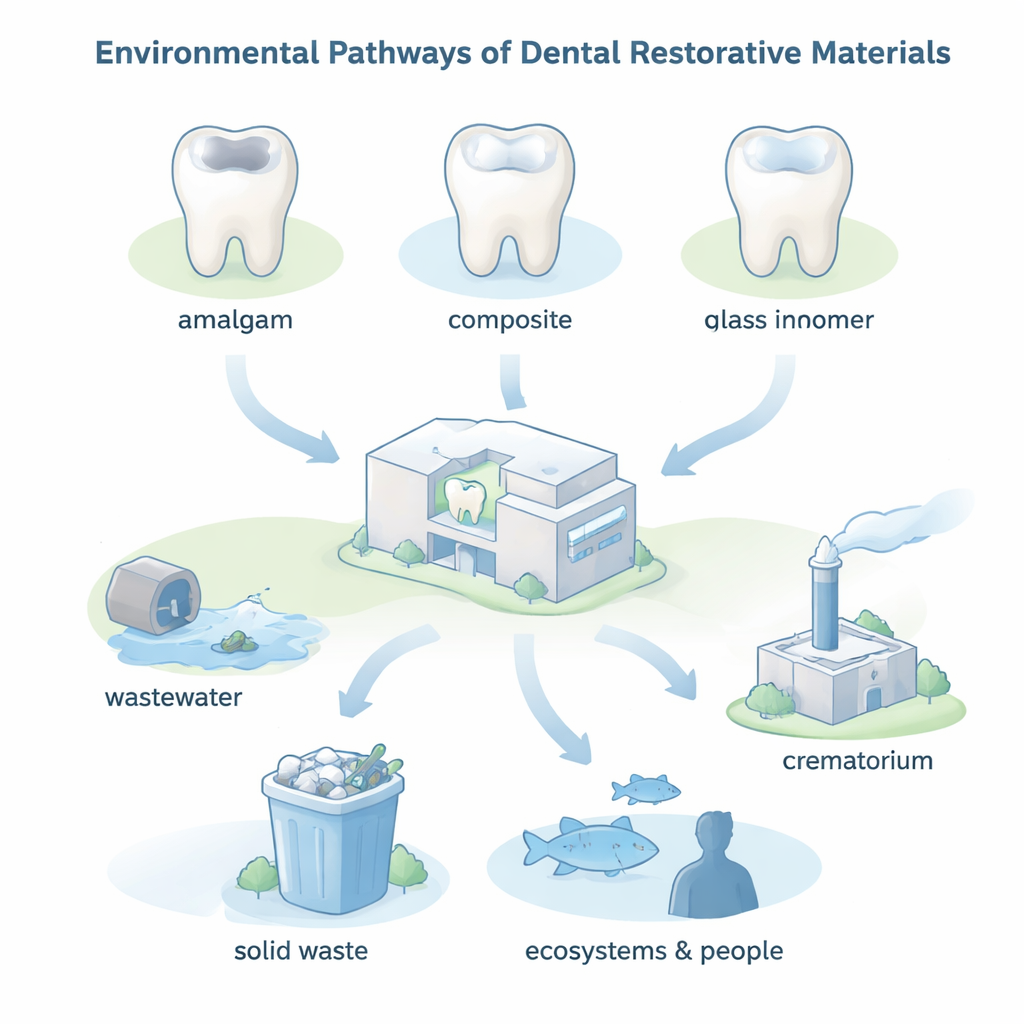
Most adults have several dental fillings, but few realise these tiny repairs can add up to big environmental questions. For decades, dentists relied on silver-coloured amalgam, which contains mercury, a well-known pollutant. Newer white materials, like resin-based composites and glass-ionomer cements, avoid mercury but bring their own chemical footprints. This review pulls together the best available evidence on how different filling materials affect air, water, waste and ultimately living things, helping patients, dentists and policymakers think beyond the dentist’s chair.
The shift away from silver fillings
Over the last ten years, concern has grown about both the health and environmental effects of dental materials. Amalgam has been steadily phased down, especially since the international Minamata Convention on Mercury pushed countries to reduce mercury use and emissions. At the same time, tooth-coloured alternatives such as resin-based composites and glass-ionomer cements have become more popular. These newer materials do not contain mercury but can release other substances, including plastic-like monomers and compounds related to bisphenol A, which may harm wildlife and people if they escape into the environment. Given that roughly nine in ten adults have fillings, even tiny releases per tooth could add up across millions of procedures.
How the researchers looked for answers
The authors carried out a systematic review, a structured way of searching for and assessing all relevant studies on a question. They combed several scientific databases for research published since 2007, focusing on high-income countries with similar dental services to the UK. To be included, studies had to measure environmental outcomes linked to direct fillings or their removal, such as mercury in wastewater, chemical residues in air or dust, carbon emissions, or toxicity to animals. Health-only studies, opinion pieces and case reports were excluded. Each eligible study was critically appraised for risk of bias using a specialised environmental evidence tool, and the findings were combined in a narrative rather than statistical summary because the studies were so varied.
What the studies found about different materials
The review identified 21 studies (22 reports) set in dental clinics, laboratories and crematoria. All materials studied—amalgam and non-amalgam—were linked to some form of environmental impact. Amalgam was most often associated with mercury in wastewater, solid waste, air emissions and vapour during drilling or cremation. Some measurements exceeded recommended workplace exposure or wastewater limits when protective measures were poor or absent. At the same time, studies of composite and glass-ionomer materials found releases of plastic-like monomers into wastewater and air, and in some cases these discharges were above environmental guidelines. A few experiments exposed aquatic animals such as fish and water fleas to dental wastewater; both mercury from amalgam and chemicals from mercury-free materials could cause developmental problems or toxicity under test conditions.
Gaps in the evidence and what we still don’t know
Despite wide public interest, the evidence base is surprisingly patchy. Only six studies directly compared amalgam with alternative materials, and none were judged to have a low risk of bias. Methods, settings and outcome measures differed so much that the results could not be pooled or ranked in a simple "best" versus "worst" list. For example, one study suggested amalgam had greater toxicity to test fish than some white materials, while another found that, after wastewater passed through amalgam separators, solids linked to composite and glass-ionomer exceeded legal limits more often than amalgam-related solids. A separate analysis of carbon footprints indicated that the total climate impact of amalgam and composite procedures in English NHS dentistry was similar, and that glass-ionomer had a lower footprint per filling—but importantly, that study did not include the environmental costs of manufacturing the materials themselves.
What this means for patients, dentists and policy
For non-specialists, the main message is that there is no completely "green" filling material yet. Amalgam clearly poses mercury-related risks if waste and vapour are not tightly controlled, but switching entirely to mercury-free materials does not automatically solve the problem, because these alternatives can release persistent plastics and other chemicals. The review concludes that both amalgam and non-amalgam fillings have environmental downsides, and that current research is too limited and inconsistent to say which is better overall. Practical steps—such as following guidance on when to replace fillings, using effective amalgam separators and filters, and improving wastewater treatment—may matter as much as the choice of material. Better, comparative research is urgently needed so that decisions about phasing out or promoting specific filling types are based on a full picture of their impact on our air, water, wildlife and future health.
Citation: Briscoe, S., Shaw, L., Lawal, H.M. et al. Environmental impact of dental amalgam and alternative restorative materials: a systematic review. BDJ Open 12, 11 (2026). https://doi.org/10.1038/s41405-026-00399-z
Keywords: dental fillings, mercury pollution, composite resin, healthcare wastewater, environmental dentistry