Clear Sky Science · en
Bioenergetic and early treatment response stratification (BIOERES): a two-variable prognostic model for early identification of treatment-resistance schizophrenia
Why this matters for patients and families
When someone experiences a first episode of psychosis, families and clinicians face a pressing question: will standard medicines work, or will this person turn out to be resistant to treatment and need special care? This study looks for early warning signs in a routinely tested body fluid to help identify, within the first hospital admission, who is most likely to struggle with standard antipsychotic drugs over the next five years.
Looking for clues in brain fluid
The researchers focused on people admitted with their first episode of schizophrenia-spectrum psychosis in a hospital in Spain. During this initial stay, a spinal tap was performed to obtain cerebrospinal fluid, the clear liquid that bathes the brain and spinal cord. From this fluid, the team measured three common laboratory markers: total protein, sugar (glucose), and an enzyme called lactate dehydrogenase, or LDH, which is linked to how cells handle energy. They then followed 44 of these patients clinically for five years to see who would later meet strict criteria for treatment-resistant schizophrenia, typically reflected in the eventual need for the drug clozapine.

Who became treatment-resistant
After five years, about one in three patients in this group had developed treatment-resistant schizophrenia, a proportion similar to that seen in larger international studies. Those who later became treatment-resistant tended to have been sicker at admission, with more severe symptoms and a longer period of untreated illness before getting proper care. They also stayed in the hospital almost twice as long during that first admission. These patterns underline how deeply disabling treatment resistance can be, and how much it shapes the course of early psychosis care.
An energy marker that runs low
The most striking finding came from the LDH measurements in the spinal fluid. At baseline, people who would eventually become treatment-resistant had clearly lower LDH levels than those who later responded well to treatment, while protein and glucose showed no meaningful differences. Statistical models that adjusted for age, sex, smoking, symptom severity, and delay in treatment confirmed that lower LDH remained strongly linked to later resistance. In plain terms, patients whose brain fluid showed signs of reduced energy-processing activity at the start were more likely to have stubborn symptoms years later.
Combining biology with early drug response
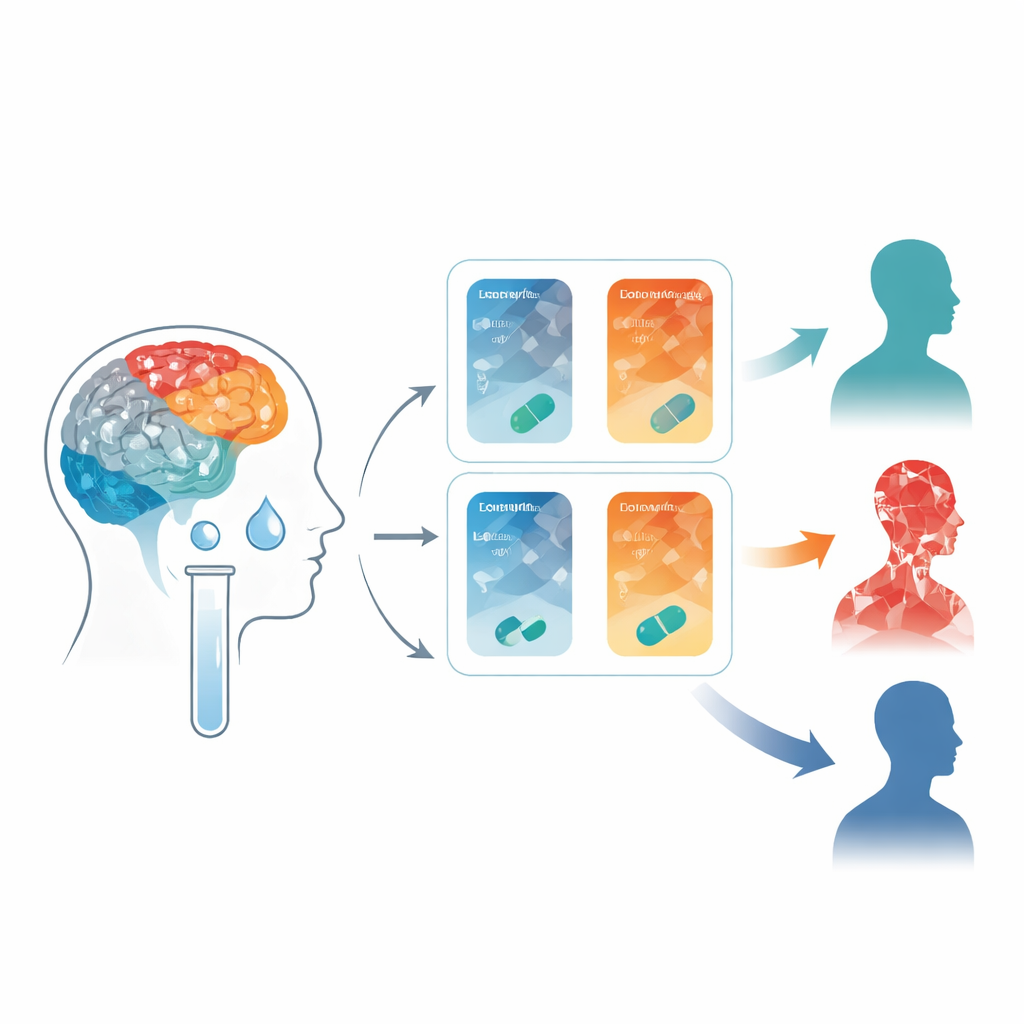
The team then asked whether adding a simple clinical observation could sharpen this prediction. They looked at how much patients’ positive psychotic symptoms improved during the first two weeks of antipsychotic treatment. People who showed little early improvement and also had low LDH formed the highest-risk group: in this small sample, all of them later needed clozapine. By contrast, patients with higher LDH and a good early response had a very low risk of becoming treatment-resistant. This two-part approach—one laboratory measure from spinal fluid and one short-term response marker—was bundled into a proposed tool called BIOERES (Bioenergetic and Early Response Stratification), which showed high accuracy in distinguishing higher- from lower-risk patients in this cohort.
What this could mean for future care
For people facing a first psychotic episode and their families, the idea of drawing spinal fluid may sound daunting, and this study is still small and preliminary. Yet its message is simple: routine measurements in brain fluid, especially LDH, together with how a patient responds in the first weeks of treatment, may offer an early roadmap of who is likely to need more intensive or different care. If confirmed in larger groups, such a tool could help clinicians move sooner to effective options like clozapine for those at highest risk, while sparing others from unnecessary medication changes. Ultimately, this work supports the view that underlying energy problems in the brain contribute to why some people do not respond to standard drugs—and that reading those energy signals early may help guide more personalized treatment.
Citation: Giné-Servén, E., Boix-Quintana, E., Ballesteros, A. et al. Bioenergetic and early treatment response stratification (BIOERES): a two-variable prognostic model for early identification of treatment-resistance schizophrenia. Transl Psychiatry 16, 220 (2026). https://doi.org/10.1038/s41398-026-03983-x
Keywords: treatment-resistant schizophrenia, first-episode psychosis, cerebrospinal fluid biomarkers, brain energy metabolism, early antipsychotic response