Clear Sky Science · en
Investigating PTSD, mental disorders, and suicide through self-comparison: a self-controlled case series study over two decades
Why these findings matter to everyday life
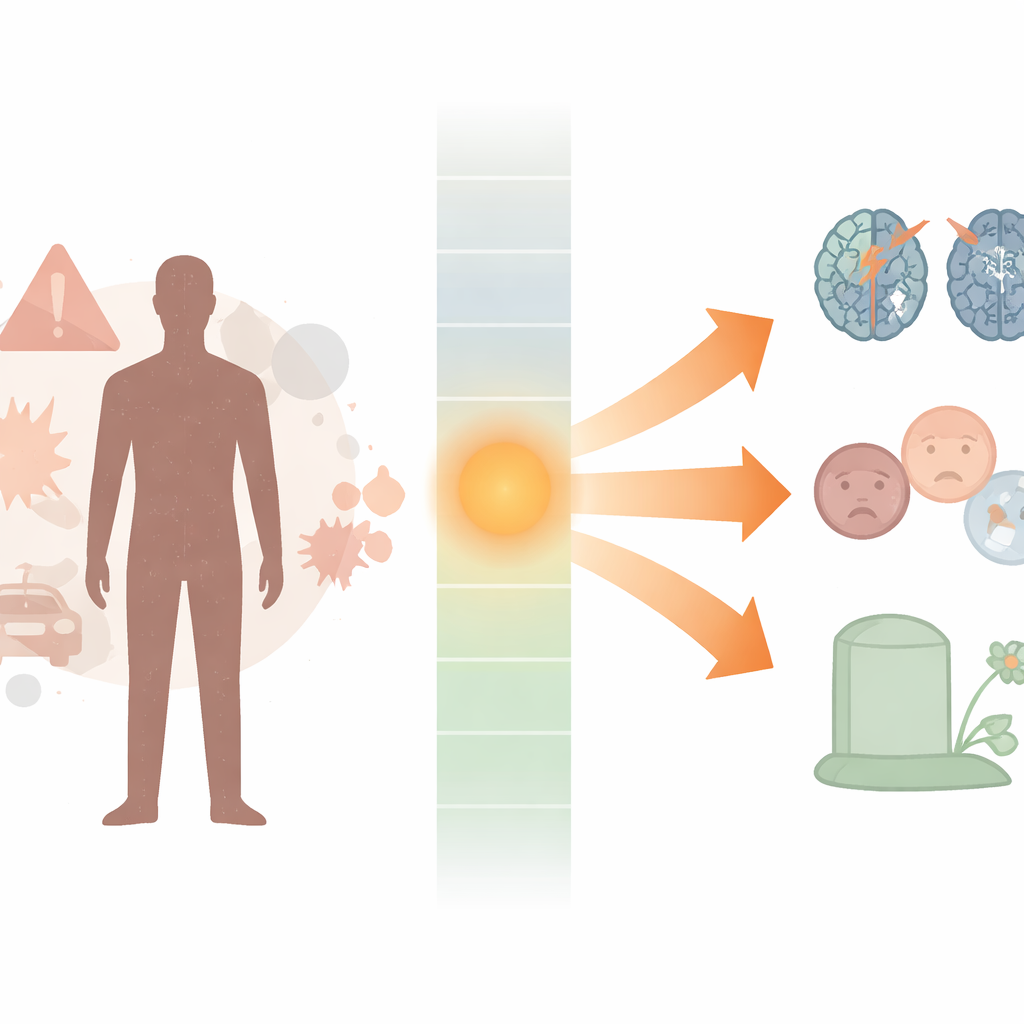
Many people live through frightening or life‑threatening events, from car crashes to natural disasters or violence. Some later develop posttraumatic stress disorder (PTSD), a condition that can haunt sleep, strain relationships, and derail work and family life. This study followed adults in Taiwan over nearly two decades to ask a simple but crucial question: how does PTSD fit into the larger picture of mental health over time—does it mostly cause other problems, result from them, or both? The answers help doctors and policymakers decide when to act and where to focus care so that early warning signs are not missed.
A long look at PTSD in the real world
The researcher used Taiwan’s National Health Insurance database, which covers almost the entire population, to track more than 16,000 adults newly diagnosed with PTSD between 2000 and 2012. These individuals were followed until 2018 or until they died. Rather than comparing one person to another, the study compared each person to themselves at different times in life. Time around the first PTSD diagnosis—the year itself and the five years before and after—was treated as a “risk window,” and other years in that person’s life served as a personal baseline. This design helps strip away fixed differences such as sex, genetics, or upbringing and focuses on how timing of PTSD and other conditions line up.
PTSD and other mental health problems move together
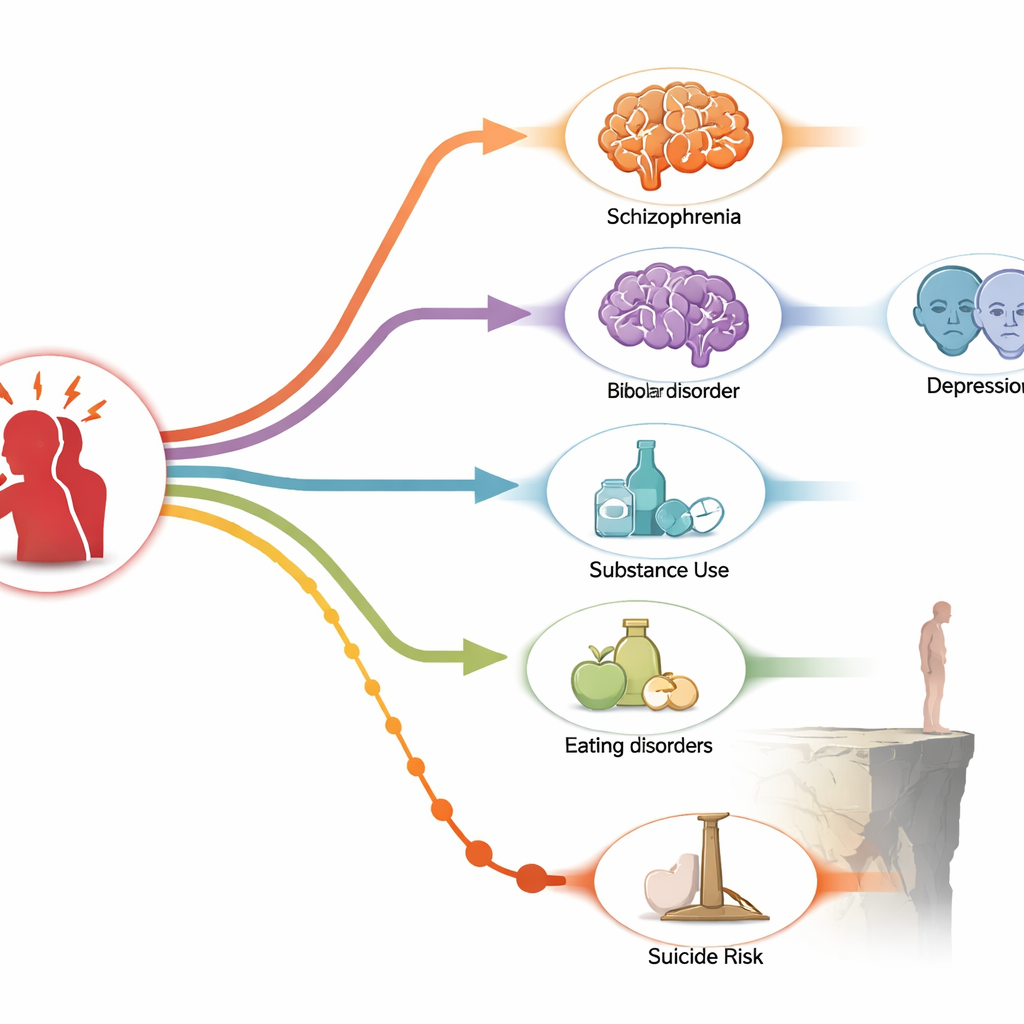
The analysis showed that PTSD and several other mental disorders are tightly intertwined. Schizophrenia, bipolar disorder, obsessive‑compulsive disorder, generalized anxiety, eating disorders, and substance use problems all became more likely both in the years leading up to PTSD and in the years afterward. In other words, these conditions and PTSD tend to cluster in time, suggesting a two‑way relationship rather than a simple cause‑and‑effect chain in one direction. The risk was especially high in the same year PTSD was diagnosed and in the year just before it, highlighting a narrow window when people are particularly vulnerable to multiple overlapping problems.
Depression as an early warning sign
Major depression stood out as different. In this study, depression mostly appeared before PTSD rather than after it. People were much more likely to receive a depression diagnosis in the years leading up to PTSD, with especially strong links in the immediate year before. This pattern supports the idea that depression can be an early sign of deeper troubles, possibly making people more likely to experience trauma in ways that lead to PTSD, or to seek help only once both conditions are present. It also fits with recent genetic findings suggesting that PTSD may, for some people, be a subtype or offshoot of depression rather than a completely separate illness.
Suicide risk rises years after PTSD
When the study turned to deaths, it found a worrying but specific pattern. Overall deaths from any cause did not show a clear increase in the first five years after a PTSD diagnosis. Suicide deaths, however, told a different story. The risk of dying by suicide was noticeably higher three to five years after PTSD first appeared, with the peak in the fourth year. This delayed rise suggests that even after the initial crisis period around diagnosis, people with PTSD remain in danger and may need sustained support rather than short‑term follow‑up alone.
What this means for care and prevention
Taken together, the findings paint PTSD not as a lone condition but as part of a shifting network of mental health problems that can both precede and follow it. For the public and for clinicians, this means that a diagnosis of any serious mental disorder—especially depression—should trigger careful screening for trauma and PTSD, and vice versa. The first year around a PTSD diagnosis is a critical time to look for additional disorders, while the three‑to‑five‑year period afterward is key for suicide prevention. By recognizing these risk windows and the back‑and‑forth links between conditions, health systems can move toward more integrated, long‑term care that aims not only to treat PTSD but also to prevent cascading crises down the road.
Citation: Chen, YL. Investigating PTSD, mental disorders, and suicide through self-comparison: a self-controlled case series study over two decades. Transl Psychiatry 16, 206 (2026). https://doi.org/10.1038/s41398-026-03975-x
Keywords: posttraumatic stress disorder, comorbidity, depression, suicide risk, longitudinal study